

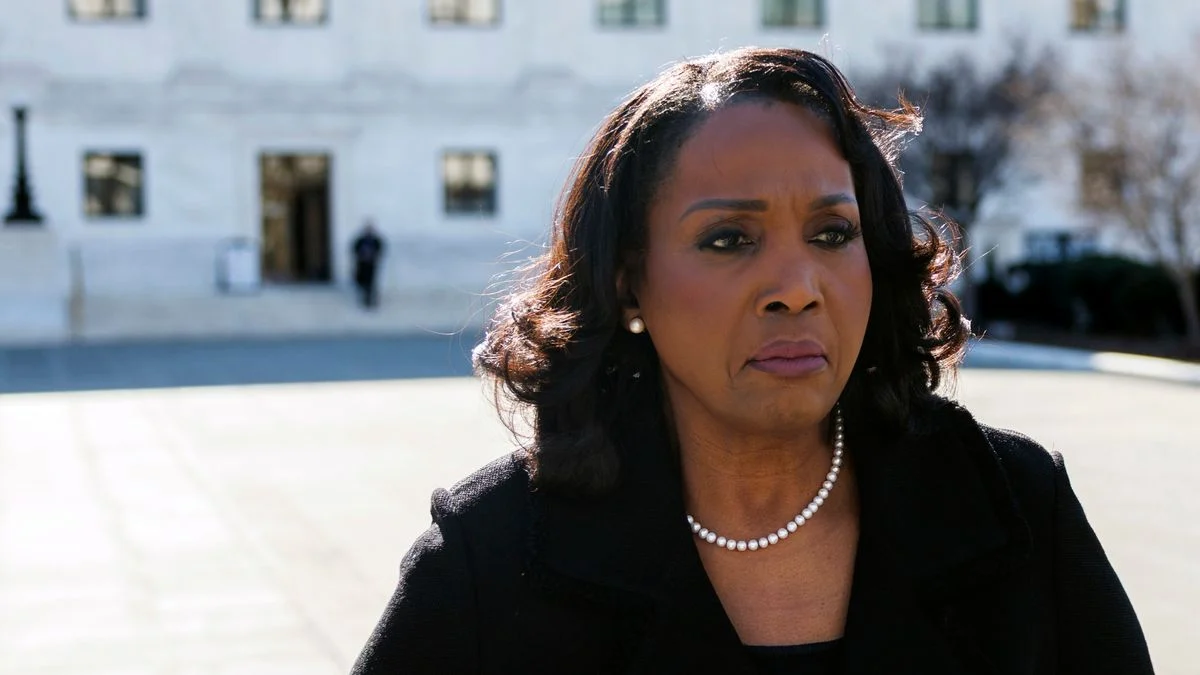
In a move that has sent tremors through the halls of Washington’s financial institutions and ignited a fierce debate over the independence of the U.S. central bank, President Donald Trump has formally established a special committee of inquiry to investigate Federal Reserve Governor Lisa Cook. The probe, announced in an official White House communique, centers on allegations that Cook provided false statements regarding her involvement with specific mortgage-backed financial instruments.
This unprecedented development marks a significant escalation in the ongoing friction between the executive branch and the Federal Reserve, a body traditionally shielded from political interference. As the administration prepares for a closed-door hearing scheduled for early November, the nation’s economic establishment is bracing for a potential constitutional crisis that could fundamentally alter the relationship between the White House and the guardians of U.S. monetary policy.
The Core Allegations: A Question of Integrity
The White House notification asserts that Lisa Cook, 62, allegedly misled authorities regarding her past associations with mortgage-related financial instruments. While the specific nature of these instruments remains the subject of the pending inquiry, the administration’s language is blunt. Trump argues that his duty as President necessitates the removal of subordinates who demonstrate a lack of commitment to truthfulness and legal compliance.
“It is a fundamental duty of the Executive to ensure that those in positions of immense public trust possess the moral and legal standing to hold office,” the White House statement read. “When evidence suggests that a member of the Federal Reserve Board has provided false statements, the President has both the right and the responsibility to initiate a thorough review to determine whether such actions warrant immediate removal from office.”
The committee tasked with this investigation is comprised of high-level administration officials, including the President’s top economic advisor and the director of the U.S. Office of Government Ethics. Their mandate is to determine if the alleged misrepresentations constitute a "high crime or misdemeanor" sufficient to justify an involuntary departure from the Board of Governors. Cook has been summoned to appear in person for the non-public hearing, where she will face rigorous cross-examination by the panel.
Chronology of a Fractured Relationship
The investigation into Lisa Cook is not an isolated incident but rather the latest chapter in a long-standing narrative of tension. To understand the gravity of the current situation, one must look at the timeline of events that brought the relationship between the Trump administration and the Fed to this breaking point.
The Biden Appointment (2022)
Lisa Cook made history in 2022 when she was appointed to the Federal Reserve Board of Governors by then-President Joe Biden. As the first African American woman to serve on the Board, her appointment was hailed as a milestone for diversity and economic representation. Her term was scheduled to run through 2038, a long-term appointment designed to ensure institutional continuity and insulate governors from short-term political cycles.
The Second Term Re-ignition (2025–2026)
Following his return to the White House for his second term, President Trump signaled his intention to aggressively overhaul the personnel and policies of the Federal Reserve. Trump’s public rhetoric frequently targeted the central bank’s independence, which he has often characterized as an "undemocratic obstacle" to his economic agenda. Cook, due to her background and her status as a Biden appointee, quickly became the focal point of the administration’s scrutiny.
The Mounting Pressure (Mid-2026)
Throughout the summer and autumn of 2026, the administration began a quiet but intense review of Cook’s financial disclosures and past academic and professional engagements. The focus narrowed significantly toward her mortgage-related work, leading to the formal creation of the committee of inquiry in October 2026.
The Institutional Stakes: Fed Independence vs. Executive Power
The Federal Reserve’s "independence" is not merely a custom; it is a structural pillar of the U.S. economy. The idea is that monetary policy—decisions on interest rates and money supply—should be free from the electoral pressures that influence the White House. If a President can remove a governor for political reasons or through a unilaterally established committee, the credibility of the Fed in global markets could be permanently damaged.
The Legal Framework of Removal
Under the Federal Reserve Act, members of the Board of Governors may be removed by the President "for cause." The term "for cause" is legally ambiguous, typically interpreted to mean inefficiency, neglect of duty, or malfeasance in office. Trump’s administration is clearly attempting to define "providing false statements" as a form of malfeasance that satisfies the legal threshold for removal. Legal scholars are already split, with many warning that such a move would be challenged in the Supreme Court, potentially leading to a landmark ruling on the extent of executive power over independent agencies.
Official Responses and Political Fallout
The response to the announcement has been swift and deeply polarized.
The Administration’s Stance
Supporters of the President argue that the investigation is a matter of administrative integrity. They contend that if Cook lied on official disclosures, her fitness for office is nullified. "This isn’t about monetary policy," a White House spokesperson remarked during a recent briefing. "This is about accountability. If a government official cannot be trusted to be truthful in their disclosures, they have no business overseeing the nation’s interest rates."
Congressional and Academic Criticism
Conversely, the opposition and many mainstream economists have condemned the inquiry as a "political witch hunt." Former Fed officials have voiced concerns that the committee lacks the legal authority to bypass standard oversight procedures. Senatorial leaders have requested an immediate briefing on the evidence, with some threatening to block the administration’s future judicial and executive nominees unless the committee is dissolved.
"The integrity of the Federal Reserve relies on the public’s belief that its leaders are not pawns of the political flavor of the day," noted an economics professor from the University of Chicago. "By weaponizing an ethics investigation to target a governor whose term runs until 2038, the President is inviting a crisis of confidence that could drive up borrowing costs and unsettle the dollar."
Global Implications: Markets in Flux
Global financial markets have reacted with heightened volatility to the news of the investigation. When the Federal Reserve is perceived as being under direct political pressure, investors often move toward safe-haven assets, fearing that the central bank might adopt more inflationary policies to satisfy political agendas.
- Bond Yields: Analysts report an uptick in long-term bond yields, reflecting investor uncertainty regarding the future path of monetary policy.
- Currency Fluctuations: The U.S. dollar has seen minor fluctuations, as traders weigh the risks of domestic political instability against the traditional strength of the U.S. economy.
- Institutional Reputation: Central banks worldwide are observing the situation closely. Any erosion of the Fed’s autonomy is viewed as a global precedent that could embolden leaders in other nations to interfere with their own central banks, leading to a worldwide environment of reduced monetary credibility.
Looking Ahead: The November Hearing
As the November hearing approaches, the nation remains in a state of suspense. The outcome of the committee’s deliberation will likely define the trajectory of the remainder of Trump’s second term.
If the committee recommends removal, the President will face a choice: execute the firing and risk a massive legal and political firestorm, or use the findings as leverage to force a resignation. If the committee finds no wrongdoing, the administration will have to account for the political capital expended on a failed investigation.
For Lisa Cook, the hearing represents not only a defense of her professional reputation but also a test of the protections afforded to those serving in the nation’s most critical financial roles. As Washington prepares for this showdown, one thing remains clear: the fight for the soul of the Federal Reserve has moved from the realm of policy debates to a direct, high-stakes battle of power.
The question remains: will the institutional guardrails hold, or is the independence of the Federal Reserve entering an era of fundamental transformation? The answer will be written in the coming weeks, in the corridors of the White House and the chambers of the Supreme Court.

























