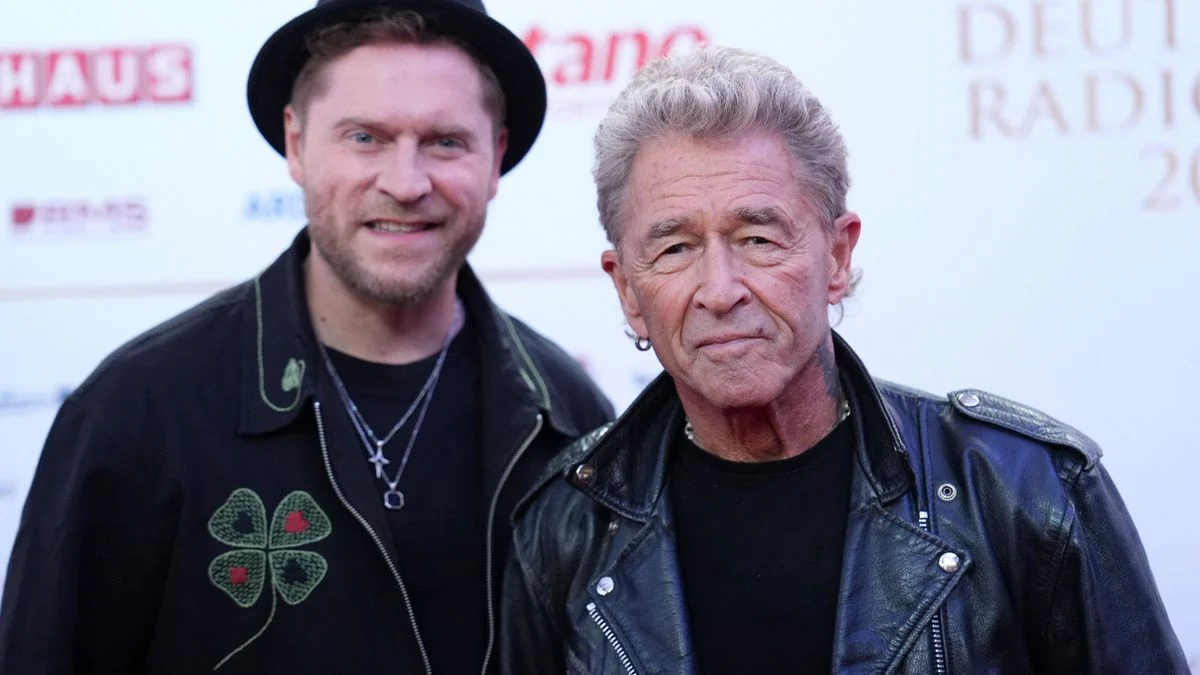
In a historic milestone for the German music industry, Peter Maffay has officially cemented his status as a national icon. With the release of his latest album, Nashville, the 77-year-old artist has secured his 22nd number-one entry on the German album charts. This achievement is not merely a personal best; it is an unprecedented feat that places him in a league of his own, surpassing every other German-speaking artist in the history of the record charts.
Released on October 2, Nashville represents a bold, Americana-infused pivot for an artist whose career has spanned over half a century. Recorded in the heart of the world’s country music capital, the album is a collaborative effort with singer-songwriter Johannes Oerding, 44. Together, the duo has crafted a record that pays homage to the roots of country-rock and blues while maintaining the narrative depth that has defined Maffay’s storied career.
The Genesis of a Record-Breaking Collaboration
The journey to Nashville began as a creative experiment between two artists separated by a generation but united by a shared musical philosophy. Both Maffay and Oerding share a profound appreciation for "handmade" music—a style that prioritizes acoustic authenticity, raw storytelling, and emotional resonance over the polished, synthetic production often found in modern pop music.
"When Johannes and I started working on Nashville, we had no idea where this journey would take us," Maffay noted in an official statement provided to the industry publication Musikwoche. "We only knew that we had a tremendous desire to make music together and to explore new territory. The fact that this project has now reached the number-one spot is something that makes us incredibly happy."
The decision to record in Nashville, Tennessee, was not merely a stylistic choice; it was an immersion. By stepping into the epicenter of the country music world, Maffay and Oerding sought to capture the grit and soul of the genre. The resulting sound is a departure from the stadium-rock anthems that characterized much of Maffay’s 1980s and 90s output, leaning instead into the storytelling traditions of the American South.
A Career Defined by Evolution: From Kronstadt to the Charts
To understand the magnitude of Maffay’s achievement, one must look at the trajectory of a man who has become a permanent fixture in the German cultural landscape. Born Peter Alexander Makkay in 1949 in Kronstadt (now Brașov, Romania), Maffay is the most prominent living representative of the Transylvanian Saxons. His family’s migration to Germany in 1963 marked the beginning of a life that would eventually redefine the parameters of German popular music.
Chronology of a Musical Titan
- 1960s: Following his arrival in Germany, Maffay began honing his craft, eventually finding his footing in the burgeoning folk-rock scene.
- 1970s: Maffay established himself as a powerhouse, with hits like "Du" becoming essential anthems of the decade.
- 1980s: This period saw his transition into a rock superstar. His ability to fill stadiums cemented his status as a cultural phenomenon.
- 1990s–2000s: Maffay demonstrated his versatility, notably launching the Tabaluga project—a series of children’s musicals that captured the hearts of generations and showcased his ability to bridge the gap between adult rock and family-oriented storytelling.
- 2010s–Present: Maffay continued to innovate, experimenting with diverse genres, including rap collaborations and, most recently, the Americana-inspired sound of Nashville.
With over 50 million records sold across a 55-year career, Maffay’s impact is difficult to quantify. He has survived the digital transition of the music industry, the shifting tastes of the German public, and the inevitable cycle of trends, remaining consistently relevant while others have faded into obscurity.
Supporting Data: The Charts and the Competition
The week of the Nashville release saw significant movement in the German charts, confirming that the appetite for established artists remains robust.
- The Top Tier: Peter Maffay’s Nashville claimed the top spot, followed closely by the critically acclaimed Danger Dan with his album Keine Angst. The third position was occupied by the Beatles’ newly remastered edition of the classic Rubber Soul.
- The Singles Market: The singles chart remains dominated by international powerhouses. Taylor Swift continues her reign with "Patient Zero," followed by a collaboration between Shakira and Burna Boy, whose track "Dai Dai" has emerged as a major hit. The top five is rounded out by the Israeli band Temper City with their track "Self Aware."
The success of Nashville amidst such competition highlights the enduring loyalty of Maffay’s fanbase, which spans multiple generations. Unlike many artists who rely on nostalgic tours, Maffay has managed to maintain his chart dominance by constantly evolving his sound, proving that his audience is willing to follow him into new musical territories.
Official Responses and Industry Implications
The industry reaction to Maffay’s 22nd number-one album has been one of reverence. Musikwoche, the authoritative voice on the German music business, noted that this achievement effectively places Maffay in a category of his own. By breaking his own record, he has raised the bar for what longevity in the German music industry looks like.
For Johannes Oerding, the collaboration serves as a validation of his own trajectory. Oerding, who has carved out his own successful career as a singer-songwriter, has found in Maffay a mentor and a creative equal. Their success suggests a growing trend in the industry: established icons reaching back to collaborate with younger, respected artists to create "organic" music that cuts through the noise of the algorithm-driven streaming era.
The Broader Context: Danger Dan and the Political Dimension
While Maffay’s success dominated the headlines, the presence of Danger Dan at number two on the album charts warrants significant attention. Danger Dan, a musician known for his biting, politically charged lyrics, has become a focal point of cultural debate in Germany.
Following the release of his album Keine Angst, Danger Dan has been involved in several public discussions regarding the role of the artist in modern society. His work frequently addresses the intersection of art, censorship, and political activism. In a recent interview, he touched upon the complexities of his public persona, specifically addressing his stance on violence and his frustrations with institutional gatekeeping, such as his high-profile disagreements with public broadcasters like the ZDF.
The fact that these two artists—the legendary, rock-and-roll titan Maffay and the provocative, socially conscious Danger Dan—are occupying the top spots on the charts speaks to the diversity of the German music scene. It reflects a nation that values both the historical continuity of its musical legends and the disruptive, critical voices of its contemporary poets.
Conclusion: A Legacy Secured
As Peter Maffay looks back on more than half a century of professional performance, the success of Nashville serves as a testament to his adaptability. He has not merely survived; he has thrived by refusing to remain stagnant. Whether he is performing for the masses in a stadium, recording a children’s musical, or finding the blues in the backroads of Tennessee, Maffay’s commitment to the craft remains the defining characteristic of his career.
For the German music industry, Maffay represents a standard of excellence that is becoming increasingly rare. His ability to connect with the listener, regardless of the genre or the decade, has made him more than just a musician—he is an institution. As he celebrates this record-breaking achievement, the industry is left to wonder: in an era of rapid change, how many more records does the Transylvanian Saxon have left to break? For now, the answer remains firmly in the music, and for Maffay, the journey continues.