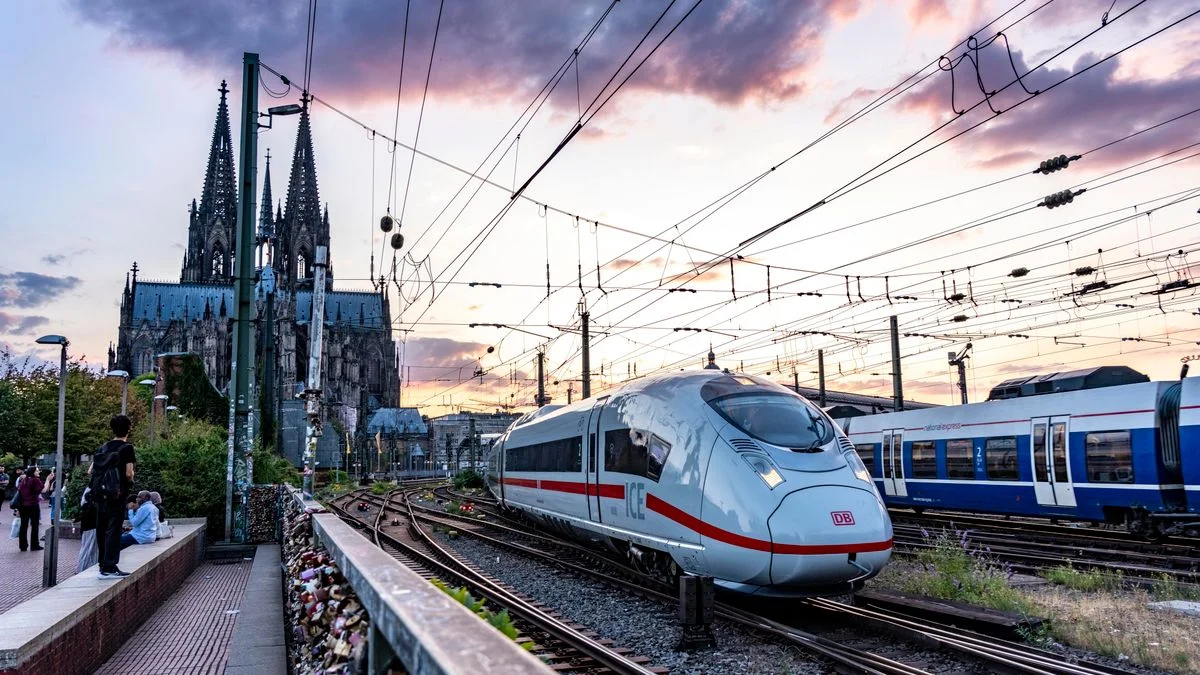
In a significant blow to the German federal government’s ambitions to liberalize the national rail network, a court has ruled that a key mandate imposed by the Federal Network Agency (Bundesnetzagentur, BNetzA) is unlawful. The decision, which is final and not subject to appeal, invalidates a directive that would have forced the state-owned infrastructure operator, DB InfraGo, to reserve substantial track capacity for private competitors on the nation’s most congested rail corridors.
The ruling creates a complex legal and operational vacuum, stalling efforts to open the German long-distance rail market to international players—most notably the Italian operator Italo—ahead of their planned entry in 2028.
The Core Dispute: Mandatory Competition Clauses
On July 17, the Bundesnetzagentur issued an order requiring DB InfraGo to allocate at least 25% of track capacity on highly utilized rail corridors to competitors. This policy was specifically targeted at bottlenecks where "capacity ceilings" have been formally designated, including the critical transport hubs of Munich and Frankfurt.
The agency’s rationale was rooted in the promotion of fair competition. By mandating a quota, regulators sought to ensure that new market entrants would not be "crowded out" by the incumbent, Deutsche Bahn, on the most profitable routes. However, DB InfraGo, the subsidiary of Deutsche Bahn responsible for the country’s rail infrastructure, immediately launched an emergency legal challenge against the order.
The company argued that the BNetzA’s directive would create a logistical nightmare. DB InfraGo contended that the mandated quota would lead to a surge in conflicts regarding track usage at specific times, effectively paralyzing the efficient scheduling of trains. From the operator’s perspective, the mandate ignored the practical realities of managing a complex, overloaded rail network where every minute of track time is accounted for.
Chronology of the Regulatory Stand-off
- Early 2024: The Italian rail company Italo announces its intention to enter the German long-distance market by 2028, signaling a major challenge to Deutsche Bahn’s domestic dominance.
- July 17, 2024: The Bundesnetzagentur issues a formal directive requiring DB InfraGo to reserve 25% of capacity on high-traffic corridors for competitors.
- Late July 2024: DB InfraGo files an emergency motion, claiming the mandate is legally baseless and operationally unfeasible.
- August 2024: The court issues its final, non-appealable decision, declaring the BNetzA’s resolution unlawful.
Judicial Reasoning: A Lack of Legal Basis
The court’s decision was not merely based on operational concerns but on a fundamental lack of legal authority. In its written opinion, the court stated clearly that neither European Union directives nor national German railway regulation law contains any provision that empowers the regulator to force a rail infrastructure operator to include a "competitor clause" in its standard terms and conditions.
Furthermore, the court questioned the efficacy of the measure, suggesting that even if it were legal, the clause as drafted was fundamentally "unsuitable" for achieving its stated goal of fostering healthy competition. By imposing a rigid percentage-based quota, the regulator arguably overstepped its role, intervening in the technical management of infrastructure in a way that the legislature never intended.
The Context: Italo’s Multi-Billion Euro Ambitions
The regulatory struggle is inextricably linked to the arrival of Italo. The Italian operator is not merely testing the waters; it is preparing for a massive, capital-intensive entry into the German market.
In mid-July, Italo sent shockwaves through the industry by announcing a monumental investment package totaling approximately 3.6 billion euros. A significant portion of this—around 3 billion euros—is earmarked for the procurement of 26 high-speed trains from Siemens Mobility, with an option for 14 additional units.

Beyond the hardware, Italo’s strategy is comprehensive:
- Human Capital: The company plans to hire and train 2,500 employees, ranging from administrative staff to conductors and engineers.
- Infrastructure & Tech: Significant funds are dedicated to upgrading IT infrastructure and securing station access to ensure a seamless passenger experience.
- Market Positioning: Italo-CEO Gianbattista La Rocca has been vocal about his company’s mission, promising German passengers "greater choice, more frequent connections, fair prices, and high-quality service."
The conflict arises because these grand plans require access to the "crown jewels" of the German rail network—the high-speed lines that are already operating at or near maximum capacity.
Implications for the German Rail Market
The court’s ruling serves as a cautionary tale for regulators attempting to force market liberalization through administrative mandates.
The Regulatory Challenge
The Bundesnetzagentur now finds itself in a difficult position. The mandate was designed to preemptively solve the problem of market entry barriers. With this tool invalidated, the agency must find alternative ways to ensure fair access without violating the operational autonomy of DB InfraGo. Critics of the ruling argue that without such quotas, the incumbent will always prioritize its own trains, making it virtually impossible for private firms like Italo to operate high-frequency, reliable services on the most desirable lines.
Operational Stability vs. Liberalization
For DB InfraGo, the ruling is a victory for operational stability. The company maintains that managing an overburdened network is a delicate balancing act. Allowing regulators to impose quotas, they argue, risks ignoring the physics of train scheduling—where one delayed train can cause a cascade of delays across the entire network. However, this victory may be short-lived if the government decides to amend the legislation to give the BNetzA the explicit legal authority it currently lacks.
The Investor Perspective
For Italo and other potential competitors, the legal uncertainty is a significant risk factor. A 3.6-billion-euro investment is predicated on the ability to access profitable routes. If the infrastructure operator remains the sole gatekeeper without regulatory oversight, private operators may find themselves relegated to "off-peak" slots, which would undermine their business models and limit the benefits to the end consumer.
Future Outlook: A Legislative Pivot?
The ruling shifts the burden from the courts to the German parliament (Bundestag). If the federal government remains committed to its goal of introducing more competition into the long-distance rail sector, it will likely need to draft new, more robust legislation that explicitly defines the powers of the Bundesnetzagentur.
This legislative route, however, is fraught with political difficulty. It requires balancing the need for competition with the requirement to keep the national rail system running smoothly during an era of significant infrastructure renovation. As Germany continues to modernize its tracks, the tension between infrastructure management and market access will only intensify.
For now, the court has drawn a firm line in the sand: the regulator cannot simply mandate market share through administrative decree. The future of German rail liberalization will now depend on a more complex negotiation between the state, the infrastructure operator, and the ambitious newcomers looking to challenge the status quo. Whether this leads to a more transparent regulatory framework or a continued stalemate remains to be seen. One thing is certain: the 2028 entry of Italo is shaping up to be not just a commercial battle, but a fundamental test of Germany’s legal and regulatory capacity to manage a modern, competitive railway system.