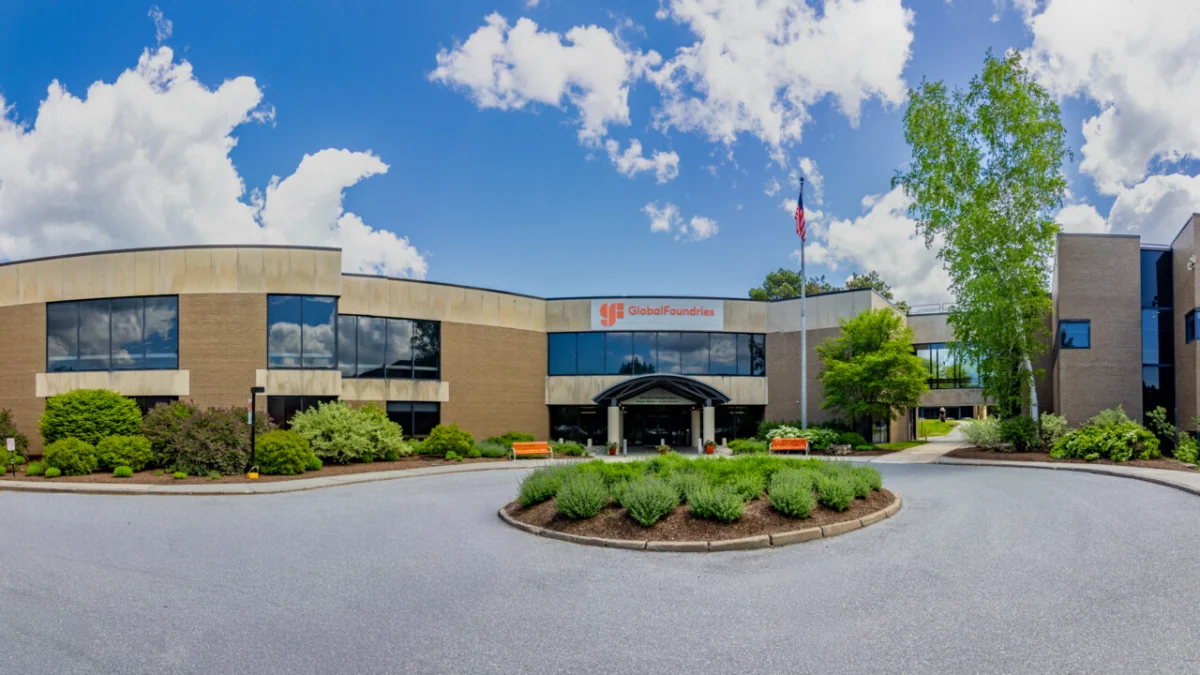
In a landmark agreement that signals a pivotal shift in the global semiconductor landscape, GlobalFoundries (GF) has secured a five-year, $2 billion contract to manufacture silicon interposers for TSMC, the world’s leading semiconductor foundry. This partnership, which bridges the gap between two of the industry’s most critical players, is designed to address the chronic supply chain bottlenecks currently stifling the production of high-performance artificial intelligence (AI) accelerators.
By integrating GlobalFoundries’ manufacturing prowess into TSMC’s sophisticated CoWoS (Chip-on-Wafer-on-Substrate) ecosystem, the deal represents more than just a business transaction; it is a tactical maneuver to bolster the United States’ domestic chip-making infrastructure.
The Core of the Deal: Interposers and AI Accelerators
At the heart of this agreement is the production of "interposers." In the era of massive AI computing, standard chip-making is no longer sufficient. Modern AI accelerators—such as those produced by NVIDIA or AMD—require a complex assembly where high-performance processors and high-bandwidth memory (HBM) are stacked together. The interposer acts as the vital, high-speed "bridge" or foundation that allows these disparate components to communicate with minimal latency.
TSMC’s CoWoS technology is the industry gold standard for this advanced packaging. However, the demand for CoWoS has outpaced global supply for years, creating a "bottleneck" that has left major tech companies clamoring for more capacity. By outsourcing the production of these foundational interposers to GlobalFoundries’ facility in Malta, New York, TSMC can offload a critical manufacturing segment, allowing its own facilities to focus on the high-complexity logic die fabrication.
Chronology: A Path to 2028
While the ink on the contract is fresh, the integration of these processes will be a multi-year undertaking.
- Q3 2024: GlobalFoundries and TSMC announce the $2 billion strategic partnership. The agreement is set for an initial five-year term, with provisions for future capacity expansion.
- 2025–2027: The companies will engage in rigorous technology transfers and facility upgrades at GlobalFoundries’ New York site. This period involves calibrating the "Fab 8" facility to meet the stringent, high-precision requirements of TSMC’s packaging standards.
- Early 2028: The projected commencement of serial, high-volume production of interposers.
- 2028 and Beyond: The partnership is expected to reach full operational capacity, providing a steady stream of U.S.-made components to support the next generation of AI infrastructure.
Supporting Data: The Scale of the Semiconductor Crisis
The semiconductor industry is currently navigating a period of unprecedented volatility. The "AI Boom," triggered by the success of Large Language Models (LLMs), has created a surge in demand that legacy supply chains were never designed to accommodate.
GlobalFoundries’ involvement is a calculated response to this demand. The company, which emerged from the divestment of AMD’s manufacturing arm, has spent the last decade positioning itself as a reliable foundry for essential, non-leading-edge, yet high-value components.
The $2 billion investment is bolstered by broader government support. In July 2024, the U.S. Department of Commerce awarded GlobalFoundries significant funding—roughly $300 million—to accelerate the development of silicon photonics. This is a critical technological synergy; as interposers grow more complex, integrating optical data transmission (silicon photonics) directly into the packaging will become the next hurdle for AI performance. By building the interposer capacity now, GlobalFoundries is laying the groundwork to become an indispensable hub for the future of heterogeneous computing.
Implications for U.S. Sovereignty and the Taiwan Dependency
The geopolitical subtext of this deal cannot be overstated. For years, the U.S. government has sought to reduce the "Taiwan dependency" in semiconductor manufacturing. Even with TSMC building state-of-the-art fabs in Arizona, the final assembly and packaging—a crucial stage of production—often still required shipping chips back to Taiwan.
This reliance on international shipping for packaging creates a single point of failure in the global supply chain. By localizing the production of interposers in New York, the U.S. is effectively creating a more resilient "closed loop."
TSMC’s strategy in the U.S. has been cautious. They have prioritized the construction of wafer fabrication plants (the "front-end") over packaging facilities (the "back-end"). Recognizing that this could leave a vulnerability in their U.S. production line, TSMC has diversified its partnerships. They have already entered a long-term agreement with Amkor Technology for packaging services in Arizona, with operations expected to scale in the 2028–2029 window. By adding GlobalFoundries to this network, TSMC is ensuring that their U.S.-based output is not just a collection of scattered fabs, but a cohesive, self-sustaining ecosystem.
Official Perspectives and Industry Outlook
In a joint statement, representatives from both firms emphasized the collaborative nature of the effort. "This is not just about capacity; it is about building a sustainable and resilient supply chain for the AI era," noted an industry analyst close to the negotiations.
For GlobalFoundries, this deal is a transformative "win." It cements their status as a tier-one partner for the industry’s most powerful player. For TSMC, it represents a pragmatic solution to a difficult logistical problem: how to scale AI production in a region where they do not yet have the full, end-to-end infrastructure established.
The market reaction has been cautiously optimistic. While the 2028 timeline means that the immediate AI supply crunch will not be solved overnight, the long-term nature of the deal provides stability for investors and manufacturers alike.
The Future of Heterogeneous Integration
As we look toward the end of the decade, the concept of a single "CPU" is fading in favor of complex chiplets. These chiplets are stitched together on interposers to form "super-chips." The success of the GlobalFoundries-TSMC partnership will likely dictate the speed at which AI hardware can evolve in the North American market.
If successful, the Malta, New York facility will move from a standard semiconductor factory to a specialized hub of advanced packaging. This will likely draw further investment into the region, potentially creating a "silicon corridor" that integrates research, fabrication, and the advanced packaging required to fuel the next wave of the digital revolution.
In conclusion, the $2 billion agreement is a hallmark of the new era of "collaborative competition." By aligning their respective strengths, TSMC and GlobalFoundries are not just addressing a manufacturing shortfall; they are architecting the physical foundation upon which the future of artificial intelligence will be built. For the U.S., it is a vital step toward securing its place in the global semiconductor hierarchy, ensuring that the critical hardware required for the next decade of innovation is built on home soil.