The global tourism landscape remains under significant strain as the travel conglomerate TUI AG faces a cooling period in its 2025/26 fiscal year. Confronted with the ongoing consequences of the Iran-led conflict in the Middle East and a marked shift in consumer behavior, the company has been forced to recalibrate its financial expectations. Despite these headwinds, strategic price adjustments and a robust performance in the cruise sector provide a measure of resilience.
1. Executive Summary: The Financial Recalibration
As the 2025/26 fiscal year draws to a close, TUI AG, a titan in the travel industry, has issued a sobering update to its investors. The company has revised its earnings guidance for the year, tightening its projected range for the adjusted operating result (EBIT) to between €1.2 billion and €1.3 billion. This represents a downward adjustment from the previously forecasted range of €1.1 billion to €1.4 billion, underscoring the volatility impacting the sector.
The primary catalyst for this shift is the persistent instability in the Middle East. The conflict, which began earlier this year, created a ripple effect that destabilized booking confidence and forced the company to curtail its operational capacity by approximately five percent. While TUI has maintained a cautious approach to capacity management, the external shocks have proven difficult to absorb entirely through operational efficiency alone.
2. Chronology of a Challenged Fiscal Year
The trajectory of the 2025/26 fiscal year for TUI has been defined by a series of geopolitical events that dictated corporate strategy.
- Early 2026 (The Onset of Crisis): The outbreak of hostilities involving Iran sent shockwaves through the global travel industry. TUI was forced to respond immediately, with two vessels from the TUI Cruises fleet stranded in the Persian Gulf, necessitating rapid logistical pivots.
- April 2026 (The Strategic Pivot): Recognizing the gravity of the situation, CEO Sebastian Ebel took the decisive step of withdrawing the initial revenue guidance and lowering profit targets. The company effectively "de-risked" its portfolio by slashing travel offerings in the affected regions.
- Mid-2026 (The Shift in Consumer Habits): As the conflict persisted, a secondary, structural shift became apparent: the "Last-Minute Trend." Consumers, wary of the unpredictable security and economic environment, shifted from traditional long-term planning to near-term booking windows.
- September 2026 (The Current Update): With the fiscal year closing in late September, TUI confirmed that while the booking dynamic has shown signs of marginal improvement in the last four weeks, the cumulative impact of lower demand in both the summer and upcoming winter seasons necessitated the latest earnings guidance update.
3. Deep Dive: Supporting Data and Operational Metrics
While the aggregate figures suggest a contraction, a granular analysis reveals a more nuanced picture of TUI’s operational health.
The Impact of Demand Fluctuations
The core package tour business has faced sustained pressure. Data indicates a five percent decline in volume for the recently concluded summer season, while the outlook for the upcoming winter season currently trails the previous year’s figures by seven percent. These numbers highlight the difficulty of forecasting demand in an environment defined by high economic uncertainty and geopolitical fragility.
Pricing Power as a Buffer
TUI’s ability to defend its margins is largely attributable to strong pricing power, which has partially offset the decline in volume.
- Hotels and Resorts: Throughout the final quarter (July to September), average daily rates for properties such as RIU and TUI Blue increased by four percent year-over-year.
- The Cruise Resilience: Perhaps the most significant "bright spot" in the portfolio is the cruise division. Despite the geopolitical noise, TUI Cruises, Marella, and Hapag-Lloyd have maintained high occupancy levels, comparable to the previous year. Pricing in this segment saw a two percent increase, proving that the luxury and experiential travel segments remain less sensitive to macro-volatility than mass-market package tourism.
4. Official Responses and Strategic Maneuvering
The management at TUI, led by CEO Sebastian Ebel, has emphasized "flexibility" as the cornerstone of their current strategy. In an official statement, the company noted: "In this environment, we continue to manage our capacities cautiously and maintain the flexibility to adjust them in line with customer demand."
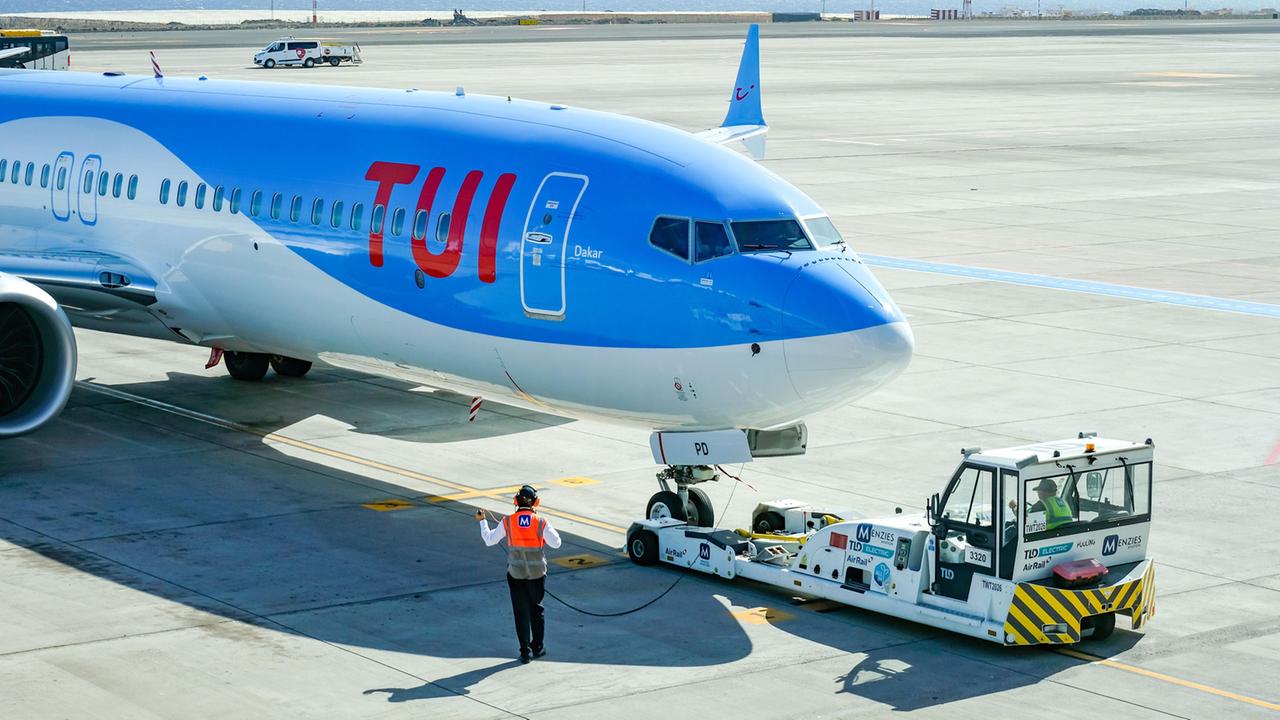
This strategy involves a delicate balancing act. By not over-committing to flight and hotel capacity, TUI avoids the costly overhead of underutilized assets, yet it risks losing market share if demand rebounds faster than anticipated. The leadership team is clearly prioritizing balance sheet stability over aggressive top-line growth until the geopolitical horizon clears.
5. Market Implications: The Stock Market Rollercoaster
The financial disclosure triggered significant volatility in TUI’s share price, reflecting the market’s internal debate over the company’s future.
Intraday Volatility
On the day of the announcement, TUI shares experienced a sharp "swing" in sentiment. In early trading, the stock dipped by as much as 2.1 percent, reaching its lowest point since mid-May as investors reacted to the narrowed earnings guidance. However, as the afternoon progressed, the narrative shifted. The stock rebounded, finishing the day up two percent.
The Macro-Correlation
This recovery was not merely a reaction to internal company news but was bolstered by a broader market rally. The DAX (the German stock index) rose by 0.5 percent to 25,700 points, driven by renewed optimism regarding diplomatic developments. Reports suggesting that Tehran has signaled a willingness to engage in new negotiations—coinciding with potential high-level discussions between US officials and Iranian representatives at the UN General Assembly—provided a "peace premium" that lifted the entire travel sector.
6. Outlook: What Lies Ahead?
The tourism sector is currently a bellwether for global stability. For TUI, the roadmap is clear but demanding. The company is scheduled to release its comprehensive, audited financial results for the 2025/26 fiscal year on December 9, 2026.
Investors and analysts will be looking for three key indicators in the December report:
- Winter Season Forward Bookings: Whether the slight improvement seen in the last four weeks of September has gained momentum.
- Cost Mitigation: How effectively the company has managed overheads in the face of reduced capacity.
- Debt Management: As the company transitions out of this period of high volatility, its ability to service debt and fund future investments in digital transformation and sustainable travel will be under the microscope.
While the "Iran-Krieg" (Iran War) impact has undoubtedly been a significant drag on TUI’s performance, the company’s ability to command higher prices suggests that the fundamental demand for travel remains intact. The challenge for TUI, and indeed for the entire tourism industry, is to navigate the unpredictable intersection of geopolitical conflict and shifting consumer confidence until a more stable equilibrium is reached. As it stands, TUI remains a resilient, albeit cautious, operator in a world that is currently testing the limits of international travel.