


By Science Editorial Staff
Updated: October 8, 2026
For decades, the standard advice from nutritionists and public health experts has focused on the "Big Three": carbohydrates, fats, and proteins. We are taught that if the calorie count is identical and the macronutrient ratios match, the body should process two meals in the same way. However, a groundbreaking study from the Fralin Biomedical Research Institute at Virginia Tech (VTC) has challenged this fundamental assumption, suggesting that the degree of food processing—the "how" rather than the "what"—fundamentally alters our physiological and neurological response to eating.
The Ubiquity of Ultra-Processed Foods
In the modern dietary landscape, ultra-processed foods (UPFs) have become a cornerstone of daily consumption. Designed for convenience, shelf-stability, and hyper-palatability, these products are engineered to hit the "bliss point" of human taste buds.
In Germany, estimates suggest that between 40% and 50% of the average daily caloric intake comes from these processed sources. The situation is even more pronounced in the United States, where some studies suggest that more than half of all food consumed falls into this category. Because these items are affordable, accessible, and require minimal preparation, they have become the default for busy households.
However, this convenience comes at a significant cost. Extensive epidemiological research has long linked diets high in UPFs to a cluster of chronic health conditions, including obesity, cardiovascular disease, type 2 diabetes, and even adverse effects on mental health. Until now, the debate has centered on whether these outcomes were simply a byproduct of the poor nutrient profile—excessive sugar, high sodium, and a lack of essential fiber—or if the processing itself plays a more sinister, hidden role.
The Quest for the "Processing Effect"
Dr. Alex DiFeliceantonio, lead researcher at the Fralin Biomedical Research Institute, sought to isolate the variable of processing.
"We know that the vast majority of ultra-processed foods are high in fat and sugar while being sparse in fiber and protein," Dr. DiFeliceantonio explained. "But the critical question we wanted to answer was: If we hold all those traditional markers constant—if we keep the macronutrient profile, the calorie count, the water content, and the salt levels identical—is there something inherent to the structural processing of the food that triggers a different biological cascade?"
To solve this, the team designed a study that would be the nutritional equivalent of a controlled lab experiment, stripping away the usual "confounding variables" that make nutrition research notoriously difficult.
Chronology: The Methodology of the Study
The research team recruited 57 healthy participants aged 18 to 45. To ensure accurate comparisons, each participant was required to consume two distinct, meticulously crafted 300-calorie meals, spaced at least three days apart. The participants arrived at the lab after an overnight fast, ensuring that their metabolic baseline was standardized.
The Two-Meal Comparison
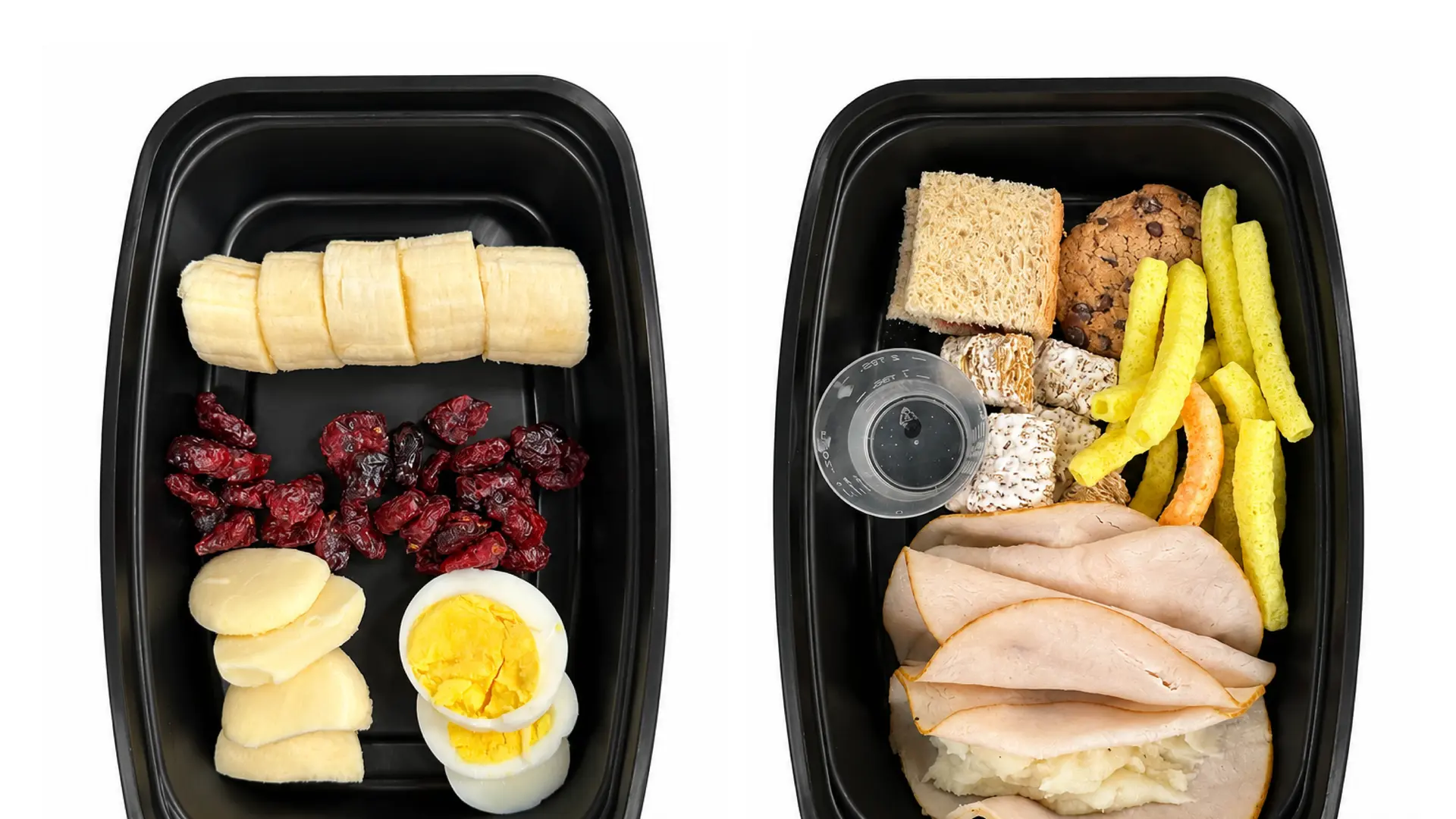
The "ultra-processed" meal consisted of a complex assembly: a peanut butter and jelly sandwich, turkey deli meat, vegan-friendly fries, a commercial cookie, breakfast cereal, instant mashed potatoes, and water.
The "minimally processed" meal consisted of whole-food equivalents: a sliced banana, dried cranberries, cheese, and a hard-boiled egg.
"We worked extensively to ensure these two meals were identical in carbohydrates, fats, proteins, calories, water, and salt," said Zach Hutelin, the study’s lead author. "We achieved a match within one percent. This was essential to ensure that any difference we observed could be attributed solely to the processing of the food."
Metabolic Monitoring
Following the consumption of each meal, researchers collected seven blood samples over a set period. This allowed them to map the metabolic "aftermath" of the food in real-time, focusing on insulin response, energy expenditure, and carbohydrate oxidation.
The results were immediate and startling. "We were surprised that every single metabolic parameter we measured was different," Hutelin noted. The ultra-processed meal triggered a significantly higher insulin response, and blood glucose levels remained elevated longer and declined more slowly than they did after the minimally processed meal.
Supporting Data: The Brain’s Reward System
The study did not stop at the digestive system; it ventured into the neurological impact of food. In a secondary trial involving 32 of the original participants, researchers used imaging to observe brain activity.
Participants were shown images of the foods from the study and asked to bid on how much they would be willing to pay for them. This behavioral economic task allowed the team to measure the "reward value" of the food. The imaging revealed that the brain’s reward centers showed significantly higher activation when participants were presented with the ultra-processed options compared to the minimally processed, whole-food alternatives.
This suggests that ultra-processed foods may have a "hijacking" effect on the brain’s decision-making pathways, potentially explaining why it is so difficult for consumers to stop at a single serving.
Implications for Public Health Policy
The implications of these findings are profound. If the processing method itself—the physical and chemical restructuring of ingredients—leads to a more aggressive insulin response and higher reward-center activation, then the current focus on "calories in, calories out" (CICO) is an incomplete model for obesity prevention.
Redefining "Healthy"
For decades, nutrition labels have focused on the chemical composition of food. This study suggests that the "degree of processing" should perhaps be a mandatory component of dietary guidelines. If a food is hyper-processed, its impact on the metabolic system is more taxing, regardless of whether the fat and sugar content appear "moderate" on the back of the package.
Future Research Directions
The research team at Virginia Tech hopes that this study will pave the way for a deeper investigation into the mechanics of food processing. They argue that understanding why these foods lead to overconsumption and metabolic distress will allow for the development of new dietary strategies. Instead of simply counting grams of protein or fat, future nutritional advice might prioritize the "structural integrity" of the food itself.
Expert Reactions and Public Health Perspectives
Public health experts who reviewed the findings have noted that this research adds a vital piece to the puzzle of the modern obesity epidemic. By stripping away the common excuses for why UPFs are harmful—like "it’s just the high sugar"—this study points to a more fundamental issue: our bodies are not evolutionarily equipped to handle the rapid-fire metabolic spike caused by highly engineered food structures.
Furthermore, the connection to mental health, hinted at by the brain imaging results, suggests that the cycle of consumption is not merely a matter of willpower. When the brain’s reward systems are consistently over-stimulated by ultra-processed textures and compositions, the resulting behavioral patterns—binge eating or craving-driven consumption—become a logical, albeit unhealthy, biological reaction to an engineered environment.
Conclusion: A New Way Forward
As we continue to navigate a food environment saturated with ultra-processed choices, the Virginia Tech study serves as a critical reminder that biology is complex. We are not just fueling a machine with basic macronutrients; we are interacting with food in a way that involves hormonal, metabolic, and neurological feedback loops.
Moving forward, the goal for nutrition science must be to bridge the gap between "convenient" and "nutritious." Until then, consumers are encouraged to view food not just as a list of ingredients, but as a product of technology that may be fundamentally misaligned with our metabolic needs. As the study concludes, the processing of food influences our internal systems in ways that transcend the simple numbers on a nutrition label, necessitating a more nuanced approach to how we feed ourselves and our families.













