Nearly three decades after the brutal execution of Manfred Meisel, the legendary founder of Mallorca’s iconic "Bierkönig" nightclub, investigators have finally received a breakthrough. Following a detailed feature on the long-standing cold case in the television program Aktenzeichen XY… International this past Wednesday, the Frankfurt Public Prosecutor’s Office has reported an influx of over 50 new tips. This development marks a potential turning point in one of the most enigmatic and high-profile murder cases involving German citizens on Spanish soil.
The Night of the Crime: A Professional Execution
The tragedy unfolded in the early hours of November 12, 1997, on a remote finca near S’Aranjassa, Mallorca. Manfred Meisel, a well-known German entrepreneur who had successfully exported the German "Ballermann" party culture to the Balearic Islands, was found dead alongside his eight-year-old son, Patrick, and his employee, Claudia Leisten.
The crime scene suggested a calculated, professional operation. There were no signs of a disorganized struggle; rather, the victims were executed in a manner that indicated the perpetrators were highly skilled and familiar with their targets’ movements. Meisel’s partner at the time, who was in Germany during the incident, was spared, leaving the authorities to grapple with a motive that spanned business rivalries, illicit trades, and personal vendettas. For 27 years, the case has remained a haunting open wound for the victims’ families and the German and Spanish law enforcement agencies tasked with solving it.
Chronology of a Cold Case
To understand the significance of the recent influx of tips, one must look at the timeline of the investigation:
- 1980s: Manfred Meisel gains prominence as a charismatic and aggressive businessman, running the "Struwwelpeter" apple wine tavern in Frankfurt’s Sachsenhausen district.
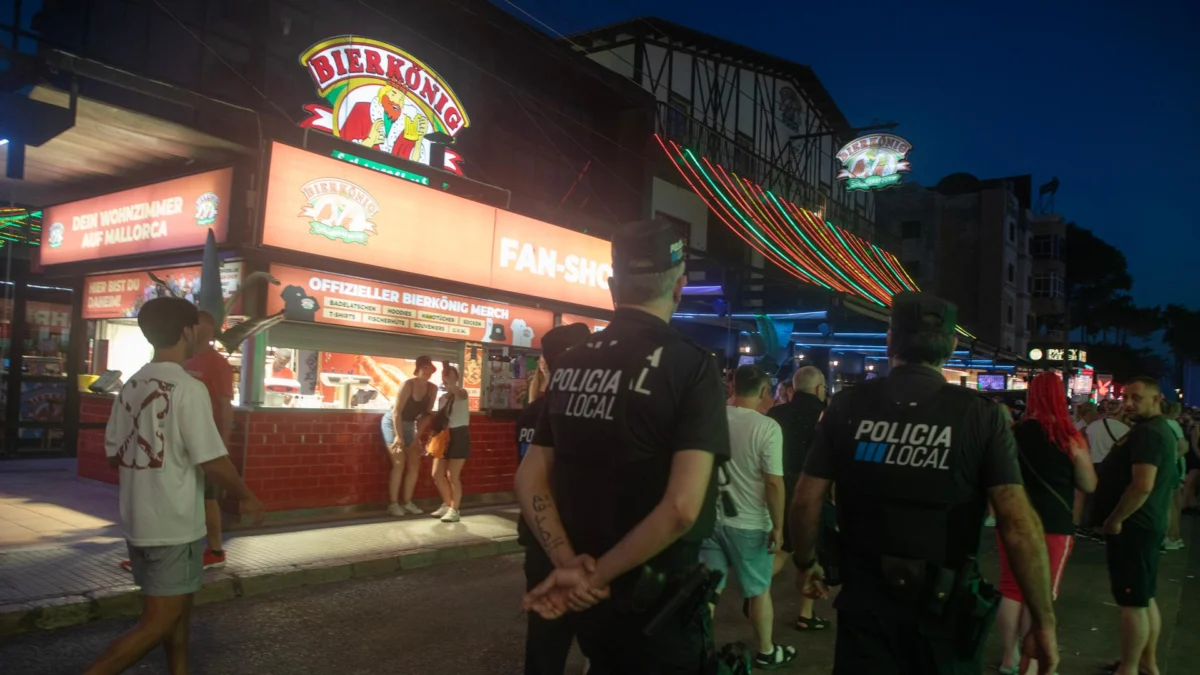
- The Mallorca Expansion: Meisel relocates to Mallorca, establishing the "Bierkönig" on the infamous Carrer del Pare Bartomeu Salvà. His venue becomes the heartbeat of the "Ballermann" party scene.
- November 12, 1997: The triple murder occurs. The precision of the killings leads investigators to suspect organized crime involvement.
- 1997–2024: Despite the collection of over 300 witness testimonies and numerous theories ranging from commercial disputes to international smuggling rings, the trail goes cold repeatedly.
- October 2024: The Frankfurt Public Prosecutor’s Office, in collaboration with the Aktenzeichen XY production, broadcasts a fresh appeal for information, highlighting the "loyalty shifts" that occur over decades.
The Motive: Rivalries and the "Parrot Mafia"
The investigation into Meisel’s death has always been complicated by his multifaceted business interests. While the "Bierkönig" was his most visible success, it was also the source of significant tension. Reports from the time suggest that Meisel was viewed as an "aggressive businessman" by his peers, a trait that inevitably created enemies in the cutthroat environment of Mallorca’s nightlife industry.
However, a more bizarre and distinct theory has persisted for years: the involvement of the so-called "Parrot Mafia." Beyond his nightlife empire, Meisel maintained a private finca where he kept a highly valuable, exotic bird collection. In the 1990s, the illegal trade of rare parrots was a lucrative underworld market. Authorities investigated whether Meisel’s bird collection was merely a hobby or if he had become entangled with criminal syndicates operating in the illegal wildlife trade. The intersection of the party scene and the exotic pet trade remains one of the most compelling avenues of the investigation.

Official Responses: "Loyalty Shifts" and Renewed Hope
The recent broadcast of Aktenzeichen XY appears to have struck a chord. According to a spokesperson for the Frankfurt Prosecutor’s Office, the response was immediate and overwhelming. By midnight, more than 50 tips had been logged.
Perhaps most significant is the nature of these tips. Investigators have hinted that the passage of time—nearly 30 years—has fundamentally changed the landscape of the investigation. "It appears that there have been shifts in loyalties among witnesses," the prosecutor’s spokesperson stated. "There is now a willingness to provide further statements that did not exist in the past."
This concept of "loyalty shifts" is common in cold cases. People who were once afraid to speak, or who felt bound by a code of silence or personal allegiance to suspects, may now feel liberated by the aging of the suspects, their own changing circumstances, or a desire to unburden themselves before they die. The authorities have not disclosed the specific nature of the new evidence, citing "investigative tactics," but the surge in interest suggests that investigators may finally have the missing pieces to connect the long-standing theories to specific individuals.
Jurisdictional Complexity: Frankfurt and Palma
Because Meisel was a German citizen and had deep roots in Frankfurt, the Frankfurt Public Prosecutor’s Office has been involved in the case since the day of the murder, working in parallel with the Spanish Guardia Civil and the local murder commission in Mallorca.
This dual-jurisdiction approach has been both a benefit and a burden. While it ensures that the case is never fully sidelined, it also necessitates complex coordination across borders. The collaboration has been essential in keeping the case active, even when local interest on the island waned. The fact that German investigators are still treating this as an active pursuit after nearly three decades speaks to the gravity of the crime and the determination of the German judicial system to see justice served.
The Implications: Why This Matters Now
The reopening of this investigation carries profound implications for the families of the victims. For nearly three decades, they have lived with the knowledge that the individuals responsible for the execution of a father and his eight-year-old child have remained at large.

Furthermore, the case serves as a dark chapter in the history of German-Spanish tourism relations. The "Ballermann" strip, while synonymous with leisure, has historically been a nexus for money laundering, turf wars, and organized crime. By revisiting this case, law enforcement is not just attempting to solve a murder; they are shedding light on the darker side of a industry that often prioritized profit over safety.
As the authorities begin to sift through the 50-plus new leads, the legal system faces the challenge of corroborating old memories with new digital and forensic possibilities. If these "loyalty shifts" lead to credible witnesses, we may finally see the culprits brought to justice.
The death of Manfred Meisel was a sensationalized event in the late 90s, often reduced to tabloid fodder about the "Bierkönig" and his exotic birds. Today, however, it is being treated with the clinical, sober focus that a triple homicide demands. Whether these leads will result in indictments remains to be seen, but for the first time in a generation, there is a tangible sense that the truth behind the S’Aranjassa murders is no longer buried in the past.
The Frankfurt Public Prosecutor’s Office has reiterated that the investigation remains ongoing, and they continue to urge anyone with even the smallest detail to come forward. After 27 years of silence, the wall of secrecy surrounding the "Bierkönig" murder finally appears to be crumbling.