


By Sports Desk
October 8, 2026
In the high-stakes theater of modern professional football, few things are as volatile as a young talent’s career trajectory. Tom Bischof, the 21-year-old midfield orchestrator, currently finds himself living in two distinct worlds. In the white jersey of the German national team, he has emerged as the heartbeat of a tactical revolution under new Bundestrainer Jürgen Klopp. Yet, upon returning to the daily grind at Säbener Straße, he faces the cold, hard reality of the FC Bayern Munich pecking order.
As the international break concludes, the narrative surrounding Bischof has shifted from "promising prospect" to "established international performer." However, his path to a starting spot at the Allianz Arena remains obstructed by the entrenched hierarchy of the Bavarian giants.
The Main Facts: A Tale of Two Roles
The crux of the matter is straightforward but daunting for the youngster: Tom Bischof has become a focal point for Germany, but he remains a secondary option for Bayern Munich head coach Vincent Kompany.
Under Jürgen Klopp, the German national team has undergone a radical transformation. Moving away from the rigid structures of the previous era, Klopp has prioritized pace, aggressive pressing, and fluidity. Bischof, with his low center of gravity, laser-like passing range, and instinctive tactical awareness, has been the primary beneficiary of this philosophy.
Conversely, at Bayern Munich, the midfield composition is dominated by the established partnership of Joshua Kimmich and Aleksandar Pavlović. These "Platzhirsche" (top dogs) define the club’s current rhythm, leaving little room for a creative pivot like Bischof to break into the starting XI. While he has occasionally been utilized as a versatile defensive filler, the return of Alphonso Davies and the acquisition of Nathaniel Brown have effectively closed the door on his defensive cameos.
Chronology: The Rise of the "Bischovic" Dynamic
The Nagelsmann Era
Under former national team coach Julian Nagelsmann, Bischof was relegated to the fringes. While he was a staple of the U21 national team—serving as its captain and undisputed leader—the leap to the senior squad seemed perpetually delayed. His development was hampered by a lack of clear pathway into the senior setup, leading to stagnation in his international progression.
The Klopp Intervention
The appointment of Jürgen Klopp served as the catalyst for change. Klopp, known for his penchant for identifying and empowering young talent, immediately signaled that he would evaluate players based on current form rather than past reputation. During the recent international break, Klopp made a bold statement by granting a "vacation" to Joshua Kimmich, effectively clearing the stage for the next generation.
The Breakthrough
The match against Serbia in the Allianz Arena served as the definitive "coming out party" for the Bischof-Pavlović axis. Dubbed "Bischovic" by fans and media alike, the duo controlled the tempo of the game. Bischof’s 1st-minute opening goal was not just a statistical achievement; it was a psychological milestone. He demonstrated the grit to recover the ball in dangerous areas and the technical composure to finish with clinical precision.
Supporting Data: Why the Tactical Shift Matters
To understand the disparity in Bischof’s impact, one must look at the underlying metrics of his recent performances.
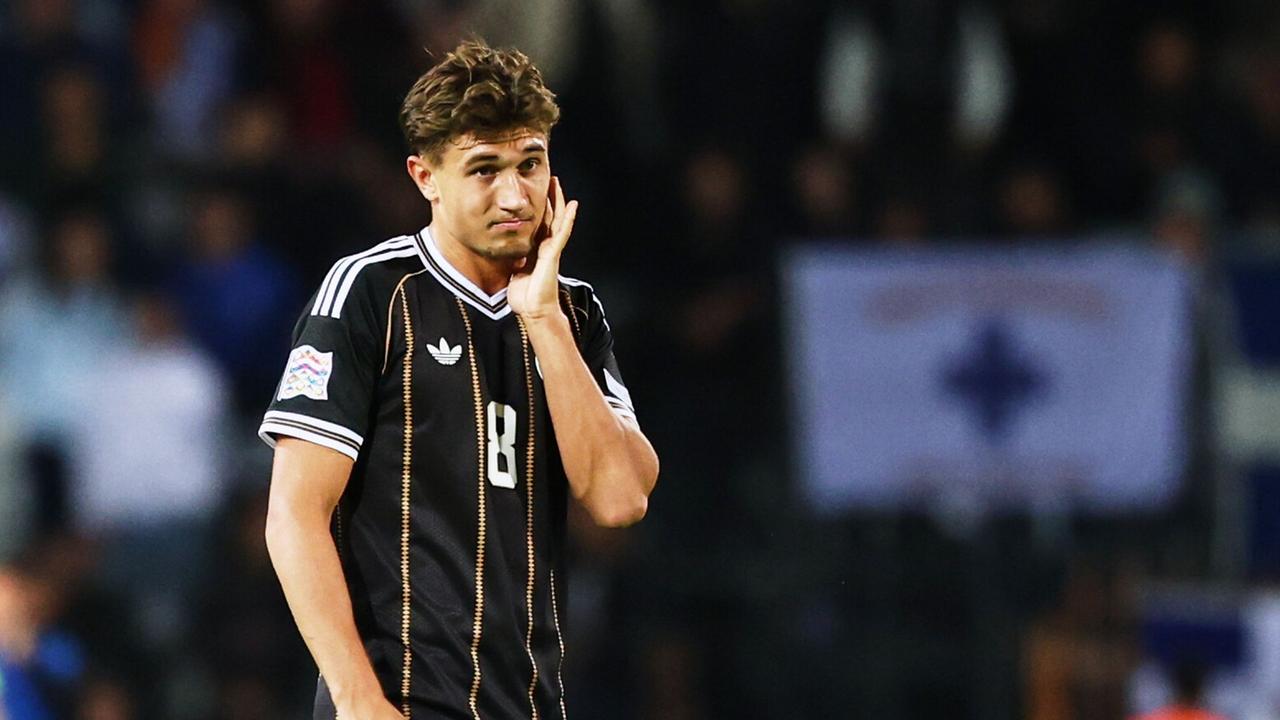
- Aggressive Pressing: In the DFB-Elf’s recent matches, Bischof recorded an average of 4.2 successful defensive actions in the final third per 90 minutes. This high-octane pressing is a hallmark of the Klopp system, which relies on winning the ball back instantly after a turnover.
- Offensive Output: Beyond his goal against Serbia, Bischof maintained an 88% pass completion rate, with a high frequency of "key passes" (passes leading to a shot).
- The Bayern Comparison: At FC Bayern, the Kimmich-Pavlović duo functions as a stabilizing, ball-retention unit. Their role is to dictate the game through measured possession. While highly effective, this system is inherently more conservative than the one Klopp has implemented for the national team.
The challenge for Bischof is that he is currently being asked to play two different sports. One requires the lung-busting, high-intensity pressing of a "Kloppian" number eight; the other requires the measured, disciplined positioning of a "Kompany" holding midfielder.
Official Perspectives and Behind the Scenes
The internal tension at Bayern Munich is palpable. While Vincent Kompany has publicly praised Bischof’s growth, he remains committed to the team’s structural integrity.
"Tom is a player of immense quality," Kompany noted during a press conference following the international break. "He has shown his worth in the national shirt, and we are proud of that. However, the balance of our midfield is delicate. We have players who have delivered consistently for years, and breaking that rhythm requires more than just a few good games for another team."
Conversely, the camp surrounding Bischof is understandably frustrated. His agent has hinted that the player is at a stage in his development where regular minutes are non-negotiable. "Tom has proven he can lead a midfield at the highest level," the statement read. "He is no longer a prospect; he is a performer. We are monitoring the situation closely."
Implications: The Looming Transfer Window
The implications of this situation are far-reaching for both the club and the player:
- The "Kimmich Factor": If Bayern continue to prioritize the Kimmich-Pavlović pivot, Bischof’s path to the starting lineup is effectively blocked for the remainder of the season. This puts immense pressure on the club’s leadership to either redefine his role or risk losing a generational talent.
- National Team Continuity: Jürgen Klopp has already indicated that he values the Bischof-Pavlović partnership. If they continue to shine for Germany, it creates a "proof of concept" that is difficult for Bayern to ignore. The national team is becoming the platform where Bischof demonstrates the value that his club currently chooses to underutilize.
- Market Value and Future: Should the deadlock continue into the winter transfer window, top-tier clubs from the Premier League and La Liga will undoubtedly circle. Bayern Munich risks a repeat of the "Musiala dilemma" or the "Wirtz oversight," where a player of immense potential was allowed to drift because the club’s internal structures were too rigid to accommodate his evolution.
A Crossroads for the Bavarians
As the Bundesliga resumes, all eyes will be on the team sheet at the Allianz Arena. Will Kompany dare to bench a "Platzhirsch" to reward the form of the nation’s new hero, or will the status quo prevail?
For Tom Bischof, the goal is simple: he must continue to treat every training session and every substitution as an audition. He has already convinced the national coach, the fans, and the pundits. Now, he faces the final hurdle: convincing the one man whose opinion dictates his weekly routine.
The irony is not lost on the football world—a young German talent dominating the pitch for his country, only to find himself fighting for a seat on the bench for his club. It is a classic narrative, one that has defined many of the greatest players in history. Whether Bischof becomes the next success story of the Bavarian academy or a cautionary tale of mismanaged potential depends entirely on the next few months of the 2026/2027 campaign.
One thing is certain: the world is watching, and Tom Bischof has made it very clear that he is no longer content with just being a spectator.









