

In a landmark case that has sent shockwaves through the music industry, a federal court in New York has sentenced 54-year-old Michael Smith, a musician from North Carolina, to 18 months in prison. His crime? Orchestrating a sophisticated, years-long scheme that weaponized artificial intelligence, a vast army of automated bots, and thousands of fraudulent identities to siphon millions of dollars in royalties from the world’s largest music streaming platforms.
Smith’s conviction marks a significant milestone in the ongoing war against "streaming fraud"—a pervasive issue that costs the industry hundreds of millions of dollars annually. While the music business has long grappled with the integrity of its play counts, Smith’s operation was uniquely industrial in scale, blending modern generative AI with traditional cyber-fraud techniques to manufacture artificial popularity.
The Anatomy of the Fraud: How the Scheme Worked
The mechanics of Smith’s operation were as precise as they were deceptive. Between 2017 and 2024, Smith executed a multi-layered strategy designed to game the algorithmic nature of royalty distribution. The core of his business model was simple: create content for pennies, automate the consumption, and reap the dividends.
Phase 1: AI-Generated Content
Smith did not write songs in the traditional sense. Instead, he leveraged emerging generative AI tools to churn out thousands of tracks. To avoid detection, he avoided recognizable patterns, inventing obscure, nonsensical band names such as "Calliope Erratum" and "Camel Edible." By flooding the platforms with high volumes of low-effort tracks, he created a massive catalog that existed solely to be played by machines.
Phase 2: The Bot Army
The songs were useless without streams, and for that, Smith required an audience. He deployed a network of over 10,000 bots programmed to access streaming platforms like Spotify, Apple Music, and YouTube Music continuously. To make these bots appear as legitimate users, Smith utilized VPN services to mask their IP addresses, making it appear as though the traffic originated from diverse locations across the globe.
Phase 3: The Financial Loophole
Perhaps the most ingenious—and cynical—part of his plan involved the exploitation of subscription models. Smith utilized thousands of fake identities to create "family accounts." By configuring his bots to operate within these paid accounts, he ensured that his streaming activity generated more in royalty payouts than the cost of the subscription fees themselves. It was a classic arbitrage play, where the "cost of goods sold" was the monthly fee, and the "profit" was the royalty check issued by the platforms.
A Chronology of Deception
The timeline of Smith’s operation reveals a steady escalation of ambition. What began as a modest attempt to manipulate royalty algorithms eventually ballooned into a multi-million-dollar criminal enterprise.
- 2017–2019: The Testing Phase. Smith began experimenting with automated streaming, likely testing the sensitivity of platform security systems. During this period, he refined his ability to mask traffic and generate enough tracks to remain under the radar of content moderation algorithms.
- 2020–2022: Scaling Up. As the AI revolution gained momentum, Smith increased his production capabilities. With more sophisticated tools at his disposal, he began uploading thousands of AI-generated tracks per month. His bot network expanded from hundreds to thousands.
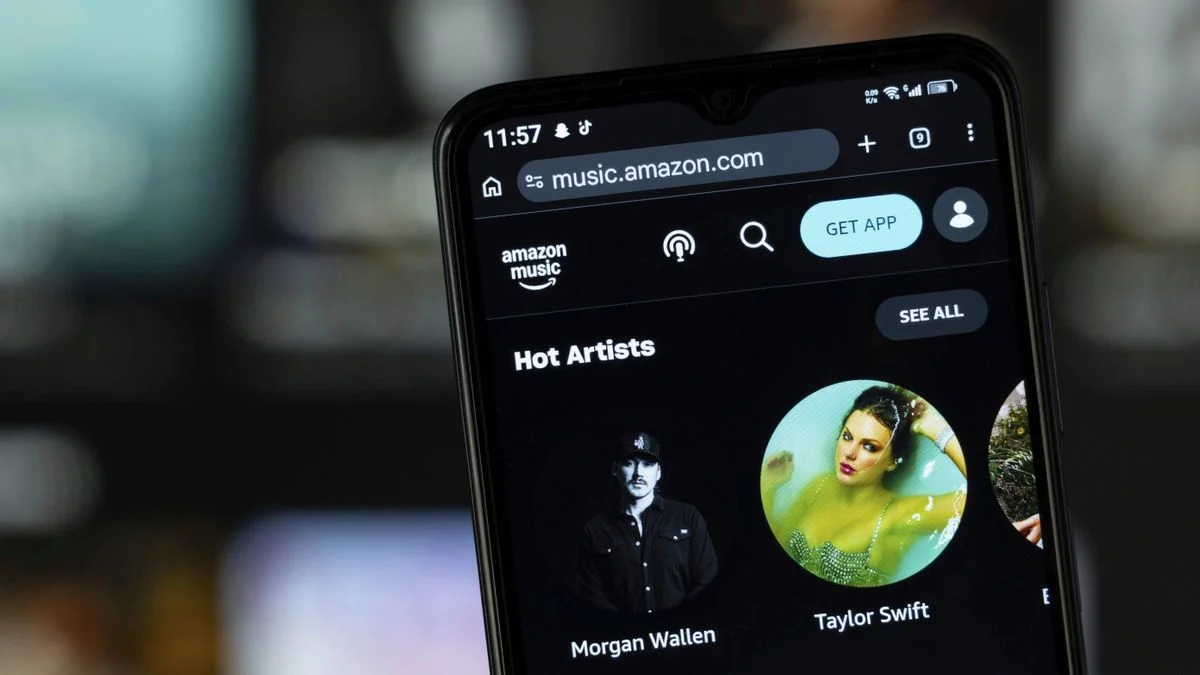
- 2023: The Apex. By early 2023, Smith’s operation reached its peak. The efficiency of his bot-driven ecosystem was so high that in April 2023 alone, his AI-generated tracks were streamed approximately 80.9 million times on YouTube Music. To put this in perspective, that volume of streams dwarfed that of global superstars like Taylor Swift, who garnered 9.3 million streams in that same segment during the same month.
- 2024: The Reckoning. Following an extensive investigation by federal authorities, Smith was indicted. He eventually pleaded guilty to charges of wire fraud, wire fraud conspiracy, and conspiracy to commit money laundering. The court ordered him to pay over $8 million in restitution—the total amount of the illicit royalties he had amassed over the seven-year period.
The Economics of "Fake Streams"
The data released by the U.S. Attorney’s Office for the Southern District of New York provides a chilling look at the disparity between human popularity and algorithmic exploitation. Smith’s ability to outperform world-renowned artists was not a testament to his musical prowess, but to the sheer, relentless throughput of his infrastructure.
To fund his operations, Smith reportedly obtained thousands of credit card numbers from a service provider that specialized in supplying corporate cards for employees. This provided the financial infrastructure necessary to keep his thousands of "family accounts" active. Because the platforms pay out royalties based on the percentage of total streams a song receives, Smith’s artificial volume effectively diluted the royalty pool. Every cent that went to one of Smith’s fake tracks was a cent taken away from legitimate artists whose work was actually being sought out by human listeners.
Official Responses: A Crime Against Creativity
The legal defense argued that Smith’s actions were largely "victimless," as he was not stealing from a specific individual but rather gaming a systemic distribution model. However, the federal prosecutors took a firm stance against this narrative, emphasizing that streaming fraud is not a victimless crime—it is a theft of value from the entire creative community.
"By flooding music streaming platforms with automated bots instead of real consumers and with fake songs instead of creativity, Smith stole millions in royalties from real artists and their fans," stated U.S. Attorney Jamie McDonald during the sentencing proceedings.
The prosecution’s argument highlights the existential threat posed by such activities. If the royalty pool is depleted by fraudulent, non-human content, the economic incentive for genuine artists to create music is diminished. It essentially turns a meritocracy of talent into a race to the bottom, where the winners are those with the most efficient bot networks, not the most compelling songs.
Implications for the Future of Music Streaming
The case of Michael Smith serves as a wake-up call for the entire streaming ecosystem. The rapid adoption of generative AI has lowered the barrier to entry for content creation, but it has also provided bad actors with the tools to weaponize volume against the industry.
1. Increased Scrutiny and Security
Streaming platforms are now under immense pressure to tighten their fraud detection protocols. This includes the development of more advanced behavioral analytics to identify bot-like patterns in listening habits, as well as the implementation of stricter verification processes for account creation.
2. Regulatory and Industry Standards
The music industry is increasingly calling for federal oversight to hold platforms and fraudsters accountable. There is a growing consensus that platforms must be more transparent about how they handle streaming fraud and that the legal consequences for such activities must be severe enough to act as a genuine deterrent.
3. The Devaluation of "The Stream"
This case underscores the limitations of the current "pro-rata" royalty model, where all streams are weighted equally regardless of whether they come from a real listener or a bot. Industry leaders are now exploring alternative models—such as "artist-centric" payments, which prioritize active engagement and fan loyalty over raw stream counts—to mitigate the impact of automated manipulation.
Conclusion
Michael Smith’s 18-month prison sentence is a symbolic victory for the music industry, but it is unlikely to be the end of the story. The technology that allowed him to succeed—AI, cloud computing, and automated bot networks—is becoming cheaper and more accessible every day.
As the industry moves forward, it faces a difficult balancing act. It must continue to support the democratization of music creation enabled by AI, while simultaneously defending the integrity of the ecosystem from those who seek to profit from synthetic, hollow engagement. The "Botnet Ballad" may have ended in a New York courtroom, but the broader struggle to protect the value of human artistry in the digital age is only just beginning.























