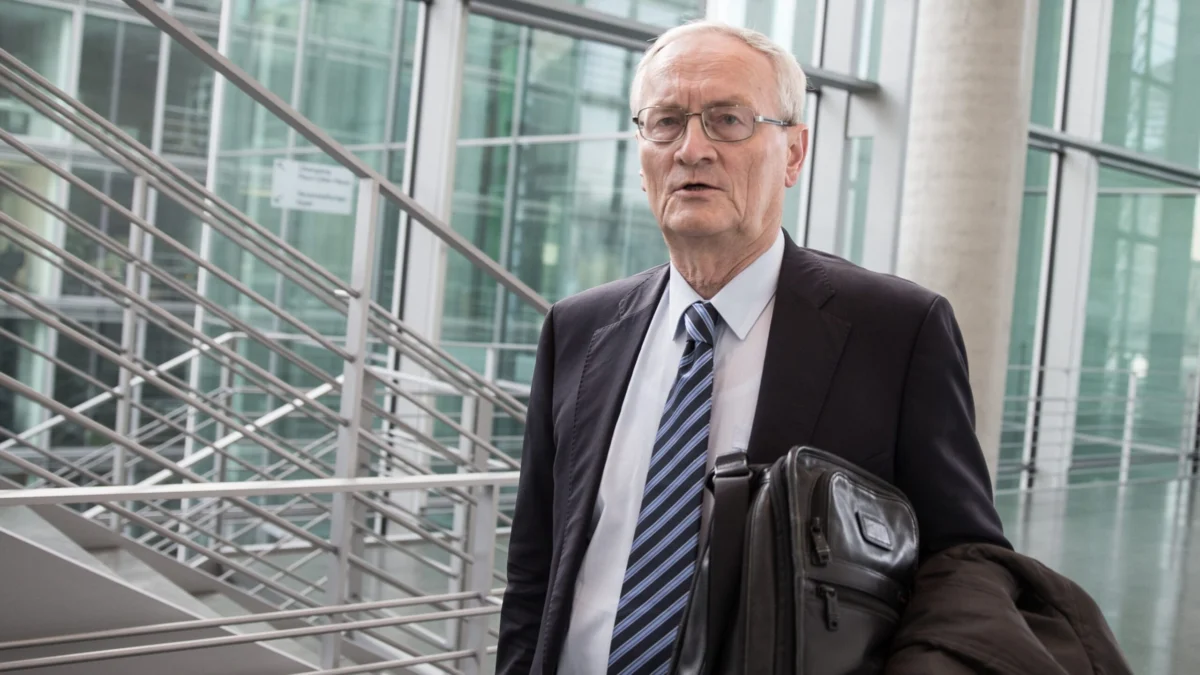
Berlin – In a move that has sent shockwaves through the highest echelons of the German intelligence community, the Federal Prosecutor’s Office (Generalbundesanwalt) has announced the arrest of August Hanning, the former president of the Bundesnachrichtendienst (BND), Germany’s foreign intelligence agency. The arrest, executed alongside that of his former chief of staff, identified as Manfred D., marks one of the most significant national security scandals in the history of the Federal Republic of Germany.
The Charges: A Betrayal of State Secrets
The allegations leveled against Hanning are severe, striking at the core of the state’s security apparatus. According to an official statement released by the Federal Prosecutor’s Office on October 6, 2026, Hanning is under urgent suspicion of treasonous espionage, the unauthorized collection of state secrets, attempted treason, and intelligence-related agent activity. His associate, Manfred D., faces charges of complicity in attempted treason and treasonous espionage.
The investigation, which has been conducted in absolute secrecy for months, suggests a calculated breach of public trust. The Federal Prosecutor alleges that the defendants engaged in a long-term scheme to siphon classified intelligence from the BND, purportedly to serve private financial interests and, according to reports from Der Spiegel, to potentially benefit foreign interests linked to the Caucasus republic of Azerbaijan. While the Federal Prosecutor’s Office has declined to comment on the specifics regarding Azerbaijan, the gravity of the charges suggests that the information leaked was of immense strategic value.
Chronology of a Decade-Long Breach
The timeline of the alleged betrayal paints a picture of a systematic, years-long effort to exploit state resources.
The Foundation (Spring 2010)
According to investigators, the conspiracy began in the spring of 2010. It was at this time that Hanning, having already concluded his tenure as head of the BND (a position he held from 1998 to 2005), allegedly approached Manfred D. to establish a clandestine pipeline for information. The arrangement was transactional: Manfred D. was to secure “valuable” BND intelligence, and in exchange, he would receive payment from Hanning.
The Period of Infiltration (2010–2022)
For over twelve years, the operation functioned in the shadows. Prosecutors allege that the duo successfully compromised the integrity of the BND’s internal information systems. During this period, it is estimated that Manfred D. passed nearly 2,000 documents to Hanning. A significant portion of these files were classified as "Verschlusssache" (Secret/Classified), containing sensitive operational data that could jeopardize German foreign policy and the safety of intelligence assets abroad.
The Investigation and Arrest (2026)
The veil was lifted this week. Federal Criminal Police Office (BKA) agents executed simultaneous operations in the district of Bad Tölz-Wolfratshausen in Upper Bavaria and the Steinfurt district in the Münsterland region. These locations, along with secondary sites in Berlin, were subjected to extensive searches as evidence was seized. The arrests were made based on warrants issued by the investigating judge of the Federal Court of Justice (Bundesgerichtshof), signaling the judicial system’s readiness to treat this as a high-level national security threat.
The "Consultant" Facade
Central to the prosecution’s case is the claim that Hanning utilized the stolen intelligence to bolster his private consulting business. After leaving public service, many high-ranking officials move into the private sector, leveraging their expertise and networks. However, the state argues that Hanning crossed the line from legitimate networking into the illegal exploitation of state secrets.
By commodifying sensitive intelligence, Hanning is accused of undermining the very institution he once led. The "consulting" work, prosecutors contend, was a front for a sophisticated intelligence operation that prioritized profit over the security of the German state.
Official Responses and Political Repercussions
The arrest of a former BND president is unprecedented. The BND, which has faced numerous internal challenges regarding transparency and oversight over the past decade, now finds itself at the center of a crisis of confidence.
The Prosecutor’s Position
The Federal Prosecutor’s Office has maintained a strict stance, emphasizing that the rule of law applies regardless of an individual’s past service or rank. The public announcement of the arrest on October 6 was deliberately timed to coincide with the execution of the warrants, preventing any possibility of evidence tampering or the flight of the suspects.
Parliamentary Oversight
The Parliamentary Control Panel (PKGr), tasked with overseeing the intelligence services, is expected to convene an emergency session. Lawmakers across the political spectrum have expressed shock, with many calling for a comprehensive review of the BND’s document management and "retiring official" protocols. Questions are already being raised as to how an individual could maintain access to or influence over the flow of classified information for more than a decade after leaving office.
Implications for German National Security
The implications of this case are far-reaching, extending well beyond the individual guilt of Hanning and Manfred D.
The "Azerbaijan" Angle and Foreign Influence
The reported link to Azerbaijan adds a geopolitical layer to the scandal. If the investigation confirms that German intelligence was being sold to a foreign power, it would trigger a diplomatic crisis. Such an arrangement would suggest that the BND’s internal security protocols were susceptible to foreign penetration, forcing a complete audit of current operations and international partnerships.
Internal Security and Trust
The betrayal of a former BND chief strikes at the internal morale of the agency. Intelligence officers operate under the assumption that their work is protected by the highest standards of integrity. Knowing that a former director may have been harvesting their efforts for personal gain creates a toxic environment, potentially leading to a "brain drain" of talent or a lack of cooperation with international partners like the CIA, MI6, or DGSE, who may now be wary of sharing intelligence with Berlin.
Legal Precedent
The case will likely become a landmark trial for the German judiciary. It tests the limits of the law regarding "state secrets" and the responsibilities of high-ranking officials even after they have retired. The defense will undoubtedly attempt to argue that the information was not "harmful" to the state, while the prosecution will rely on the sheer volume of classified documents—2,000 files—to prove that the cumulative effect of the disclosure was a severe blow to the national interest.
Conclusion: A Turning Point
The arrest of August Hanning is not merely the end of a long-standing criminal investigation; it is a turning point for the German intelligence community. The coming months of trial will likely reveal the true extent of the damage done to Germany’s security architecture.
As the Federal Prosecutor’s Office continues to sift through the mountains of evidence seized during the raids, the German government must grapple with the reality that its most sensitive secrets were, for years, for sale. The task ahead is twofold: to ensure justice is served in the courtroom, and to rebuild a system that was fundamentally compromised from within. For the BND, the process of healing and restoring its reputation will be long, arduous, and essential for the future of European security.