In a landscape where artificial intelligence and industrial automation are rapidly converging, the Munich-based startup Robco has officially crossed the threshold into the elite "unicorn" category. With a fresh injection of $40 million in capital, the company has seen its valuation soar past the $1 billion mark, a staggering achievement considering the firm was valued at just $500 million less than a year ago. This rapid ascent underscores a broader, transformative shift in the German technology ecosystem, where "physical AI" is moving from the realm of science fiction to the factory floor.
Main Facts: A Valuation Surge
The latest funding round, which combines contributions from both existing and new investors, serves as a powerful validation of Robco’s modular approach to robotics. Beyond the primary capital injection, the deal provided a unique liquidity event: employees were granted the opportunity to sell their vested shares, a hallmark of a maturing startup that values its human capital as much as its technological prowess.
Robco, founded in 2020, has now raised a total of over $200 million. The company’s trajectory is best measured by its growth in valuation; in January 2026, the firm closed a $100 million round that set its value at $500 million. To double that valuation in just nine months speaks volumes about investor confidence in the scalability of Robco’s "robotic-as-a-service" model.
The cap table is a "who’s who" of international venture capital. Sequoia and Lightspeed, long-term backers of global tech giants, have reaffirmed their commitment, while newcomers such as Cherry Ventures and the European Tech Collective have joined the ranks. Perhaps most notably, the venture arms of industrial heavyweights Volkswagen and the Agnelli family (the force behind Fiat) have invested, signaling that the traditional automotive giants are betting heavily on the future of flexible, modular automation.
The Technological Edge: Modular Intelligence
At the heart of Robco’s success is a radical departure from the rigid, monolithic industrial robots of the 20th century. Robco specializes in modular robot arms that can be assembled like building blocks, allowing small-to-medium-sized enterprises (SMEs) to automate specific tasks without the need for million-dollar capital expenditures or specialized robotics engineers.
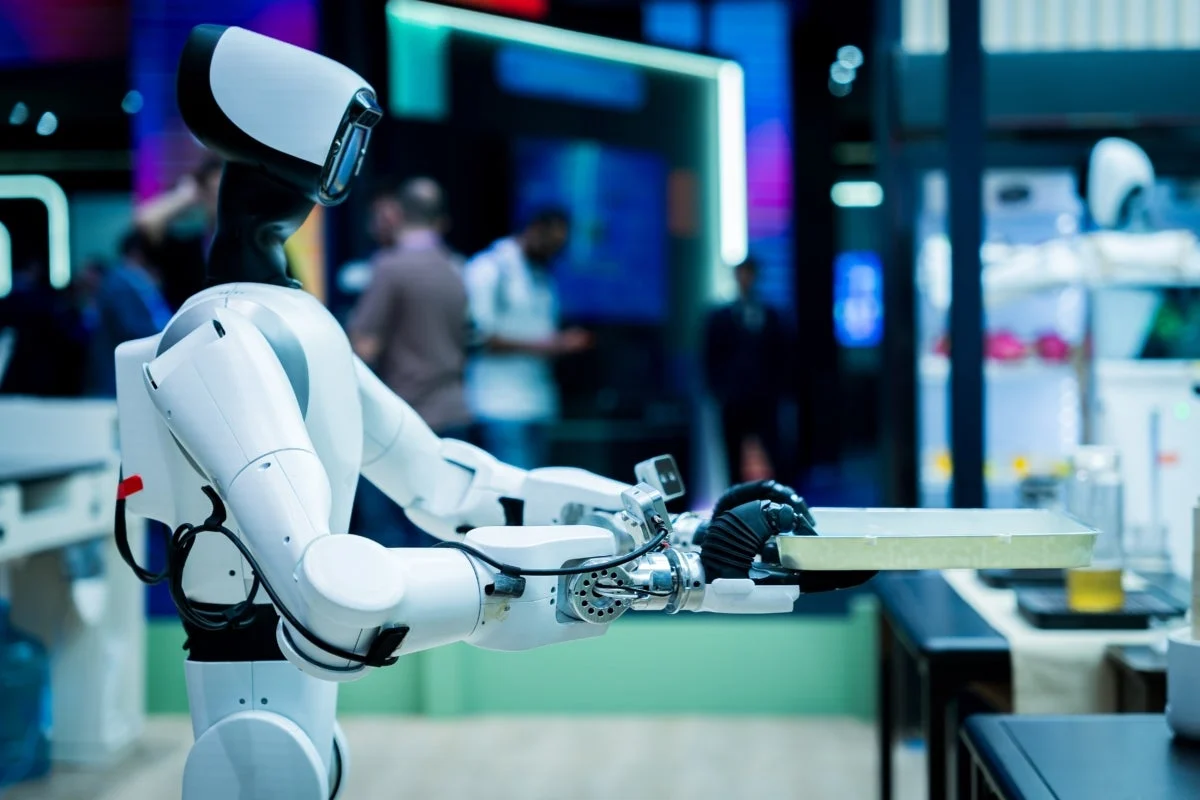
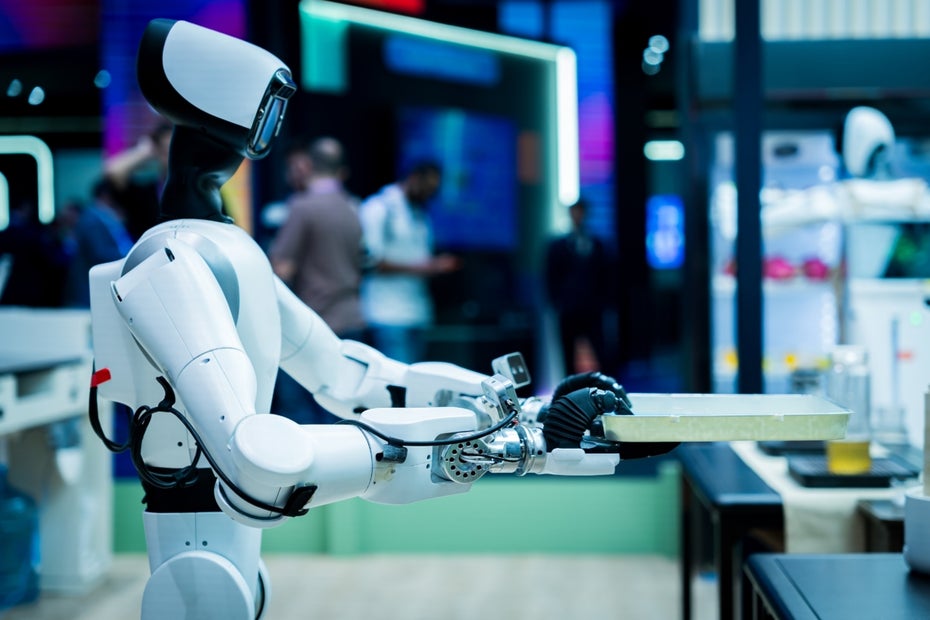
The hardware is paired with a proprietary "no-code" software platform. This allows users to control their robots remotely via a digital twin, making deployment and troubleshooting accessible to factory floor workers rather than high-level developers. As the industry pivots, Robco has doubled down on "physical AI." The company is currently preparing for the spring launch of "Alfie," a two-armed, fully autonomous robot designed to handle complex, human-like manipulation tasks. This transition from static, pre-programmed tasks to adaptive, AI-driven physical movement is what investors believe will drive the next decade of industrial efficiency.
Chronology of a Success Story
- 2020: Robco is founded in Munich, Germany, with the vision of making industrial automation modular and accessible.
- 2021–2024: The company builds its reputation by servicing the German "Mittelstand," providing cost-effective automation to manufacturers previously priced out of the robotics market.
- January 2026: Robco closes a massive $100 million funding round, signaling the start of its global scaling phase. Valuation reaches $500 million.
- June 2026: The broader German robotics market reaches a fever pitch as competitors like Neura Robotics secure $1.4 billion in funding, highlighting the intense interest in the sector.
- October 2026: Robco officially secures unicorn status, raising an additional $40 million and reaching a valuation exceeding $1 billion. Founder Roman Hölzl announces his relocation to the United States to spearhead international expansion.
The German Robotics Triad: A New Era
Robco is not alone in its success. Germany is currently witnessing a renaissance in robotics, often referred to as the "Robotics Triad." Alongside Robco, two other Munich-based or regionally linked firms have set the standard for high-tech industrial growth.
- Neura Robotics (Metzingen): The current heavyweight of the industry, Neura Robotics raised $1.4 billion in June 2026. Reports suggest the company is now valued at a staggering $7 billion, focusing on "cognitive robots" that integrate deeply with human workers.
- Agile Robots (Munich): An early pioneer of the unicorn status, Agile Robots raised $220 million in 2021. The company continues to be a major player in precision robotics and is reportedly preparing for a new financing round to bolster its R&D capabilities.
This concentration of talent and capital in Munich and the surrounding areas is no coincidence. The proximity to elite technical universities (like the Technical University of Munich) and the traditional German strength in mechanical engineering has created a fertile ground for "Deep Tech" startups.

Strategic Expansion: The U.S. Opportunity
The $1 billion valuation is tethered to a clear geographical strategy: the United States. Founder and CEO Roman Hölzl has taken the decisive step of relocating to Austin, Texas, to manage the company’s American expansion personally.
According to the company, the U.S. is currently its fastest-growing market. Robco has already established a footprint in over 12 states and has begun local production in Texas to serve domestic demand. By positioning itself in the U.S., Robco is moving closer to its largest potential customer base and insulating itself from European regulatory headwinds, while also tapping into a massive pool of venture capital and specialized engineering talent.
Broader Economic Implications
The rise of unicorns like Robco, alongside the emergence of companies like Proxima Fusion (energy) and Stark Defence (defense), points to a "unicorn boom" in Germany. Data from the German Startup Monitor indicates that 2026 has been a record-breaking year, with ten new unicorns emerging since January—a level of activity not seen since the venture capital peak of 2021.
However, this picture is nuanced. While the "top-tier" startups are attracting massive capital, the broader startup ecosystem faces a paradoxical reality. Despite a record number of new company registrations—with over 3,000 startups founded in the first half of 2026—the total number of financing rounds has stagnated. This suggests a "flight to quality," where investors are funneling capital into proven winners like Robco, while early-stage startups struggle to find support.
The Future of "Physical AI"
The success of Robco serves as a case study for the future of manufacturing. We are moving away from an era where machines were static tools that simply performed a task until they wore out. We are entering an era of "Adaptive Automation," where the machine understands its environment, adapts to changes in supply chains, and learns through continuous software updates.
For the German economy, which has long relied on the strength of its industrial base, the rise of Robco is a critical survival mechanism. By digitizing the physical workspace, these startups are ensuring that German manufacturing remains competitive in a global market where labor costs are high and automation is no longer an option, but a necessity.
As Robco looks toward the 2027 fiscal year, the focus will shift from valuation to execution. With "Alfie" set to hit the market and a U.S. operation now under the direct supervision of the founder, the company is moving from a high-growth startup to a global industrial player. For the investors, the employees, and the German robotics sector, the billion-dollar valuation is merely the starting line for what promises to be a fundamental transformation of how the world builds products.