


By Global Sports Desk
Updated: October 6, 2026
The global governance of football is facing its most significant internal rupture in decades. In a sharp escalation of the conflict between the European football establishment and the world governing body, DFB (German Football Association) President Bernd Neuendorf has declared that the German federation will formally oppose a fourth term for FIFA President Gianni Infantino.
The declaration, made during an interview with Tagesspiegel, marks a turning point in the relationship between the DFB and the Zurich-based organization. Neuendorf, who has increasingly positioned himself as the standard-bearer for reform within the FIFA Council, did not mince words: "We must take him off the pitch," he stated, adding that Infantino is "no longer tenable" as the head of the organization.
The Core of the Conflict: A Crisis of Credibility
The tension between European associations and the FIFA leadership has been simmering for years, but the current dispute centers on a fundamental disagreement regarding the trajectory of the sport. For critics, Infantino’s tenure has been defined by a concentration of power, a lack of transparency, and a series of controversial decisions that have prioritized commercial expansion over the integrity of the game.
Neuendorf’s rejection of Infantino’s candidacy for the March 2027 election is not an isolated sentiment. It reflects a growing consensus among several UEFA member associations that the current governance structure at FIFA is fundamentally broken. The DFB has made it clear that they believe the Swiss-Italian lawyer has "gambled away all trust," rendering his continued leadership a liability for the sport.
Chronology of a Fractured Relationship
The friction between the DFB and FIFA has evolved through several distinct phases:
- 2016–2022: The Honeymoon Period: Initially, Infantino was seen as a clean break from the Sepp Blatter era, promising a new, more inclusive FIFA.
- 2022–2023: The Qatar Watershed: The 2022 World Cup in Qatar intensified scrutiny on FIFA’s human rights policies, leading to the first major public disagreements over leadership ethics.
- 2023–2025: The Institutional Pushback: Following his appointment to the FIFA Council in April 2023, Neuendorf began advocating for internal structural reforms, which were repeatedly sidelined or diluted by the central administration.
- August 2026: Legal Escalation: The conflict moved into the courtroom when threats of criminal complaints were issued regarding FIFA’s opaque investor plans, marking the most aggressive legal maneuver against the FIFA leadership to date.
- October 2026: The Public Break: With the March 2027 elections approaching, the DFB has officially signaled that they will not support a fourth term, effectively launching a campaign to find an alternative.
The "Reform" Maneuver: A Tactical Ruse?
In response to the intensifying criticism, Gianni Infantino recently extended an olive branch to his detractors. In a letter addressed to the 211 member associations, the FIFA president offered a series of discussions regarding governance reforms, including an independent external review and potential adjustments to the powers of the presidency.
However, the proposal has been met with widespread skepticism. Bernd Neuendorf and other European leaders have dismissed the offer as a "transparent maneuver" designed to secure re-election rather than to address genuine systemic flaws. "It cannot be that the person responsible for the current state of affairs is the one to lead the urgently needed reform process," Neuendorf noted. The cynical view held by many in the UEFA bloc is that the reform talks are a stalling tactic to neutralize opposition until the November 18, 2026, deadline for submitting official candidacies.
Contradictions and Criticism: The Neuendorf Paradox
While Neuendorf is currently the face of the opposition, his position is not without its own set of internal contradictions. Since joining the FIFA Council in 2023, the DFB president has been criticized for his own pragmatic—and sometimes controversial—alignments.
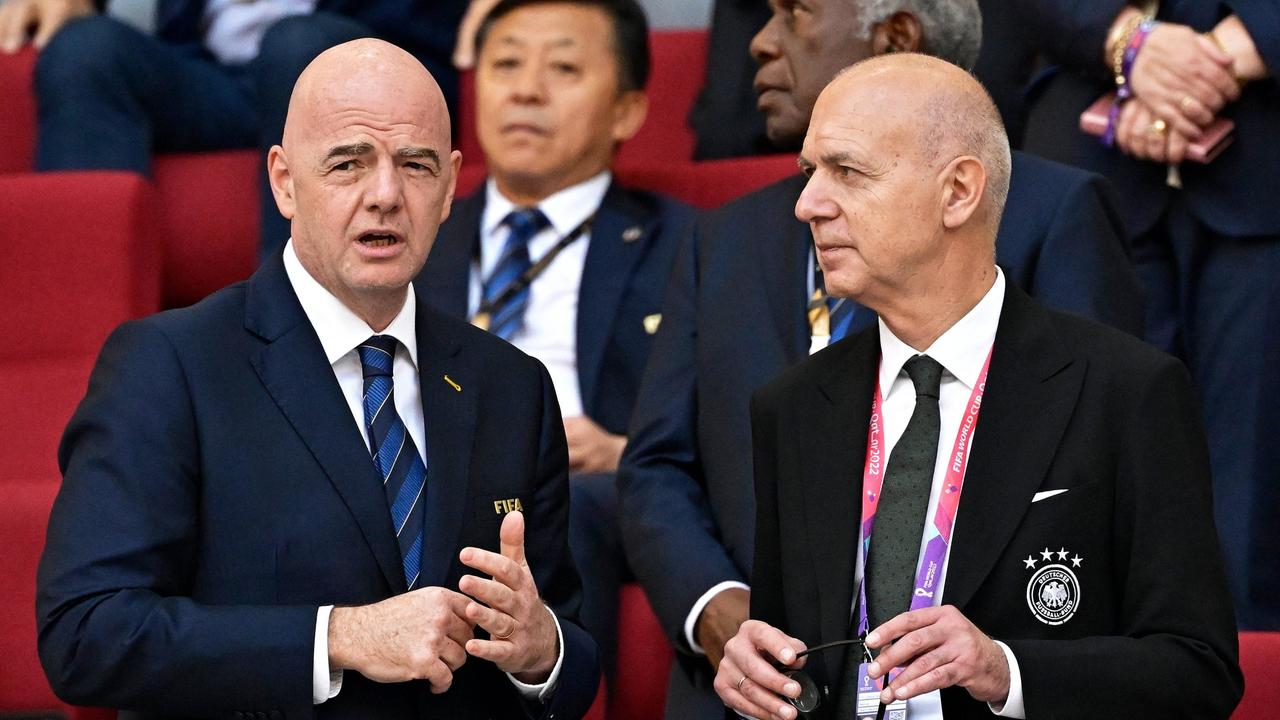
Observers have pointed to his previous comments regarding the hosting of the World Cup in Saudi Arabia, where he described the nation as a "true football country," despite widespread concerns over human rights, gender equality, and the treatment of the LGBTQ+ community. Furthermore, his previous defense of Infantino’s decision to award a "Peace Prize" to former U.S. President Donald Trump has been used by his critics to suggest that his current moral stance is a relatively recent development, potentially motivated by shifting political winds within Europe rather than a long-standing ideological conviction.
Implications for the Future of Global Football
The upcoming vote in March 2027 in Morocco represents a crossroads for FIFA. As of now, there is no formal challenger to Infantino. However, the clock is ticking. With the deadline for nominations set for November 18, the coming weeks will be characterized by intense diplomatic maneuvering behind the scenes.
1. The UEFA-FIFA Schism
If a prominent European candidate emerges, the divide between the UEFA bloc and the rest of the world could lead to a permanent split in the governance of international football. Many emerging nations in Africa, Asia, and the Americas have historically benefited from the financial programs initiated under Infantino, creating a significant geopolitical hurdle for those hoping to unseat him.
2. Governance Reform vs. Centralization
The debate highlights a fundamental question: Should FIFA remain a highly centralized, president-led organization, or should it shift toward a more decentralized model where power is distributed among continental confederations and national associations? Neuendorf’s call for a "fundamental change in culture" suggests that the European approach favors the latter, while the current administration clearly prioritizes the power of the center.
3. The Legal Front
The threat of legal action in both Switzerland and the United States over FIFA’s financial dealings creates an environment of extreme volatility. If investigations into the organization’s "investor plans" reveal malfeasance, it could provide the political leverage needed to force a change in leadership, regardless of the election outcome.
The Road to March 2027
As the football world turns its eyes toward the upcoming congress in Morocco, the stakes could not be higher. For Bernd Neuendorf, the objective is clear: the current leadership model has failed the stakeholders of the game. For Gianni Infantino, the challenge is to maintain the coalition that has kept him in power for a decade, even as the most influential federation in Europe breaks ranks.
The success of the "rebellion" will depend on whether they can move beyond public rhetoric and secure a credible, unified candidate who can appeal to the diverse interests of the 211 member associations. Until that name is put forward, the FIFA presidency remains firmly in the hands of the incumbent—but the ground beneath him has never been less stable.
The sport now finds itself in a state of suspended animation, waiting to see if this public split will lead to the "fundamental change" that Neuendorf demands, or if it will simply result in further polarization within the beautiful game. One thing is certain: the era of uncontested, quiet governance in Zurich is officially over.








