Executive Summary: A Region Under Siege by Volcanic Ash
The Indonesian archipelago, a nation intimately acquainted with the volatile temper of the Pacific "Ring of Fire," is grappling with a significant disruption to its aviation infrastructure. Following a series of violent eruptions from the Anak Krakatau volcano, situated in the strategic Sunda Strait between the islands of Java and Sumatra, authorities have been forced to suspend operations at six major airports.
The volcanic activity, which commenced on a Saturday and persisted through the weekend, propelled massive plumes of ash into the atmosphere. The fallout has reached as far as the Soekarno-Hatta International Airport, the country’s primary aviation hub serving the capital, Jakarta. With over 22,000 passengers stranded and hundreds of international flights grounded, the incident serves as a stark reminder of the fragile balance between human infrastructure and the primal forces of the earth.
Chronology of the Eruption
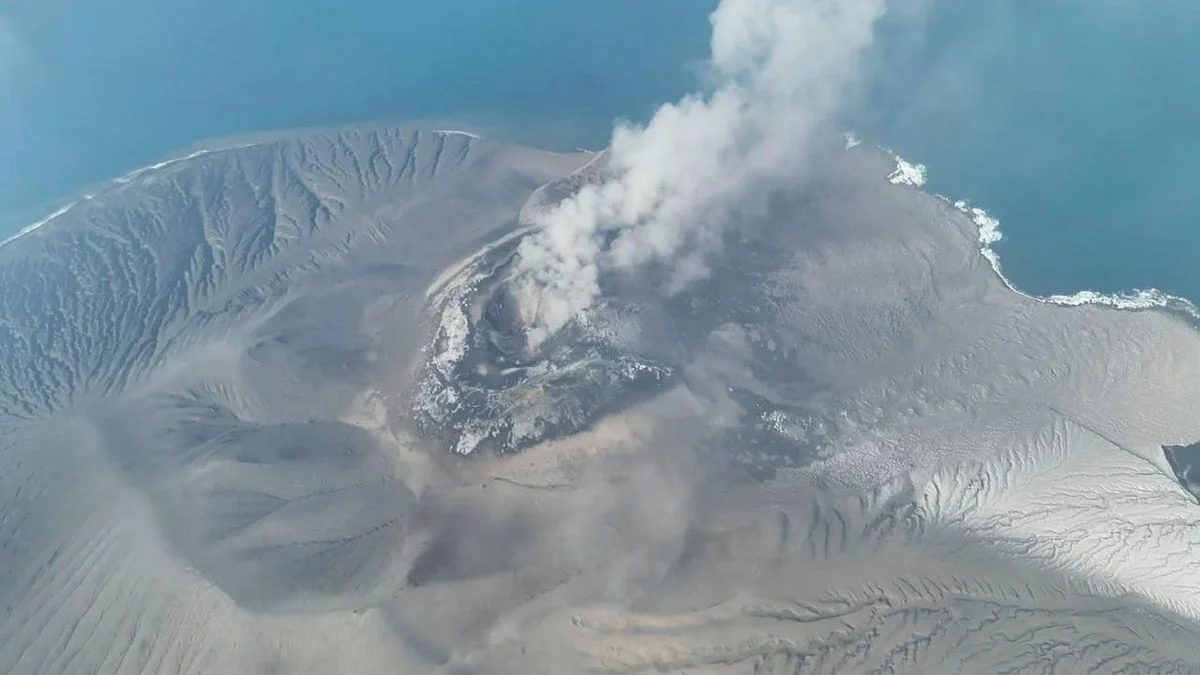
The current crisis began on Saturday, when the "Child of Krakatau" (Anak Krakatau) roared to life. According to reports from the Indonesian Geological Agency, the eruption was not merely a visual spectacle but an acoustic phenomenon of immense power; the roaring sound of the explosion was reportedly audible up to 700 kilometers away.
By Sunday, the situation escalated as two additional, powerful eruptions were recorded, further intensifying the volcanic cloud. The geological authorities monitored the plume’s ascent with alarm, noting that on the Java-facing side of the volcano, the ash reached an altitude of 6,000 meters. Even more concerning was the plume on the Sumatra-facing side, which soared to a staggering 15,000 meters—a height that poses a critical threat to long-haul flight corridors.
The Soekarno-Hatta International Airport, located over 150 kilometers from the crater, initially suspended operations until Sunday morning. However, as air quality tests confirmed the presence of abrasive volcanic ash in the airport’s airspace, the Ministry of Transportation took the decisive step of extending the closure into Sunday afternoon, underscoring the severity of the fallout.
Supporting Data and Statistical Impact
The economic and logistical ramifications of the volcanic activity are substantial. The Ministry of Transportation reported that at the Soekarno-Hatta hub alone, at least 209 flights were canceled. These disruptions ripple far beyond Indonesia’s borders, affecting vital flight paths to regional and international transit hubs, including Singapore, Doha, Sydney, and Kuala Lumpur.
In total, six airports have seen their operations crippled, including the Husein Sastranegara International Airport in the densely populated metropolis of Bandung. The sheer volume of affected passengers—exceeding 22,000—has strained the capabilities of ground crews and airline customer service departments. Beyond the main hub, three other airports in the capital region were forced to cease operations, leading to hundreds of secondary cancellations and significant delays across the national network.
Maritime traffic has not been spared. Authorities have issued stern warnings to vessels navigating the Sunda Strait, a critical maritime artery. A strict three-kilometer safety radius has been enforced around the volcano, prohibiting any maritime or aerial approach, as the risk of debris and unexpected atmospheric shifts remains high.
Official Responses and Mitigation Strategies
In a display of rapid emergency coordination, the Indonesian National Board for Disaster Management (BNPB) has shifted from passive monitoring to active intervention. During a press conference, BNPB head Suharyanto announced an ambitious "weather modification" operation.
This technical response includes the deployment of cloud-seeding aircraft to induce artificial rainfall over affected areas. "If it rains heavily enough, the volcanic ash that has been disrupting our daily lives since yesterday will be washed away quickly," Suharyanto explained. This strategy is designed not only to clean the air and surfaces but also to reduce the long-term respiratory and logistical hazards posed by the fine, abrasive ash particles.
Public health directives have been disseminated with urgency. The government has explicitly advised citizens to:
- Wear high-quality masks to prevent inhalation of fine ash.
- Utilize eye protection to avoid corneal abrasion from microscopic volcanic glass.
- Minimize outdoor activity until the ash dissipates.
- Exercise extreme caution while driving, as ash can cause extreme slipperiness on roads and reduce engine efficiency.
Historical Context and Geological Implications
While the current event has caused massive disruption, officials are keen to temper public anxiety regarding the risk of a tsunami. Lana Saria, head of the Geological Agency, explicitly stated that the current series of eruptions does not possess the tectonic profile to trigger a tsunami of the magnitude seen in 2018. That tragedy, which resulted in the loss of over 400 lives, remains a vivid and painful memory for the Indonesian public.
However, the history of this region is defined by catastrophic transformation. The name "Anak Krakatau" is a testament to the cataclysm of 1883, when the original Krakatau volcano effectively destroyed itself in a series of eruptions so violent they were heard thousands of miles away. The subsequent tsunamis claimed over 36,000 lives and altered global weather patterns for years. The "Child" emerged from the caldera of that original giant nearly a century ago and has been growing incrementally ever since.
Indonesian geologists have maintained a "Level 3" alert—the second-highest warning tier—for the volcano since July 2nd. This alert status reflects the volcano’s status as a high-risk entity within the Pacific Ring of Fire, a region where the subduction of tectonic plates creates a constant state of seismic and volcanic potential.
The Future of Aviation in Volcanic Zones
The ongoing crisis highlights the growing vulnerability of modern global aviation to regional geological events. As air travel demand continues to rise in Southeast Asia, the reliance on high-frequency flight paths near the Ring of Fire creates a recurring economic liability.
Aviation experts note that volcanic ash is particularly dangerous because it consists of tiny, jagged particles of rock and glass. When ingested into jet engines, these particles melt in the combustion chamber and coat turbine blades, leading to catastrophic engine failure. Consequently, even trace amounts of ash detected by sophisticated air-quality monitoring equipment necessitate immediate flight groundings—a policy that, while frustrating for travelers, is essential for passenger safety.
As Indonesia looks toward the coming days, the success of the cloud-seeding operations will be the primary metric for the resumption of normalcy. For now, the archipelago remains on high alert, a society navigating the intersection of natural majesty and the inherent dangers of living on a planet that is constantly in flux. The authorities continue to monitor the plume height and seismic activity, prepared to extend safety measures should the Anak Krakatau show further signs of instability.
In the long term, this event is likely to prompt a review of regional disaster response protocols and perhaps a shift in aviation scheduling, as the world learns once again that in the shadow of the Krakatau, nature dictates the timetable.