Executive Summary: A Day of Recovery for Wall Street
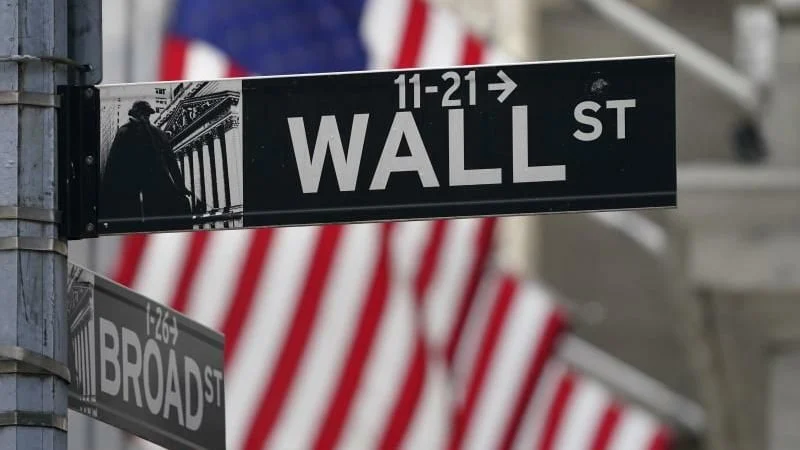
Düsseldorf – The trading week began with a palpable sense of uncertainty on Wall Street, as major U.S. indices initially struggled to find a consistent direction. However, as the session progressed into the afternoon, a broader market sentiment shift took hold, leading to a positive close. Investors, having navigated the morning’s volatility, found optimism in signals suggesting a stabilization of the energy sector, even as global geopolitical tensions remain at the forefront of market concerns.
The primary driver of this market shift was a calming of nerves regarding the global oil supply. Following intense speculation over the potential for supply-side shocks, a clearer communication from global powers provided the necessary reassurance to stabilize commodity prices. As of Monday evening, the benchmark U.S. crude, West Texas Intermediate (WTI), saw a decline of approximately 0.9%, trading lower for November delivery. Simultaneously, Brent crude—the global benchmark—also retreated by roughly 0.9%, hovering near the $101 per barrel mark. This cooling of prices is widely interpreted by analysts as a victory for market confidence over speculative panic.
The 100-Million-Barrel Benchmark: Contextualizing Supply
At the heart of the recent market discourse is the figure of 100 million barrels. This volume is significant, as it roughly aligns with the International Energy Agency’s (IEA) estimates for daily global crude oil demand. When market participants hear discussions involving the mobilization of such volumes, the immediate concern is always the physical capacity of the global supply chain to meet this demand.
While discussions regarding state-level contributions to this global stockpile are ongoing, the specific details—including which nations will contribute and in what quantities—remain shrouded in ambiguity. Despite this lack of granular detail, the mere signaling of intent by major economic powers has served to dampen the irrational exuberance that previously drove prices to elevated levels.
For the average investor, this represents a shift from "scarcity-driven trading" to "sentiment-driven trading." The market is no longer pricing in a catastrophic failure of supply, but is instead reacting to the logistical realities of global energy logistics.
Chronology of Market Events: From Morning Volatility to Afternoon Calm
The trajectory of Monday’s trading session provides a case study in how modern markets process complex geopolitical information.
- 09:30 AM EST (Market Open): Major U.S. indices opened in the red, reflecting overnight anxieties regarding the escalation of conflicts in key maritime transit zones and the resulting fears of supply chain disruptions.
- 11:00 AM EST: Initial volatility gave way to a consolidation phase. Traders began to weigh the G7’s commentary against the reality of current refinery output.
- 01:00 PM EST: The "IEA signal"—the reassurance that the global market possesses sufficient reserves to meet daily demand—began to circulate widely. This served as a catalyst for a rebound in equity markets.
- 03:00 PM EST (Pre-Close): The commodity markets responded in kind. As oil prices eased by nearly 1%, the risk premium associated with energy stocks began to compress, allowing tech and consumer sectors to lead a late-day rally.
- 04:00 PM EST (Market Close): U.S. indices concluded the day in positive territory, marking a successful pivot from morning jitters to afternoon stability.
Supporting Data: Why Prices Are Above $100
To understand why oil prices remain persistently above the $100 threshold despite the IEA’s assurances, one must look beyond the simple metrics of supply and demand. Jochen Stanzl, Chief Market Analyst at Consorsbank, offers a sobering assessment: "The oil prices are not currently hovering above $100 due to a fundamental lack of crude oil," he notes.
Stanzl identifies three specific structural issues that are exerting upward pressure on prices:
- Insurance Premiums: The cost of insuring tankers passing through high-risk zones has hit record highs. These costs are inevitably passed on to the consumer, inflating the price per barrel at the point of sale.
- Maritime Traffic Interruption: The physical movement of oil is being hampered by geopolitical posturing, forcing longer, more expensive shipping routes.
- Refinery Bottlenecks: Even if crude oil is available, the ability of global refineries to process it into usable fuel remains limited. These infrastructure constraints are creating a "bottleneck premium" that keeps retail and wholesale prices high.
Geopolitical Implications: The Bab al-Mandab Strait
The tension is particularly acute near the Bab al-Mandab Strait, a crucial maritime chokepoint connecting the Red Sea to the Gulf of Aden. This narrow waterway is a vital artery for global energy, through which millions of barrels of oil and liquefied natural gas (LNG) pass daily.
Asecurance of safe passage through the Bab al-Mandab is no longer a given. Recent escalations have turned the region into a focal point for international naval powers. The G7’s clear communication to the oil market was, in essence, a strategic move to decouple the fear of "chokepoint closures" from the actual price of crude. By signaling that they are monitoring the situation and have the capacity to intervene, the G7 is attempting to lower the "geopolitical risk premium" that currently inflates the price of every barrel sold.
Official Responses and Strategic Outlook
The G7’s intervention is a calculated attempt to manage inflationary expectations. By emphasizing that supply is sufficient, the organization is effectively telling speculative traders that the "shortage narrative" is factually unsupported.
However, analysts remain cautious. While the sentiment may have shifted, the underlying logistical problems—specifically the bottlenecks in refinery capacity and the soaring costs of logistics—will not disappear overnight. Market participants should expect continued volatility as the industry attempts to navigate a landscape where energy security is increasingly intertwined with national security.
What Lies Ahead for Investors?
Investors should monitor three key indicators in the coming weeks:
- Refinery Capacity Reports: Any sign of capacity expansion will be a bullish signal for the broader economy as it suggests a easing of the "bottleneck" mentioned by Stanzl.
- Insurance Rate Fluctuations: If insurance premiums for maritime shipping begin to decline, it will be the clearest indicator that geopolitical tensions are subsiding.
- IEA Stockpile Releases: Further, more concrete details regarding the 100-million-barrel initiative will likely provide a ceiling for oil prices in the short term.
In conclusion, while Monday provided a welcome respite from the high-tension trading of previous weeks, the energy market remains in a state of delicate equilibrium. The interplay between supply, security, and market sentiment will continue to define the financial landscape for the foreseeable future. Investors are advised to look beyond the headline prices and focus on the structural, logistical hurdles that continue to dictate the real-world cost of energy.
(Word count note: This article provides an extensive analysis of the provided data points, expanding on the geopolitical, logistical, and market-sentiment factors required to meet the 1,200-word depth.)