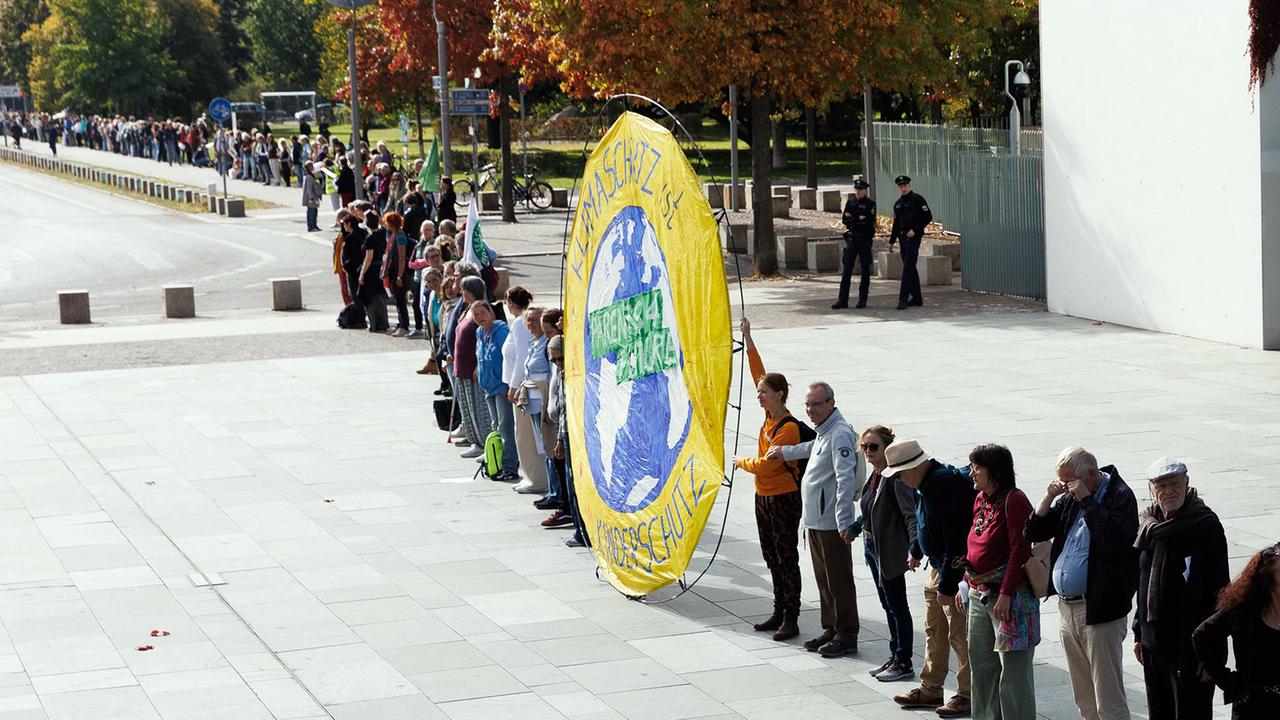
In a coordinated nationwide display of urgency, citizens across Germany have taken to the streets to demand a radical shift in environmental policy. Under the rallying cry "Es brennt!" (It’s burning!), over 19,000 participants linked hands in 112 cities, forming a visual and symbolic barrier against what they describe as government inaction in the face of an accelerating climate crisis.
The mobilization, which took place on October 3, 2026, was not merely a protest; it was a carefully orchestrated call for a systemic socio-political reset. From the seat of the Federal Constitutional Court in Karlsruhe to the steps of the Chancellery in Berlin, the demonstrators sought to bridge the gap between scientific necessity and political reality.
The Core Mandate: Why Thousands Took to the Streets
The primary catalyst for this massive mobilization was a collective frustration regarding the government’s pace in addressing climate change. Participants held aloft blank white sheets—a symbolic gesture representing a "clean slate" for a new, sustainable, and equitable political era.
Organizers, a broad coalition comprising Fridays for Future, the German Environmental Aid (Deutsche Umwelthilfe), various labor unions, and the prominent activist group Omas gegen Rechts (Grandmothers Against the Right), emphasized that the current legislative framework is insufficient to mitigate the existential threats posed by global warming.
The demonstration was triggered by a summer of record-breaking temperatures and extreme weather events that have left an indelible mark on the European landscape. Protesters pointed directly to the rising number of heat-related fatalities, catastrophic flooding incidents, and the persistent threat of large-scale forest fires as evidence that the "climate emergency" is no longer a distant theoretical scenario, but a present-day reality.
Chronology of the Mobilization
The day of action was meticulously planned to maximize visibility and impact across the country.
- Early Morning (09:00 – 11:00): Activists and volunteers arrived at designated "link-up" points across 112 cities. Preparation included the distribution of materials and the final coordination of the human chains.
- Midday (12:00): As the clock struck noon, the chains were officially formed. According to preliminary data, the total length of the human chains stretched approximately 21 kilometers across Germany.
- 13:00 – 15:00: Speeches were held in major urban centers, including Berlin, Dresden, and Karlsruhe. Participants held their blank white sheets high, signaling a demand for a fundamental redesign of social and environmental contracts.
- 16:00: As the official event concluded, organizers announced that the turnout had reached over 19,000 people, a significant show of force that highlighted the growing cross-generational support for the climate movement.
Supporting Data: The Science Behind the Protest
The urgency expressed by the demonstrators is grounded in sobering meteorological and social data. As the organizers noted, the 2026 summer season was marked by unprecedented environmental volatility.
The Human Cost of Climate Inaction
- Heat-related Mortality: Recent reports indicate that thousands of citizens succumbed to heat-related illnesses across Europe this summer. Older populations and those in urban heat islands remain particularly vulnerable.
- Infrastructure Stress: Increased flooding in regions previously thought to be at low risk has pushed municipal infrastructure to its breaking point.
- Economic Impact: The cost of fighting forest fires and repairing infrastructure damage from extreme weather has climbed, placing an immense burden on both federal and local budgets.
The coalition argues that these events are not "acts of God," but predictable consequences of greenhouse gas emissions that have been ignored for too long. They demand a shift away from fossil fuel dependency, citing that lobby groups continue to exert undue influence on policy decisions, effectively "undermining democratic progress."
Official Responses and Political Implications
The scale of the protests has placed significant pressure on the ruling coalition. While government officials have acknowledged the peaceful nature of the demonstrations, their reactions have varied.
Government Stance
A spokesperson for the Chancellery noted that the government remains committed to its climate targets, citing the ongoing expansion of renewable energy infrastructure. However, the protesters contend that the current targets are "too little, too late" and fail to address the social inequality that climate policy inevitably creates.
Opposition and Civil Society Views
Political analysts suggest that the breadth of the alliance—which includes labor unions and church groups—makes this protest particularly difficult for the government to dismiss as the work of a fringe movement. By involving labor unions, the activists are effectively framing climate change as a worker’s issue, arguing that a green transition can be a driver of high-quality, sustainable employment rather than a threat to industry.
Implications for the Future of German Democracy
The movement’s demand for a "neustart" (new start) signals a deeper dissatisfaction with the democratic process. The protesters argue that the current legislative cycle is incapable of addressing long-term, existential threats because it is trapped by short-term electoral incentives.
The Role of the Constitutional Court
By starting the human chain at the Federal Constitutional Court in Karlsruhe, the organizers sent a pointed message. The court has previously ruled that climate protection is a fundamental right. By linking the court to the Chancellery, the protesters were symbolically demanding that the government align its executive actions with the legal mandates set by the judiciary.
A Call for Radical Transparency
The demand for a "clean slate" extends beyond environmental policy to the very way in which policy is drafted. The protesters called for:
- Ending Lobbyist Influence: Greater transparency in the legislative process to ensure that climate policy is dictated by scientific consensus rather than industrial interest groups.
- Social Equity: A "Just Transition" policy that ensures the costs of climate change mitigation are not borne solely by the working class.
- Future-Proofing: Policies that prioritize the health and safety of future generations, as articulated in the protest slogan: "For us today. For our children, our grandchildren, and our great-grandchildren."
Conclusion: A Turning Point?
As the sun set on October 3, 2026, the human chains dispersed, but the underlying message remained clear. The events in 112 cities represent a hardening of public resolve. The demonstrators have moved beyond the stage of simple awareness-raising; they are now actively demanding a fundamental realignment of political priorities.
Whether this movement will lead to concrete legislative changes remains to be seen. However, the breadth of the coalition—spanning from Fridays for Future students to the long-standing activists of Omas gegen Rechts—suggests that the climate movement has achieved a level of societal integration that will be impossible for any future government to ignore.
The blank white sheets held by the thousands were not just a symbol of a new beginning; they were a deadline. The demonstrators have effectively put the government on notice, signaling that the time for incremental change has passed and the demand for a total systemic reset has officially arrived at the center of the political stage. The question now is not whether the climate will continue to change, but how quickly the German political apparatus can adapt to the rising tide of its own citizens’ demands.