

PLAUEN, SAXONY – As the Free State of Saxony grapples with a multi-billion euro deficit in its state budget, the regional government has turned its attention to the education sector in a move that has sparked widespread outrage. Thousands of teachers, parents, and students across the state are mobilizing, with a significant demonstration in Plauen signaling the beginning of a coordinated protest movement against planned funding cuts that critics argue threaten the very foundation of the "free school" (private, state-approved) sector.
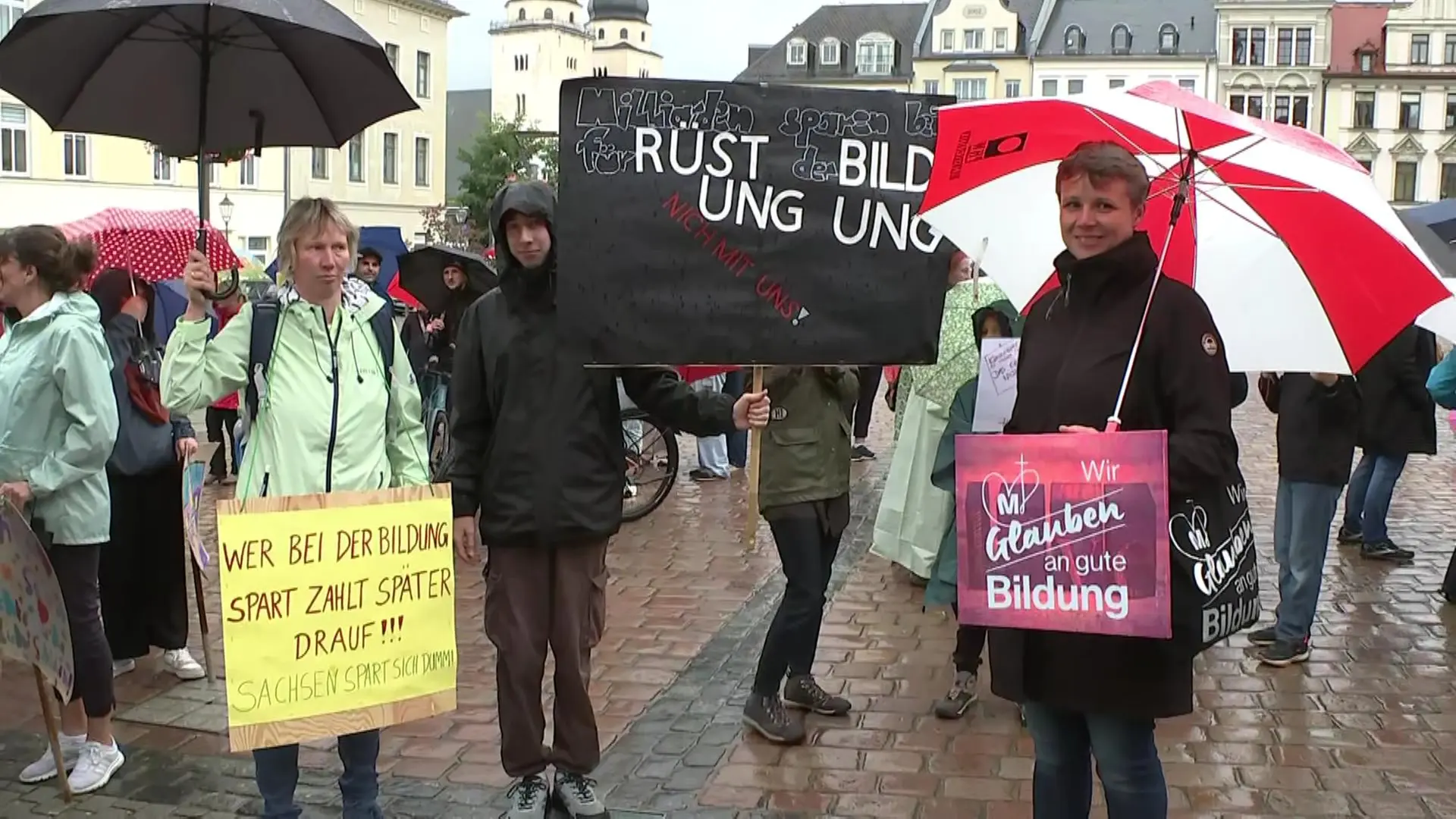
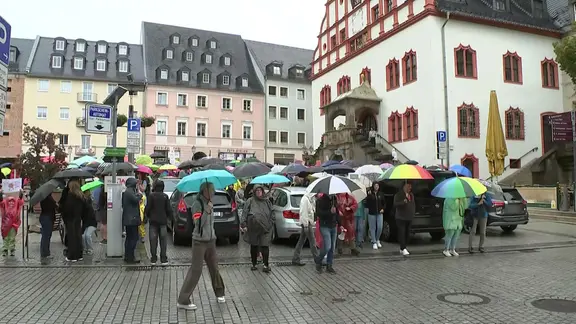
On Wednesday, approximately 350 protesters gathered in front of the Plauen town hall, braving the elements to voice their opposition to the state’s austerity measures. The protest, organized under the banner "Don’t Break It!" ("Nicht kaputt machen!"), highlights a growing rift between the Saxon Ministry of Education and the diverse network of independent, non-profit educational institutions that serve as a cornerstone of the region’s pedagogical landscape.
The Core Conflict: Why the Cuts Matter
At the heart of the controversy is a fundamental disagreement over how public funds should be distributed during times of fiscal hardship. The Saxon state government, facing a revenue shortfall, has proposed a series of budgetary constraints set to take effect in August 2027.
The proposed measures include:

- Reduction in Sachkosten (Non-personnel costs): Free school operators will be required to cover an "own contribution" of approximately 10% for non-personnel operating expenses, such as building maintenance, equipment, and utility costs.
- Increased Financial Burden for New Schools: For newly established schools, subsidies during the mandatory three-year "waiting period"—a phase during which a school must prove its viability before receiving full state support—are set to be slashed by an additional 20%.
For the state government, these measures are presented as necessary adjustments in light of declining student population projections. However, for advocates of free schools, these cuts represent a systemic attack on the constitutional mandate of educational diversity and equality.
A Chronology of the Dispute
The escalation of tensions did not happen overnight. The current protest follows years of subtle shifts in the funding formulas used by the state.
- 2007: The Precedent: Protesters and school associations frequently cite 2007 as the last time the state "reached into the trick box" to justify funding cuts based on demographic shifts. Many believe that the current strategy mimics this past approach, using the argument of "fewer students" to mask deeper structural cuts.
- Early 2026: Budgetary Alarms: As the state budget deficit became increasingly apparent, the Ministry of Education began drafting the current austerity plan.
- September 2026: The Mobilization: Throughout early September, the Landesarbeitsgemeinschaft (State Working Group) of independent school operators began a concerted effort to organize rallies, social media campaigns, and direct lobbying of members of the state parliament (Landtag).
- September 16, 2026: The Plauen Rally: The demonstration in Plauen marked the first major public escalation of the conflict, drawing stakeholders from across the Vogtland region.
Supporting Data and The Constitutional Argument
In Germany, the state is constitutionally obligated to ensure that private schools—provided they meet state requirements—are not treated as second-class institutions. Article 102 of the Saxon Constitution is the legal bedrock of this argument. It mandates the "equivalence" of schools in public and private (free) sponsorship.
Solveig Speck, a representative of the Evangelical School Association of Auerbach, points out that the current funding model is already split into two distinct categories: personnel costs and non-personnel (Sach) costs.

"Every student in Saxony is entitled to a subsidy," Speck explains. "By targeting the Sachkosten specifically for free schools, the state is effectively creating a two-tier system. It is unfair and, in our view, potentially unconstitutional to demand this 10% contribution only from the independent sector while public schools remain fully shielded from this specific cost-shifting measure."
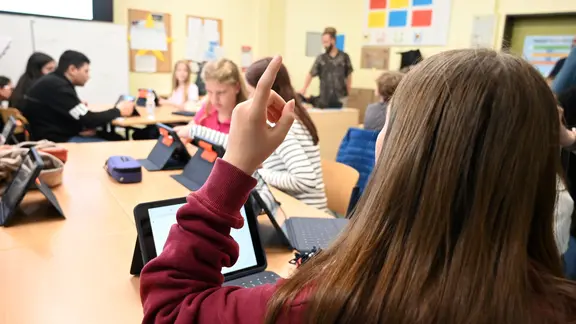
There are over 600 schools in free sponsorship across Saxony, ranging from Montessori and Waldorf schools to church-affiliated institutions. For many of these organizations, the 10% cut is not a manageable reduction but a threat to their operational viability.
Official Responses and Political Maneuvering
The state government, currently in what observers describe as a "finding phase," has maintained that all sectors must contribute to filling the billion-euro hole in the budget. Government spokespeople have argued that private schools must exhibit the same fiscal responsibility as public entities.
However, the response from the school associations has been one of strategic pressure. They are not merely relying on street protests; they are engaging in intense lobbying. "We are contacting every member of the Landtag," says Speck. "We are encouraging parents to flood the Ministry of Education with letters and personal accounts. We want to show them that this is not just an administrative line item—these are real children and real communities they are impacting."

The organizers emphasize that they are currently seeking dialogue rather than total confrontation. However, they have made it clear that if the dialogue fails, they are prepared to take legal action. The argument is that the cuts infringe upon the "equivalence" principle, and if the state cannot prove that the funding gap is truly existential, the courts may be asked to intervene to protect the constitutional status of these schools.
Implications for the Future of Education in Saxony
The potential long-term consequences of these cuts are significant. If independent schools are forced to shoulder 10% of their operating costs, they face three primary options:
- Tuition Hikes: Schools may be forced to pass the costs on to parents, potentially turning elite-friendly private education into a luxury, thereby exacerbating social inequality.
- Cost-Cutting in Education Quality: Schools may reduce extracurricular activities, delay facility renovations, or cut specialized staff, directly impacting the quality of the learning environment.
- Closures: Smaller or newer institutions, particularly those in rural areas where the financial margin for error is razor-thin, may be forced to shut their doors, reducing educational choice for families.
Furthermore, the impact on "newly established schools" is particularly concerning for educational innovators. By cutting subsidies by an additional 20% during the three-year waiting period, the state effectively creates a barrier to entry for any new, experimental, or alternative educational concepts.
Voices from the Frontlines
The human element of the protest is what drives the urgency of the movement. At the Plauen rally, parents spoke passionately about why they chose independent schools for their children.

"I want to show the flag," said one attendee. "Education should be accessible to everyone in every way. My child attends a private primary school because the pedagogical approach there fits their needs better than the local state school. I want to ensure that those schools remain supported."
Another participant, a teacher, echoed these sentiments: "It is not just about the money. It is about the principle of pluralism. Saxony prides itself on a diverse educational landscape. These cuts don’t just take money; they shrink the space for alternative, modern, and diverse schooling methods."

Conclusion: A Turning Point?
As the debate continues, all eyes are on the Saxon Landtag. The government finds itself in a precarious position: it must balance a massive budget deficit while avoiding a political firestorm that could alienate thousands of engaged, active, and organized parents and educators.
The protests in Plauen are likely just the beginning. As the 2027 deadline approaches, the campaign "Don’t Break It!" is expected to gain momentum, potentially spilling over into more urban centers like Dresden and Leipzig. The outcome of this dispute will serve as a bellwether for how the state handles the tension between austerity and its constitutional commitment to an inclusive and diverse educational system.

For now, the message from the streets is clear: the independent school sector in Saxony is not willing to accept these cuts without a fight, and they are prepared to leverage every constitutional, legal, and political tool at their disposal to ensure that their schools remain open, funded, and free.