

Washington D.C. / Riyadh / Tehran – The Middle East finds itself at a critical juncture as the Trump administration reportedly prepares a new multi-billion dollar arms package for Israel. This development comes against a backdrop of intensifying proxy conflicts, significant disruptions to global oil trade routes, and a deepening humanitarian crisis, particularly in Yemen. Regional and international actors are grappling with a volatile security landscape marked by drone and missile attacks, maritime confrontations, and a renewed push from the U.S. Congress to rein in military engagement with Iran.
The planned U.S. weapon delivery to Israel, valued at approximately $2.8 billion, includes thousands of powerful bombs, a move that has historically drawn criticism over potential civilian casualties. Concurrently, Saudi Arabia has reportedly canceled some oil shipments to Europe following attacks on its critical infrastructure, while Qatar has issued a stark warning that the closure of the Bab al-Mandab strait would be "catastrophic" for global trade. As the U.S. House of Representatives again votes to limit presidential authority in the "Iran War," and Iran’s foreign minister openly mocks American military losses, the region remains trapped in a dangerous cycle of escalation.
Escalating Military Engagements and US Policy Shifts
Billions in Advanced Weaponry for Israel Sparks Concern
The Trump administration is advancing a new arms deal with Israel, a move poised to inject significant firepower into the ongoing regional conflicts. Valued at around $2.8 billion (€2.4 billion), the package reportedly includes 40,000 high-payload bombs, specifically 20,000 Mk84 and 20,000 BLU-117 types, each weighing approximately 900 kilograms. These "bunker buster" style bombs are known for their immense destructive capability, designed to penetrate hardened targets.

The potential delivery of such formidable ordnance has reignited debates over its humanitarian implications. Past administrations, notably that of President Joe Biden, had temporarily suspended similar shipments to Israel two years prior, citing concerns over the high number of civilian casualties in the Gaza Strip. The current proposed sale signals a robust commitment from the Trump administration to bolstering Israel’s military capabilities, even as international pressure mounts for de-escalation and civilian protection. Critics argue that providing such heavy weaponry risks exacerbating conflict and civilian suffering in densely populated areas, while proponents maintain it is essential for Israel’s security in a hostile environment.
Congressional Pushback on Iran War
In a significant display of legislative assertiveness, the U.S. House of Representatives has once again voted to compel President Donald Trump to withdraw American military forces from combat operations involving Iran. A resolution calling for this withdrawal passed with 220 votes in favor and 204 against, drawing support from members of both the Democratic and Republican parties. This is not the first time Congress has attempted to limit the executive’s power in the context of the "Iran War," reflecting a persistent legislative desire for greater oversight on military engagements.
While the resolution does not carry immediate legal consequences for U.S. policy towards Iran, its passage is largely seen as a strategic maneuver to maintain political pressure on President Trump, particularly with midterm congressional elections less than two months away. The resolution includes a crucial exemption, allowing for the deployment of forces deemed necessary to defend the United States or its allies against direct attacks, thereby acknowledging legitimate security concerns while seeking to curb offensive actions. This ongoing tension between the executive and legislative branches underscores the deep divisions within American foreign policy circles regarding the optimal approach to Iran and regional security.

US Military Presence and Losses Detailed
A groundbreaking report from a U.S. government oversight body has for the first time offered an official, comprehensive assessment of the consequences of the "Iran War." The report, released by the Inspector General of the Department of Defense, documents the loss of eleven U.S. service members "killed in action" and highlights critical shortages in essential weaponry. Furthermore, the report reveals extensive damage inflicted upon American military bases and aircraft across the Middle East.
Hundreds of buildings and facilities at U.S. bases in Kuwait, Bahrain, Qatar, the United Arab Emirates, Saudi Arabia, Iraq, Oman, and Jordan were either damaged or destroyed by Iranian attacks. The U.S. Naval Base in Bahrain, a key strategic asset, was reportedly among the most severely affected. These sustained attacks have forced U.S. forces to rely on more distant supply bases, complicating logistics and potentially impacting operational readiness. The findings underscore the tangible costs of the protracted conflict and raise questions about the long-term sustainability of the current U.S. military posture in the region.
High-Level Security Consultations in Germany
Amidst the escalating regional tensions, the U.S. military recently hosted a high-level conference in Germany, bringing together senior military representatives from eight nations. A U.S. government official confirmed that participants engaged in discussions focused on "strengthening security cooperation in the Middle East." While specific details remained scarce, earlier reports from the news portal "Axios," citing Israeli sources, indicated that the meeting involved top military commanders from the U.S., Israel, and several Arab countries.
The agenda reportedly centered on the ongoing "Iran War" and broader regional tensions. Notably, General Brad Cooper, the commander of the U.S. Central Command (Centcom) responsible for the region, reportedly reiterated the U.S. military’s commitment to maintaining its troop presence in the Middle East, despite Iranian attacks on U.S. installations. This assurance aims to project stability and resolve to allies in the face of persistent threats, emphasizing a collective approach to regional security challenges.
New US Ambassador to Saudi Arabia Nominated
In a move signaling continued engagement with a key regional partner, President Donald Trump has nominated outgoing Congressman Wesley Hunt as the next U.S. Ambassador to Saudi Arabia. The Republican representative from Texas, nearing the end of his second term, will be dispatched to Riyadh amidst burgeoning tensions in the Middle East.
Hunt, who placed third in the Republican primary for the U.S. Senate in Texas in March 2026, acknowledged the weight of his prospective role. In a post on X, he expressed his awareness of "the strategic importance of the partnership between the United States and Saudi Arabia and the great responsibility of this office." His appointment comes at a critical time when diplomatic channels and strategic alliances are more crucial than ever in navigating the complex web of regional conflicts and geopolitical rivalries.
Maritime Chokepoints and Economic Fallout
Critical Waterways Under Threat: Hormuz and Bab al-Mandab
The stability of global energy markets and international trade is being severely tested by intensified threats to two crucial maritime chokepoints: the Strait of Hormuz and the Bab al-Mandab strait. Both waterways are vital arteries for global commerce, particularly oil and gas shipments, and their disruption carries far-reaching economic consequences.
The Strait of Hormuz, linking the Persian Gulf with the Arabian Sea, has been a flashpoint for years. Recent reports from Iran’s Revolutionary Guards (IRGC) claimed an oil tanker, the "El Gaia," exploded after striking a sea mine in the strait. According to Iranian state radio Irib, quoting the IRGC, the tanker was traversing the "mined southern route" through the strait, which the IRGC subsequently declared closed and under its control, demanding fees for passage through a "safe" northern route. However, the U.S. military’s Central Command (Centcom) vehemently refuted this account, stating that the "El Gaia" had been struck by an Iranian missile the previous month, dismissing the mine claim as false. This conflicting narrative highlights the information warfare accompanying the physical confrontations in this strategically critical passage, through which an estimated 20% of the world’s total oil consumption passes.
Further south, the Bab al-Mandab strait, connecting the Red Sea with the Gulf of Aden, faces an equally precarious situation. Qatar has issued a dire warning, stating that a "de facto closure" of this waterway would be "catastrophic" for the world, already grappling with disruptions in the Strait of Hormuz. A spokesperson for Qatar’s Foreign Ministry emphasized that the international community cannot afford for the Bab al-Mandab, often referred to as the "Gate of Tears," to become impassable. This strait is a crucial shortcut for shipping between Europe and Asia, normally handling about 10% of global sea trade and 30% of worldwide container traffic.

The threat to Bab al-Mandab has been amplified by the Houthi militia, backed by Iran, which has advanced southward along the Yemeni coast. Their control over key coastal cities like Mokha and Dhubab, as well as several islands in the Red Sea, grants them a more strategic position to target commercial vessels. The capture of the Greater Hanish and Lesser Hanish islands, located 160 kilometers north of Bab al-Mandab, further cements their ability to disrupt shipping, a development confirmed by both Houthi spokespersons and Yemeni government officials.
Oil Supply Disruptions and Economic Repercussions
The escalating tensions have direct and severe repercussions for global energy supplies. Saudi Arabia, the world’s largest crude oil exporter, has reportedly begun canceling some crude oil deliveries to European customers scheduled for late September. This decision, according to sources familiar with the matter speaking to Reuters, is a direct consequence of the closure of its East-West pipeline following an attack last week. The pipeline, designed to bypass the Strait of Hormuz by transporting oil from the kingdom’s eastern oil fields to Red Sea export terminals in the west, was a critical alternative route.
The 1200-kilometer pipeline, with a pre-war capacity of up to seven million barrels per day, was temporarily shut down as a precautionary measure after drone attacks. While U.S. Energy Minister Chris Wright optimistically predicted its return to operation "very soon," within "days," insiders offered varying estimates for repairs, ranging from several days to five or six weeks, with some suggesting partial operation might resume during repairs. The disruption underscores the vulnerability of critical energy infrastructure to regional conflict and the ripple effect on global supply chains.

The German Federal Ministry for Economic Affairs, however, has stated that despite the worsening situation in the Middle East, Germany does not anticipate immediate oil and gas shortages. A ministry spokesperson clarified that Germany does not source oil, gas, or LNG via the Bab al-Mandab route. Nevertheless, a government spokesperson expressed "great concern" over rising diesel and petrol prices, attributing the increases solely to geopolitical factors. This indicates that while direct supply might not be immediately threatened, the global market impact of disruptions will still affect consumer costs.
Regional Actors and Escalating Tensions
Iran’s Defiance and Proxy Warfare
Iran’s leadership has met the U.S. military’s challenges with open defiance and mockery. Iranian Foreign Minister Abbas Araghtschi, using the platform X, derided reports of U.S. military ammunition shortages and combat losses. He claimed that "hundreds of U.S. military bases in the region had been shot to pieces" and "dozens of U.S. aircraft burned," attributing these assertions to U.S. Department of Defense data. Araghtschi dismissed any notion of Iran being defenseless as mere "fiction," showcasing Tehran’s confident stance in the face of perceived American vulnerabilities.
Adding to the maritime confrontations, the U.S. military reported successfully repelling an Iranian attempt to seize an unmanned U.S. drone boat. According to a Centcom spokesperson, two Iranian small boats unsuccessfully attempted to take control of the U.S. vessel, which is deployed for patrols in the Strait of Hormuz. The U.S. military confirmed that the Iranian Revolutionary Guard Corps (IRGC) was behind the attempted takeover, leading to the destruction of the Iranian boats and the death of their personnel. This incident highlights the direct and often lethal confrontations occurring in strategic waterways.

In an effort to further pressure Iran, the U.S. government has imposed extensive sanctions on Russia’s VTB Bank, Russia’s second-largest financial institution. The U.S. Treasury Department announced the measure as part of broader efforts to sever Iran’s remaining financing channels. While VTB Bank had already faced sweeping sanctions from the Biden administration in 2022 following Russia’s invasion of Ukraine, the Trump administration now accuses the Russian bank of actively assisting the Islamic Republic in circumventing international sanctions. VTB’s extensive international presence, including branches in China, India, and Iran, underscores the complexity of enforcing such financial restrictions.
Saudi Arabia Under Fire
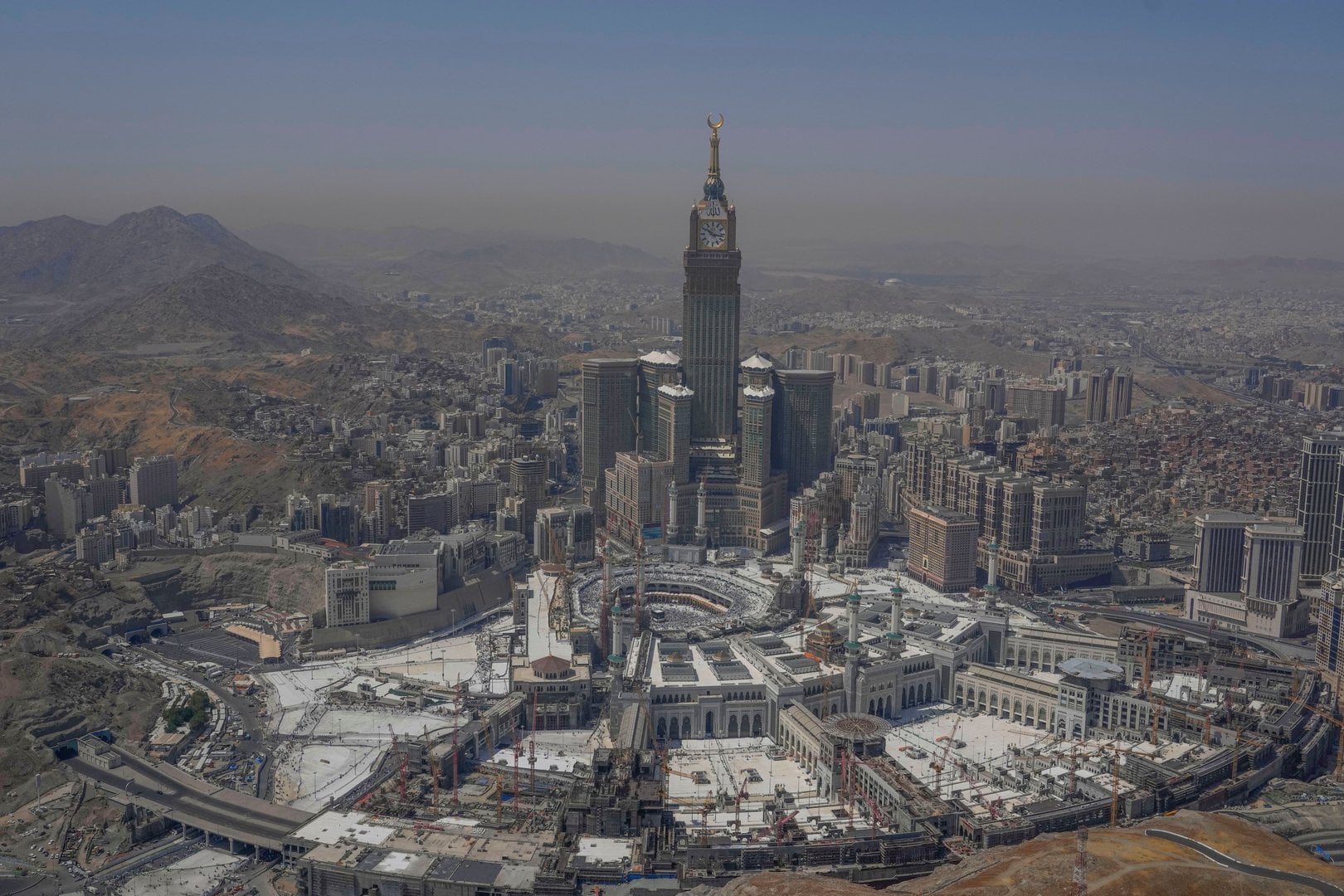
Saudi Arabia continues to face direct attacks from Houthi forces, exacerbating regional instability. The Saudi air defense reportedly intercepted a Houthi militia drone near the holy city of Mecca, destroying the unmanned aerial vehicle south of the city. Turki al-Maliki, spokesperson for the Saudi-led military coalition operating in Yemen, condemned the attack on X as a "despicable act." This incident marked the first time Mecca had been under alarm since the renewed escalation with the Houthi militia, though authorities in the pilgrim city had issued a warning the previous day. Al-Maliki noted it was the first Houthi attack attempt on Mecca since 2017, when a ballistic missile was reportedly aimed at the city.
In response to the heightened security risks, the U.S. government has advised its citizens against travel to Saudi Arabia. The State Department issued a travel advisory, urging Americans to reconsider travel plans due to the "risk of Iranian drone and missile attacks" targeting American facilities within the kingdom, as well as the pervasive threats of armed conflict and terrorist attacks. The advisory designated the entire country at the second-highest warning level, with areas near the Yemeni border carrying the highest possible "do not travel" warning, directly referencing recent Houthi attacks from neighboring Yemen.

Gaza and Yemen: Humanitarian Crises Deepen
The human cost of these conflicts continues to mount, with humanitarian crises deepening in both Gaza and Yemen. In the Gaza Strip, the Israeli military announced it had killed Nayal Abu Obeid, a high-ranking commander of the Islamist Hamas group in Rafah. The Israel Defense Forces (IDF) stated on X that Abu Obeid was a "key figure in the Hamas leadership" and responsible for the brigade’s activities and terrorist attacks. While the military’s claims could not be independently verified, Defense Minister Israel Katz confirmed the involvement of the Shin Bet internal intelligence agency in the operation, with reports suggesting he was killed in a drone strike.
Meanwhile, Yemen’s humanitarian catastrophe is spiraling, with new fighting displacing over 100,000 people internally, according to the UN Refugee Agency (UNHCR). Thousands more have fled by sea to neighboring Djibouti, straining limited resources. The UNHCR highlighted the extreme difficulty of delivering humanitarian aid due to the insecure environment, damaged roads, and blocked communication channels. The International Organization for Migration (IOM) further warned that fuel shortages are severely impeding people’s ability to flee the escalating conflict, even as more Yemenis are planning perilous sea journeys to Djibouti, where over 2,000 Yemeni refugees are currently being supported. The Houthi rebels’ intensified attacks on Saudi cities and energy infrastructure, coupled with Saudi and Yemeni air strikes on rebel positions, continue to devastate the civilian population.
Conclusion
The Middle East remains a crucible of interconnected conflicts, where geopolitical rivalries, economic vulnerabilities, and humanitarian crises are converging. The Trump administration’s planned arms deal with Israel, while aimed at bolstering a key ally, risks further fueling a regional arms race. Concurrently, the vulnerability of critical maritime chokepoints like the Strait of Hormuz and Bab al-Mandab, coupled with attacks on energy infrastructure, threatens to unleash significant economic turmoil on a global scale.

The ongoing proxy war between Iran and a U.S.-backed coalition, manifest in drone attacks, naval confrontations, and defiant rhetoric, shows no signs of abating. The humanitarian toll in Yemen, with hundreds of thousands displaced and aid access severely hampered, underscores the urgent need for diplomatic solutions that prioritize civilian lives. As the U.S. Congress seeks to assert its authority over military engagements and international bodies like the UN Security Council convene to address specific flashpoints, the path to de-escalation appears fraught with challenges. Without concerted international effort and a willingness from all parties to step back from the brink, the region risks descending into an even deeper and more protracted period of instability.