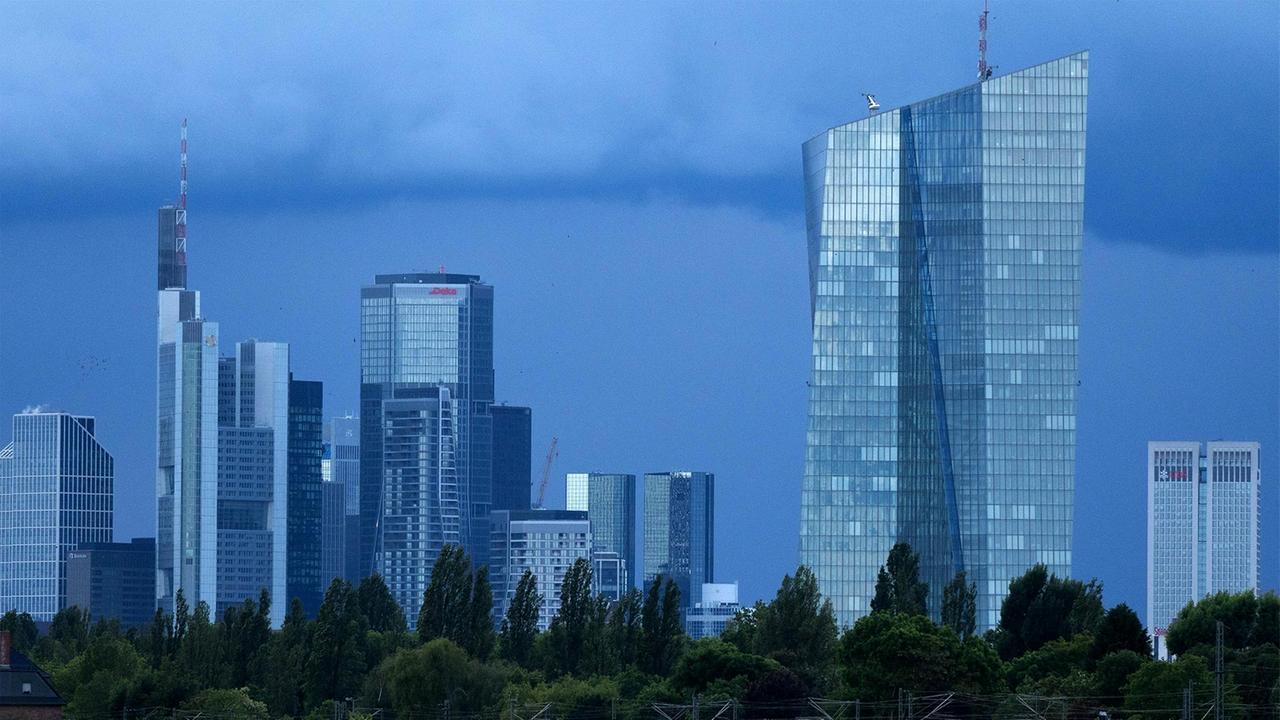
FRANKFURT – In a decisive effort to combat persistent inflationary pressures sweeping across the Eurozone, the European Central Bank (ECB) has raised its key interest rate to 2.5 percent. The decision, announced today in Berlin, marks the second major rate hike this year as the bank attempts to rein in a cooling economy and a cost-of-living crisis driven largely by geopolitical instability.
The move to lift the deposit rate from 2.25 percent to 2.5 percent comes as the Eurozone grapples with inflation rates that have breached the three-percent threshold, fueled primarily by an energy supply shock resulting from the ongoing conflict in the Middle East.
The Core Facts: A Shift in Monetary Policy
The ECB’s Governing Council, meeting in an extraordinary session away from its Frankfurt headquarters, confirmed that the primary goal of the hike is to anchor inflation expectations. With the Eurozone’s inflation rate reaching 3.3 percent in August—the highest level since September 2023—policymakers felt compelled to act.
"The conflict in the Middle East continues to generate significant inflationary pressure," the ECB stated in its official release. "We anticipate that inflation will remain significantly above our target value for an extended period, and the outlook remains shrouded in high uncertainty."
The ECB’s medium-term mandate remains a stable inflation target of 2.0 percent. However, current projections from the bank’s economists suggest that the goal is becoming increasingly elusive. Forecasts have been revised upward: 2027 inflation is now expected to hit 2.5 percent, with 2028 settling at 2.1 percent.
Chronology: The Road to 2.5 Percent
To understand the current economic environment, one must look back at the timeline of the ECB’s recent interventions:
- September 2023: The ECB initiates its first rate hike cycle since the post-pandemic recovery began, signaling an end to the era of ultra-low interest rates.
- June 2026: Following a period of relative stability, the bank implements a 0.25 percentage point hike, the first since the previous year, acknowledging the structural changes in the energy market.
- July 2026: The ECB pauses, adopting a "wait and see" approach to assess whether the June hike was sufficient to dampen demand without triggering a recession.
- September 10, 2026: The Governing Council decides to increase the deposit rate to 2.5 percent, citing the failure of inflation to retreat and the continued escalation of oil prices.
Supporting Data: The Anatomy of the Crisis
The primary driver of the current inflation is the energy sector. The geopolitical standoff in the Persian Gulf, particularly regarding the security of the Strait of Hormuz, has sent global oil prices surging past the $100 per barrel mark.
Domestic Impact in Germany
As the Eurozone’s largest economy, Germany serves as a bellwether for the continent. In August, German inflation reached 2.9 percent. The impact is felt daily by citizens:
- Transport: Record-high fuel prices at the pump are eroding disposable income.
- Housing: Heating oil costs have seen double-digit percentage increases, creating a budgetary squeeze for households ahead of the winter season.
- Industrial Production: German manufacturing, heavily reliant on affordable energy, is facing significant margin compression as input costs soar.
The data suggests that the economy is caught in a "stagflationary" trap: prices are rising, but economic growth prospects are dimming. The ECB’s own projections indicate that the cooling effect of the rate hikes will likely lead to a period of stagnation rather than the "soft landing" policymakers initially hoped for.
Official Responses and Expert Analysis
The ECB’s decision has elicited a complex reaction from financial experts, industry leaders, and banking associations.
Jörg Asmussen, GDV (German Insurance Association)
Former ECB Director Jörg Asmussen described the hike as "folgerichtig" (logical). He noted that the ECB is in a difficult position: "The bank must prevent the energy shock from seeping into broader price developments and wage expectations. While the hike dampens demand, it cannot directly address the supply-side shocks caused by the energy crisis."
Ulrich Reuter, DSGV (German Savings Banks Association)
Ulrich Reuter echoed the sentiment of necessity, stating that while the ECB cannot stop the flow of oil, it can prevent a wage-price spiral. "The ECB has acted with necessary consistency today," Reuter remarked.
Volker Treier, IHK (Chamber of Commerce and Industry)
While acknowledging the technical necessity of the move, the industry perspective is more cautious. "For many companies, this is only to be digested with pain," Treier said. He warned that if the cost of credit becomes too prohibitive, the industrial base of Europe—already struggling with high energy costs—could face a wave of insolvency or stalled investment.
Implications: What Comes Next?
The central question facing investors and households is whether this is the final hike in the current cycle.
The Market Perspective
Neil Wilson, an investment strategist at Saxo Markets, suggests that we may be approaching a ceiling. "We are seeing very few ‘second-round effects’—where companies raise prices to cover wage demands—at this stage," Wilson noted. He argues that the market has already "priced in" the current environment, and that borrowing costs are already elevated due to rising bond yields, which may do the ECB’s work for it.
The Institutional Strategy
Conversely, the futures markets are pricing in at least one more increase before the end of the year. Florian Heider of the Leibniz Institute for Financial Research (SAFE) advises caution: "The ECB must correctly interpret the mixed signals. Future decisions must be strictly data-dependent."
The "Data-Dependent" Mandate
ECB President Christine Lagarde was unequivocal during the post-decision press conference. "We are following a data-dependent approach and will decide from meeting to meeting," she stated. "We are not pre-committing to a specific interest rate path."
This shift to a flexible, meeting-by-meeting strategy marks a departure from the forward-looking guidance that characterized the previous decade of European monetary policy. It reflects the reality that in an era of geopolitical volatility, central banks are effectively flying blind, reacting to the latest price indices rather than long-term economic models.
Conclusion: A Delicate Balance
The hike to 2.5 percent is a clear signal that the ECB is prioritizing price stability over immediate growth. By tightening financial conditions, the bank hopes to curb demand and force a realignment of the economy. However, the risk remains high: if the conflict in the Middle East escalates further, or if the energy supply remains constrained, the ECB may find itself forced to choose between further depressing an already fragile economy or allowing inflation to erode the purchasing power of the Euro.
For the average citizen, the message is clear: the era of "cheap money" is firmly in the rearview mirror. Borrowers should brace for higher interest rates on mortgages and consumer loans, while savers may see slightly improved returns—though these are likely to be offset by the persistent rise in the cost of living. As the ECB navigates these turbulent waters, the path forward remains entirely dependent on the volatile interplay between global politics and the European consumer market.