By Editorial Staff, MDR SACHSEN
Updated: August 31, 2026
In the heart of Radebeul, a small but significant piece of Wild West lore has officially taken up residency at the intersection of Meißner Straße and Schildenstraße. Standing directly before the iconic Karl-May-Museum, a new pedestrian signal—featuring the legendary figure Old Shatterhand—now directs the flow of foot traffic. While the sight of a cowboy commanding a crossing is a novelty for the region, the journey to bring this piece of cultural flair to the streets of Saxony was anything but a quick draw. It was a three-year bureaucratic marathon that required patience, tenacity, and, ultimately, the blessing of the state’s Interior Ministry.
The Intersection of Culture and Compliance: The Core Facts
The new signal is more than just a quirky tourist attraction; it is a symbol of a deep-rooted municipal partnership. The "Cowboy-Ampel" (Cowboy Traffic Light) was a gift from St. Ingbert, a city in the Saarland region of Germany, to celebrate the 35th anniversary of their twinning with Radebeul.
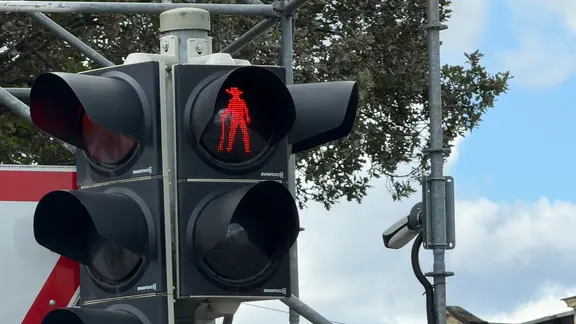
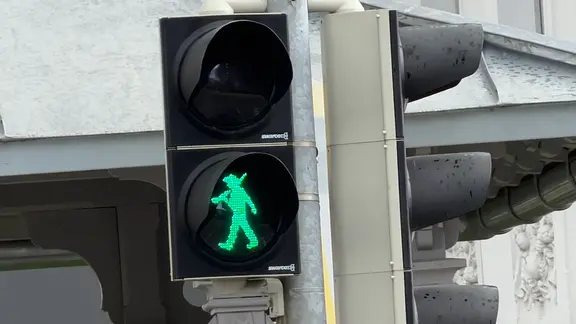
The installation features two distinct phases: a red silhouette of the cowboy, signaling a halt, and a green version, signaling permission to cross. The choice of Old Shatterhand is deeply symbolic for the city, as it serves as a gateway to the Karl-May-Museum, an institution dedicated to the life and works of Germany’s most famous writer of adventure novels. By placing the figure at the literal doorstep of the museum, the city hopes to bridge the gap between historical heritage and modern urban utility, creating an inviting atmosphere for the thousands of tourists who flock to the museum annually.

A Chronology of Bureaucracy: The Three-Year Trail
The road to the light’s activation was paved with more paperwork than the dusty trails of the American frontier. When the gift was first presented by the delegation from St. Ingbert, few expected that the installation would take three full years to materialize.
According to Volkmar Kunze, the Managing Director of the Karl-May-Museum, the primary obstacles were not aesthetic, but rather legal and logistical. The process began with the search for an appropriate, legally permissible location. Once the spot in front of the museum was selected, the city entered a complex phase of "traffic-law-based regulations."
Because any deviation from the standardized traffic light signal (the traditional Ampelmännchen) is legally considered a "new traffic sign" under German law, the city could not simply flip a switch. It required extensive vetting, safety assessments, and, crucially, the explicit approval of the Saxon State Ministry of the Interior. Each stage of the process required documentation, impact studies, and multiple rounds of negotiations to ensure that the novelty did not compromise the safety of the busy intersection.
Supporting Data: Precedents and Regional Uniqueness
While Radebeul is making headlines today, it is not the first German municipality to experiment with "motiv-ampeln." Germany has a long history of customizing its traffic signals to reflect local identity.

In Mainz, pedestrians are guided by the Mainzelmännchen, cartoon characters beloved in German television history. Trier, the birthplace of Karl Marx, famously features a traffic light depicting the philosopher himself. Similarly, Emden boasts an "Otto" light (after the comedian Otto Waalkes), and Solingen features silhouettes of local artisans.
However, Radebeul holds the distinction of being the first city in Saxony to successfully implement such a project. This status as a "pioneer" in the region was a significant hurdle; the Ministry of the Interior was notably cautious, treating the proposal with the skepticism often reserved for untested municipal experiments. The successful deployment in Radebeul is now being watched by other cities in the Free State of Saxony, who may look to follow suit if the project proves both safe and popular.
Official Responses and the "Probationary" Period
The project’s launch has been met with a mix of excitement and guarded pragmatism from local officials. Oberbürgermeister (Lord Mayor) Bert Wendsche expressed relief that the long-standing efforts finally reached a successful conclusion, though he remains acutely aware of the "probationary" nature of the installation.
The agreement reached with the state authorities mandates a five-year trial period. During this time, the city is legally obligated to document the traffic flow and record any changes in accident statistics at the intersection. The Ministry has made it clear that if there is any evidence of a "significant increase" in accidents, the cowboy must be removed and replaced with a standard signal.
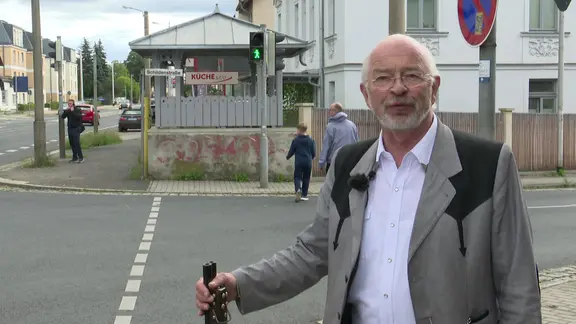
"We received the signal on a strict probation," Mayor Wendsche noted. "We have to prove that our citizens are ‘smart’ enough to navigate the street safely despite the novelty. However, we are confident that the visual change will not distract drivers or pedestrians in a way that compromises safety."
The Human Element: Public Reaction and Interpretation
The unveiling has sparked a lively debate among the local populace, ranging from amusement to mild confusion. On its first day, the reactions were as varied as the visitors passing through the square.
One visitor from Berlin, initially unsure of what she was looking at, remarked, "He has a walking stick, right? Like a hiker?" It was only when the light shifted to the green "go" phase—revealing the silhouette in motion—that she identified the figure as a cowboy. Her confusion highlights the nuance of the design: the "Silberbüchse" (the silver gun, a signature prop of the character) can, at a quick glance, be mistaken for a hiking staff or a cane.
Another local resident, while appreciative of the town’s efforts to boost its profile, remained pragmatic. "It’s a bit unusual to see a weapon on a traffic signal," she noted, referring to the rifle depicted in the silhouette. "But at the end of the day, as long as it turns green so I can make my appointment on time, it’s fine by me."
For Museum Director Dr. Volkmar Kunze, the debate is secondary to the spirit of the project. When asked whether the late Karl May would have approved, Kunze was reflective: "Karl May was a man of his time, but he was inherently a modern, forward-thinking person. He didn’t know what an Ampelmännchen was, but he understood the importance of legacy and public engagement. I believe he would look at this and say, ‘That’s the right way to keep the story alive.’"
Future Implications: Can Heritage and Safety Coexist?
The Radebeul experiment serves as a microcosm for a broader question in urban planning: how much "character" can a city inject into its public infrastructure before it risks compromising the standardized safety measures that govern modern society?
The strict five-year probationary period set by the Saxon authorities suggests that the government is willing to tolerate cultural flair, but only if it can be quantitatively proven that public safety remains uncompromised. Should this project succeed, it could open the floodgates for other Saxon municipalities to use their own local historical icons—be they regional writers, industrial pioneers, or folkloric figures—to decorate their streets.
For now, the Old Shatterhand light stands as a testament to the fact that even in a world governed by rigid traffic codes, there is still room for a bit of storytelling. It stands as a reminder that civic pride, when combined with bureaucratic persistence, can turn a mundane intersection into a landmark. Whether the "cowboy" remains standing for the long term will depend on the vigilance of the drivers and pedestrians of Radebeul, but for now, the town is embracing its new, slightly rugged, traffic-directing hero.
As the sun sets over the Meißner Straße, the red and green lights continue to cycle, a small, glowing beacon of the Wild West in the heart of the German countryside. It is a reminder that in Radebeul, the law of the land is now, quite literally, being enforced by one of the most famous fictional characters in literary history.