For two decades, World of Warcraft has stood as the titan of the MMORPG genre. Since its release in 2004, Blizzard Entertainment has employed hundreds of developers, artists, sound designers, and quest writers to maintain its sprawling, ever-evolving virtual world. The sheer scale of such a production—involving millions of lines of code and years of asset creation—has long been considered the exclusive domain of large, well-funded studios.
However, a recent experiment conducted by a developer known as a "vibe-coder" has sent shockwaves through the industry, suggesting that the barrier to entry for building complex online worlds is collapsing. In just 48 hours, with a budget of roughly $200, this developer utilized Anthropic’s advanced AI model, Claude Fable 5, to construct a fully functional, browser-based MMORPG titled World of Claudecraft.
The Genesis of World of Claudecraft: A 48-Hour Sprint
The project began as an unconventional challenge: Could a single individual, armed only with a sophisticated AI, replicate the fundamental architecture of a genre-defining game? The developer leveraged Claude Fable 5—a model renowned for its coding capabilities—to handle the heavy lifting.
Over the course of two days, the developer pushed the AI to its limits, consuming approximately 91 percent of the monthly usage quota for the "Max 20x" subscription tier. According to reports shared on Reddit, the workflow was remarkably streamlined. The AI acted as both lead architect and asset coordinator. Initially, it established the core game logic—managing player movement, server synchronization, and state management. Subsequently, the AI autonomously navigated the internet to source open-source assets to flesh out the game’s visual and auditory environment.
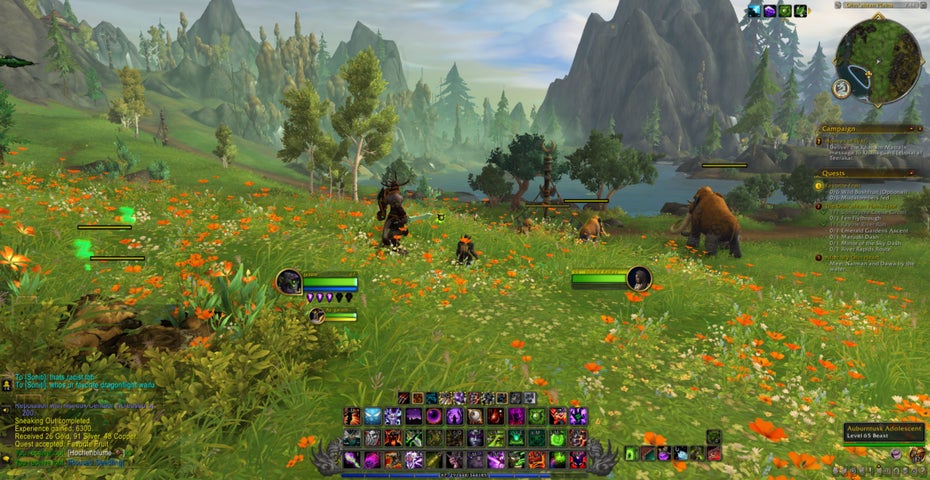
The resulting product, World of Claudecraft, is a playable, online-capable browser game. It offers a surprising depth of mechanics that mirror the industry standard: nine distinct classes, including the classic trinity of tank, DPS, and healer, and a progression system featuring a lengthy questline consisting of 90 individual objectives. Once players exhaust the leveling content, they can even engage in "raids"—small-scale group encounters designed for up to ten players.
Chronology of Development
The speed at which the project reached a playable state is perhaps its most jarring feature:
- Hour 0–6: Initial prompting and architecture design. Claude Fable 5 established the server-client communication protocol and the foundational database structure for character stats and inventory.
- Hour 7–24: Logic implementation. The AI wrote the systems for class abilities, combat calculations, and player movement.
- Hour 25–40: Asset sourcing and integration. The developer directed the AI to locate and implement free-to-use 3D models and textures, bridging the gap between raw code and visual representation.
- Hour 41–48: Refinement and deployment. Final debugging, UI polish, and hosting the game on the web for public access.
Supporting Data and Technical Reality
While World of Claudecraft is a testament to the speed of generative AI, it is not a direct competitor to AAA titles in terms of fidelity. Technical analysis of the project reveals several key limitations:
- Code Quality: Critics and fellow developers have noted that the generated code, while functional, is often a "spaghetti" mess. Without the rigorous oversight and refactoring common in professional development, the project suffers from technical debt that would make long-term maintenance or scaling nearly impossible for a solo creator.
- Performance: The game experiences frequent performance dips. Unlike World of Warcraft, which is optimized for thousands of concurrent users, Claudecraft struggles under moderate load, highlighting the gap between "functional code" and "production-ready software."
- Visual Fidelity: The aesthetic, while charming in a retro sense, lacks the cohesive artistic direction and high-poly detail of professional MMOs. It serves as a proof of concept rather than a visual masterpiece.
Despite these shortcomings, the project’s accessibility is impressive. It can be run locally or via the browser, and the developer has open-sourced the entire project on GitHub, inviting the community to contribute and refine the base.
The Industry Perspective: Efficiency vs. Craftsmanship
The emergence of World of Claudecraft has reignited the debate surrounding the role of AI in game development. Historically, the "MMORPG" label implied a multi-million dollar investment and a team of hundreds. By cutting that requirement down to $200 and two days of effort, the project poses a fundamental question: Is the craft of game development shifting from "building" to "curating"?
Industry analysts observe that while AI can accelerate the creation of rote systems—like inventory management or basic combat math—it currently lacks the "soul" of professional game design. Blizzard’s World of Warcraft is successful not just because its code works, but because its world-building, narrative pacing, and encounter design are crafted to evoke specific emotional responses.
"There is a difference between a functional game engine and an immersive experience," says one industry observer. "AI is an incredible tool for prototyping, but we are still a long way from an AI being able to replace the creative synergy of a team that has worked together for years."
Implications: The Future of "Vibe-Coding"
The term "vibe-coding"—a colloquialism for using AI to build software based on intent and natural language rather than deep technical expertise—is gaining traction. The developer behind World of Claudecraft views the project as a success, not because it dethroned a giant, but because it opened a window into the future.
"The craziest part was the emergence of features I never explicitly asked for," the developer noted in a community post. "When I think about what I can create in a few days as a side project, I have to wonder how much more powerful this will become when we move from ‘AI-assisted’ to ‘AI-collaborative’ workflows."
This sentiment is echoed by many in the indie game space. If a small team can produce a working prototype in 48 hours, the threshold for creating high-quality, niche MMORPGs or multiplayer experiences is lower than ever. We may soon see a flood of "AI-native" games—smaller, experimental, and community-driven projects that serve as a middle ground between simple browser games and massive AAA titles.
Conclusion: A New Era of Accessibility
The World of Claudecraft experiment is a watershed moment for the intersection of AI and interactive entertainment. While it remains a far cry from the polished, monolithic experiences of the gaming giants, it effectively demonstrates that the power to build is being democratized.
As Claude Fable 5 and similar models continue to evolve, the distinction between a professional developer and an enthusiastic hobbyist will continue to blur. Whether this leads to a renaissance of creative, diverse, and accessible online games, or a sea of buggy, low-effort clones, remains to be seen. However, one thing is certain: the traditional walls surrounding the development of massive, complex, and persistent online worlds have been breached, and the era of the "vibe-coder" has officially begun.
For those interested in exploring the potential of this technology, the project remains open-source on GitHub, serving as a playground for anyone who wishes to test the limits of what a human and an AI can build together in just a few short days.