
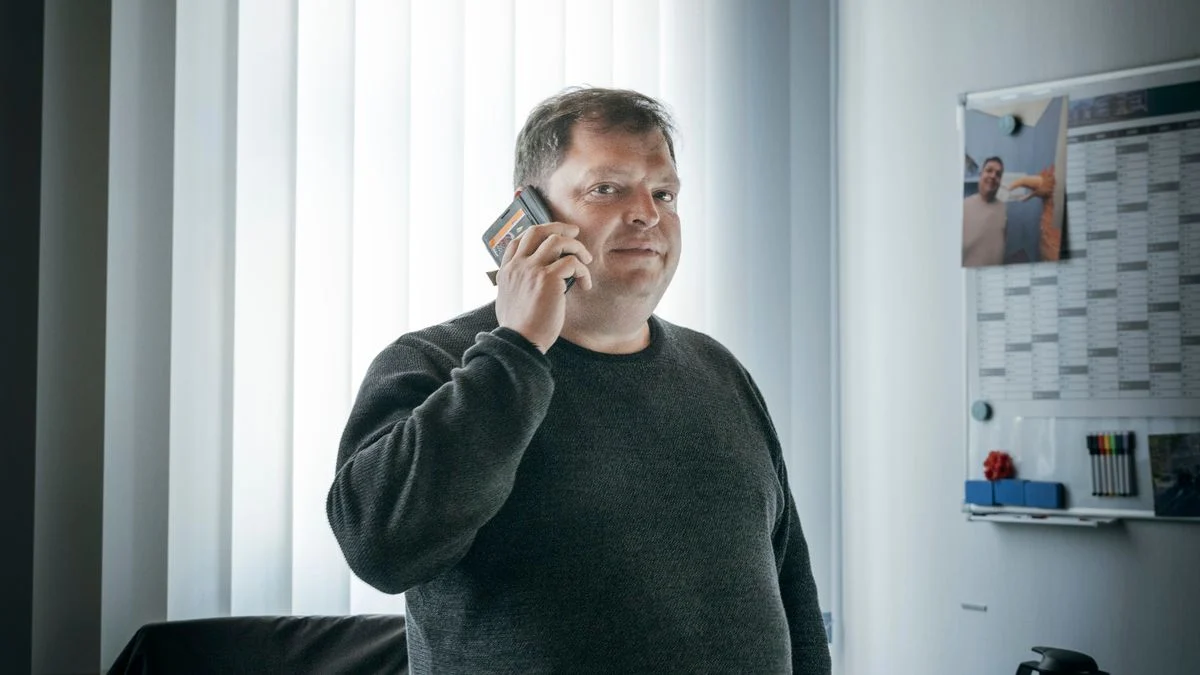
Lichtenau, Saxony-Anhalt – Nestled amidst the rolling agricultural plains of Saxony-Anhalt, the small town of Lichtenau, population just under 5,000, has become an unlikely crucible for German politics. For nearly three years, its municipal affairs have been steered by Thomas Müller, a mayor elected under the banner of the Alternative for Germany (AfD). His tenure, approaching its significant three-year mark, offers a rare glimpse into the practical realities of AfD governance at the local level, far removed from the fiery rhetoric of national parliaments.
Müller’s election in late 2021 sent ripples through the state, making Lichtenau one of the few communities in Germany, and certainly in Saxony-Anhalt, to entrust its highest local office to a representative of the far-right party. His victory was not merely a local anomaly but a potent symbol of shifting political landscapes, particularly in the economically challenged and demographically shrinking regions of eastern Germany. As his term progresses, the central question remains: how has an AfD mayor navigated the intricate, often mundane, challenges of local administration, and what does his record truly reveal about the party’s capacity to govern?
Main Facts: The AfD Experiment in Lichtenau
Thomas Müller, a former businessman with a background in logistics, secured the mayoral seat in Lichtenau with a narrow but decisive 51.3% of the vote. His campaign largely focused on pragmatic local issues: revitalizing the town center, improving infrastructure, and addressing the ongoing demographic decline. While he publicly distanced his local agenda from some of the AfD’s more controversial national stances, his party affiliation was undeniable, a fact that both energized his base and alienated a significant portion of the electorate.
Lichtenau itself is a microcosm of many challenges facing rural eastern Germany. Decades of out-migration, particularly among young people, have left an aging population. Local businesses struggle to find skilled labor, public services face budget cuts, and a sense of being "left behind" by federal policies pervades the community. It was precisely this fertile ground of discontent that Müller and the AfD capitalized on, promising a renewed focus on local identity and a departure from what they often termed "establishment politics."
Müller’s approach has been characterized by a blend of pragmatism and subtle ideological framing. He has prioritized projects aimed at improving the town’s appearance and basic services, such as road repairs and the renovation of a dilapidated community hall. Yet, his administration has also seen heightened rhetoric around "local heritage" and occasional friction with state-level integration initiatives, reflecting the AfD’s broader political platform. His nearly three years in office represent an ongoing experiment, closely watched by political analysts, rival parties, and indeed, the national AfD leadership, eager to demonstrate their viability as a governing force.
Chronology: From Campaign Promises to Daily Governance
The Road to Election (Early-Mid 2021):
Lichtenau had long been a stronghold for the Christian Democratic Union (CDU), but disillusionment was growing. The previous mayor, a long-standing CDU member, had faced criticism for failing to stem the town’s decline and for perceived inaction on several key infrastructure projects. Thomas Müller, a relatively new face in local politics but a known entrepreneur, emerged as the AfD candidate. His campaign was grassroots, focusing on town hall meetings and direct engagement with citizens. He promised efficiency, accountability, and a "Lichtenau First" policy, tapping into a widespread sentiment that the town’s needs were being overlooked by regional and federal authorities. He skillfully blended national AfD talking points about bureaucracy and identity with concrete local proposals, such as attracting a new supermarket and improving public transport links.
The Upset Victory (Late 2021):
Müller’s election came as a surprise to many outside Lichtenau, but less so to those within. Voter turnout was higher than in previous municipal elections, signaling a desire for change. His victory was narrow, overcoming the long-established CDU candidate by less than 100 votes. The immediate aftermath was marked by a mixture of jubilation among his supporters and palpable concern among others, including local business owners and community leaders worried about the town’s image. The state media highlighted Lichtenau as a significant indicator of the AfD’s growing influence beyond state parliamentary seats.
The First Year: Setting the Tone (2022):
Müller’s initial months were characterized by a steep learning curve in municipal administration. He quickly moved to address some of his key campaign promises, prioritizing budget reviews and initiating a feasibility study for the new supermarket. He faced immediate challenges, however, in assembling a functional administrative team, with some experienced municipal employees reportedly opting for early retirement or transfers, wary of the new political climate. Müller appointed a new chief of staff, a former colleague from his business days, signaling a shift towards a more results-oriented, if less politically experienced, approach. He also faced his first major political test: a proposed state-funded integration program for refugees. While unable to block the program entirely, Müller successfully lobbied for its relocation to a less prominent building, arguing it was "more appropriate" for the town’s needs, a move that pleased his base but drew criticism from human rights groups.
The Second Year: Consolidating Power and Facing Headwinds (2023):
By his second year, Müller had established a more stable grip on the town administration. The supermarket project, though still in early planning, had generated optimism. Road repair work began on several critical arteries, visibly improving local infrastructure. However, he also faced increasing scrutiny. Critics pointed to a perceived lack of transparency in some administrative decisions and a tendency to bypass established council committees. A contentious debate arose over the future of the town’s small cultural center, with Müller advocating for a more "traditional" program focusing on local history, which led to the resignation of its long-serving director. Economic development remained sluggish, with no major new businesses attracted, and the demographic decline persisted, despite his promises. The state-level AfD often cited Lichtenau as an example of their "pragmatic" approach to governance, while opposition parties intensified their criticism, accusing Müller of merely implementing a watered-down version of national AfD policies.
The Third Year: A Mixed Record and Uncertain Future (2024 – Present):
As Müller approaches his three-year anniversary, his record is decidedly mixed. The initial enthusiasm has somewhat waned, replaced by a more pragmatic assessment of his achievements. The supermarket project is still awaiting final approval, and while some infrastructure improvements are visible, the broader economic stagnation continues. He has successfully streamlined some administrative processes, leading to minor budget efficiencies, but his vision for a revitalized Lichtenau remains largely unfulfilled. Community cohesion has become a more complex issue, with increased polarization between his supporters, who praise his directness and focus on local identity, and those who feel marginalized or concerned by the town’s changing political atmosphere.
Supporting Data: Voices from Lichtenau
Interviews with Lichtenau residents, local business owners, and community leaders paint a nuanced picture of Müller’s tenure.
The Supporters:
"Finally, someone who listens to the ordinary people," says Klaus Richter, a retired farmer in his late 60s. "Before, it was all talk and no action. Müller actually got the main street fixed, and he’s fighting for our local traditions. He’s not afraid to say what needs to be said."
Martina Schmidt, a small shop owner, echoes this sentiment: "He’s brought a bit of life back into the town. People feel heard. He’s trying to bring jobs back, even if it’s slow. And he’s stopped some of the nonsense from the state capital, which is good for us."
The Critics:
However, not everyone shares this optimism. "His leadership has been divisive," states Dr. Annette Hoffmann, a local physician and long-time resident. "While he addresses some practical issues, he does so through a lens that often excludes or alienates parts of our community. The cultural center, for example, used to be a place for everyone. Now it feels like only certain kinds of events are welcome."
Michael Bergmann, who runs a small IT consulting firm in Lichtenau, expresses concerns about the town’s future reputation. "When I talk to potential clients from outside the region, the fact that we have an AfD mayor inevitably comes up. It doesn’t help with attracting investment or skilled workers. They wonder if Lichtenau is open for business, or just open to a narrow ideology."
Local Business and Economy:
Data from the local trade association shows a modest increase in some service sector jobs, mainly due to the renewed focus on local procurement for municipal projects. However, overall unemployment rates have remained stubbornly high, and there’s been no significant influx of new businesses or larger employers. "It’s a tough market anyway," explains a representative from the local Chamber of Commerce, who preferred to remain anonymous. "The mayor has certainly tried to promote local businesses, but the structural issues of an aging population and lack of high-speed internet infrastructure are much bigger than any one mayor can fix in three years. The AfD label doesn’t necessarily help in attracting external capital, either."
Community Life and Integration:
Lichtenau has a small but growing immigrant population, primarily from Syria and Afghanistan, who arrived during the 2015-2016 refugee crisis. While integration efforts are largely managed at the district level, Müller’s administration has been perceived by some as less welcoming. "There’s less support for initiatives that bring people together," says Sarah K., a volunteer with a local integration group. "The mayor talks a lot about ‘German culture’ but less about building a diverse, inclusive community. It makes our work harder." Conversely, some of Müller’s supporters argue he is simply prioritizing the "concerns of the original inhabitants."
Official Responses: State Scrutiny and Party Pride
Thomas Müller’s tenure has been closely monitored by political actors far beyond Lichtenau’s town limits.
State Government (Magdeburg):
The state government of Saxony-Anhalt, currently a coalition of CDU, SPD, and FDP, has maintained a cautious distance. While upholding the democratic legitimacy of Müller’s election, officials have privately expressed concerns. "We observe the situation in Lichtenau carefully," stated a spokesperson for the Ministry of Interior, speaking on background. "Local self-governance is paramount, but we also ensure that all municipal actions comply with the rule of law and democratic principles. We have had to clarify certain administrative procedures with the Lichtenau administration on occasion." The state has continued to allocate funds for projects in Lichtenau, emphasizing that support is provided based on need, not political affiliation. However, there have been subtle shifts, with certain cultural grants and integration initiatives previously benefiting Lichtenau now finding it harder to secure approval.
Other Political Parties:
Rival parties have used Lichtenau as both a cautionary tale and a point of analysis.
- CDU: The local CDU, still licking its wounds from the mayoral defeat, has been pragmatic on the town council. While criticizing Müller’s AfD affiliation and some of his policy choices, they often vote with him on purely local, non-ideological issues like infrastructure or budget allocations. "Our duty is to the citizens of Lichtenau, regardless of who is mayor," commented a CDU council member. "We judge each proposal on its merits, even if we fundamentally disagree with the mayor’s party’s values."
- SPD and Greens: These parties, with less of a local presence in Lichtenau, have been more vocal in their criticism, particularly regarding Müller’s rhetoric on integration and culture. They argue that Müller’s local policies, however seemingly pragmatic, contribute to a broader normalization of AfD ideology. "Lichtenau shows that the AfD, even in local office, cannot escape its fundamental character as a divisive force," stated a regional SPD spokesperson.
- The AfD Party Leadership: Unsurprisingly, the AfD leadership in Saxony-Anhalt and nationally has championed Müller as a success story. They frequently cite Lichtenau as proof that the AfD is a "responsible governing party" capable of delivering concrete results for citizens. Stephan Brandner, a prominent AfD federal MP, once visited Lichtenau, praising Müller’s "courage and dedication to the German homeland," framing his pragmatic local work within the broader AfD narrative. They hope his example can pave the way for more AfD mayors in upcoming municipal elections across Germany.
Local Town Council:
The Lichtenau town council, composed of representatives from the CDU, SPD, and a local independent citizens’ list, in addition to the AfD, has experienced heightened tensions. While consensus is often reached on purely administrative matters, debates become considerably more charged when issues touching on identity, culture, or state-federal relations arise. Müller often relies on a coalition of AfD votes and some independent council members to push through his agenda, sometimes leading to frustrated opposition.
Implications: A Glimpse into the AfD’s Governing Future?
Thomas Müller’s nearly three years as mayor of Lichtenau carry significant implications, not just for the small town itself, but for the broader political landscape of Saxony-Anhalt and Germany.
For the AfD:
Lichtenau serves as a vital proving ground for the AfD. The party, often criticized for its lack of concrete policy proposals beyond protest and rhetoric, seeks to demonstrate its capacity for practical governance. Müller’s tenure shows that while an AfD mayor can indeed oversee road repairs and budget reviews, the ideological undercurrents of the party remain present, even in local policy. The challenge for the AfD is to translate local administrative competence into broader electoral success, convincing voters that their national platform can similarly deliver. However, Lichtenau also reveals the potential pitfalls: the difficulty in attracting external investment, the alienation of some community segments, and the constant scrutiny from state and national bodies. If Lichtenau were to thrive spectacularly under Müller, it would be a huge boost for the AfD. If it stagnates or declines, it could be a significant setback.
For Local Democracy and Governance:
Müller’s election highlights the growing divergence between national political discourse and local realities. In many rural areas, voters are less concerned with high-level ideological debates and more with tangible issues like job security, infrastructure, and a sense of community. The AfD’s ability to tap into this local discontent, even with a nationally controversial platform, demonstrates a weakness in established parties’ ability to connect with these voters. However, it also raises questions about the long-term health of local democracy when a party with a fundamentally divisive ideology gains power. Can a community truly flourish if a significant portion feels unrepresented or marginalized by its leadership? The experience in Lichtenau suggests that local governance under an AfD mayor can be functional on a practical level, but often comes at the cost of increased social polarization and a more inward-looking community focus.
For Saxony-Anhalt and Germany:
Saxony-Anhalt is a state where the AfD consistently polls strongly. Lichtenau is therefore seen as a bellwether for what could become a more widespread phenomenon: AfD mayors and potentially even district administrators. The experiment in Lichtenau forces a critical examination of how mainstream parties, state governments, and civil society can engage with or counter AfD-led administrations. Do they cooperate on practical matters, risking normalization? Or do they maintain a strict distance, potentially alienating voters who supported the AfD mayor for local reasons? The answer is complex and remains a subject of intense debate.
The nearly three years of Thomas Müller’s mayoralty in Lichtenau represent a significant milestone. It’s a period that has seen pragmatic local improvements alongside subtle but distinct shifts in the town’s social and political atmosphere. As Lichtenau moves towards future elections, the town remains a crucial case study, offering invaluable insights into the challenges and complexities of AfD governance, and what it might mean for the future of German democracy. The dust has not yet settled on this unique political experiment, and its full implications are still unfolding in the heart of Saxony-Anhalt.