

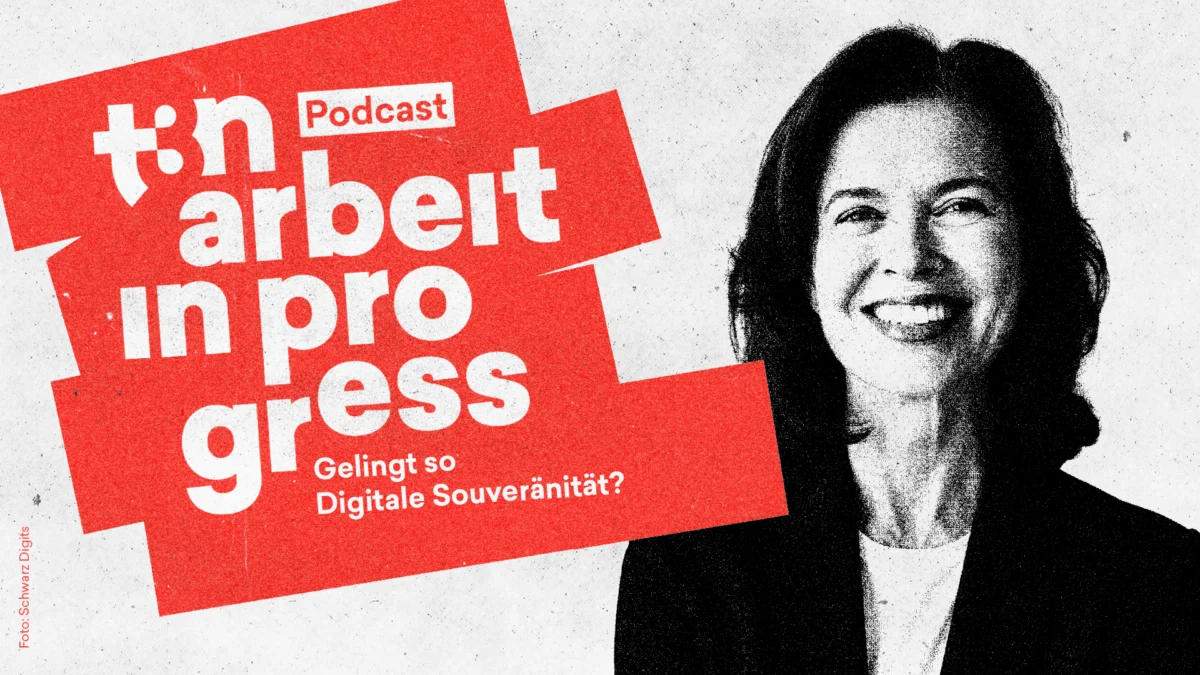
In an era defined by rapid technological transformation and intensifying geopolitical friction, the question of who controls the data has become the ultimate strategic imperative for Europe. Claudia Alsdorf, a seasoned industry expert who transitioned from roles at tech giants like Microsoft and SAP to her current position leading Business Development at Schwarz Digits, is at the heart of this struggle. Her mission is as ambitious as it is necessary: to build the “sovereign hyperscaler of Europe.”
In a candid discussion at the Kapsele Innovation Festival 2026 in Freiburg, Alsdorf outlined the challenges of competing against US-based tech titans that enjoy a decade-long head start. Her perspective offers a nuanced take on the future of European digital independence—one that eschews isolationism in favor of pragmatic, resilient, and sovereign alternatives.
Main Facts: Redefining Digital Sovereignty
Digital sovereignty, as defined by Alsdorf, is not about the ideological rejection of American technology. Instead, it is about the fundamental freedom to act. "It means we always have a choice, that we can walk away from the negotiating table, and that the other party knows we can," she explains.
Schwarz Digits, the IT and digital division of the Schwarz Group (the parent company of Lidl and Kaufland), is currently positioning itself as a cornerstone of this movement. Despite the rhetoric surrounding "sovereignty," the company maintains a strategic partnership with Google. For many, this appears contradictory, but Alsdorf clarifies that it is a tactical necessity born out of painful experience.
The catalyst for this shift was a unilateral price hike by Microsoft, which forced the Schwarz Group—a company of 600,000 employees—to reconsider its dependency. When faced with a "take it or leave it" ultimatum, the group sought a partner willing to negotiate. By leveraging their Stackit cloud infrastructure, they have ensured that they maintain a "Plan B," allowing them to migrate or control data regardless of external pressures, including the potential reach of the US Cloud Act.
Chronology: The Evolution of a Strategy
The trajectory of European digital infrastructure has been marked by a slow realization of dependency.
- The Early Years (2010–2020): European businesses and public sectors increasingly relied on American hyperscalers (AWS, Microsoft Azure, Google Cloud) for their scalability and "polished" feature sets. During this period, cost-efficiency and performance were prioritized over data residency and jurisdictional control.
- The Wake-Up Call (2020–2024): Geopolitical tensions and incidents like the US Cloud Act—which allows US authorities to compel American tech companies to provide data stored on servers globally—began to alert European leadership to the risks of total reliance.
- The Strategic Shift (2025–Present): Companies like Schwarz Digits began investing heavily in their own sovereign cloud infrastructure, moving from pure dependency to a hybrid model where local, sovereign stacks act as a fallback and primary data residence point.
- The Current Phase (2026): The market is entering a critical 12-to-24-month window. During this time, market shares for sovereign cloud solutions will be determined as European nations and enterprises move beyond mere planning and into actual implementation.
Supporting Data: The Market Reality
The dominance of non-European providers is staggering. Current estimates suggest that roughly 70% of the European cloud market is controlled by three US-based giants. This concentration of power effectively places the keys to Europe’s digital infrastructure in the hands of foreign corporations.
Alsdorf highlights that this is not just a policy issue; it is a technical one. Many US-based providers engage in "Sovereignty Washing"—a marketing tactic where servers are physically located in Europe, but the data processing and management remain under the legal and technical control of the US parent company. Because telemetry and maintenance data must often flow back to the US for oversight, true isolation remains difficult to guarantee without a fundamental architectural shift.
Official Responses and Strategic Implications
The public sector, in particular, has become the focal point of this battle. Germany, often criticized for lagging behind in digitalization, has recently taken steps to designate the government as an "anchor customer" for sovereign cloud solutions.
However, Alsdorf warns that infrastructure is not enough. "Cloud itself is just the foundation; it is not an application," she notes. "Public administrations cannot simply implement a bare-metal cloud platform and expect it to run their services." The failure of current tender processes, which often ask for infrastructure without accompanying, ready-to-use software, remains a significant bottleneck.
The Role of Partnerships
To address this, Schwarz Digits is building an ecosystem rather than a walled garden. By partnering with companies like SAP, ServiceNow, and leaders in cybersecurity, they aim to provide a "sovereign stack" that is ready for enterprise and government use. This move is designed to bridge the gap between complex infrastructure and usable, secure business applications.
Implications for the Future: "Global Thinking, Local Acting"
Is there a future for US-European cooperation, or must Europe retreat into a digital fortress? Alsdorf is adamant that total isolation is the wrong path.
"The concept of ‘global thinking, local acting’—a principle that has been neglected in recent decades—is what we need to return to," she argues. The goal is not to shut out American innovation but to ensure that Europe retains the capability to operate independently.
Avoiding the "Trap of Fear"
A major concern for Alsdorf is the motivation behind recent sovereign cloud adoption. Many organizations are migrating out of fear or due to an immediate, painful "dead end" with existing vendors. This reactive stance leads to poor strategic planning.
"I would never advise a client to move everything at once," she says. "It is too expensive and creates massive instability. Instead, create a roadmap for the next one to ten years. Decisions must be made at the enterprise management level, not just in the IT department, because the IT department is often naturally resistant to the complexity of change."
The 24-Month Window
The next two years will be the most decisive in the history of European cloud computing. As more organizations realize that sovereignty is not just a legal compliance requirement but a fundamental competitive advantage, the market will mature.
For Schwarz Digits, the challenge is to prove that a European player can offer a user experience that rivals the "polished" products of Microsoft and Google. While Alsdorf admits that they cannot match every single feature provided by the incumbents today, she poses a vital question for European businesses: Do you really need everything they are selling?
Ultimately, the goal is to reach a state of equilibrium. Europe must become a partner that can negotiate on equal footing, rather than a subordinate relying on the goodwill of foreign monopolists. By fostering a robust, sovereign infrastructure, Europe is not just protecting its data—it is securing its agency in the digital age.
Key Takeaways for Decision-Makers:
- Strategic Planning: Shift from reactive, fear-based IT migration to a long-term (3–10 year) roadmap.
- Sovereignty as an Asset: Move beyond viewing sovereignty as a checkbox for compliance and treat it as a cornerstone of business continuity and risk management.
- Holistic Ecosystems: Infrastructure is only as good as the applications running on it. Seek partners who provide a complete, integrated software stack.
- Avoid the "Sovereignty Wash": When vetting cloud providers, look beyond the physical location of the data centers and interrogate the legal and technical ownership of data processing workflows.
As the digital landscape shifts, the message from leaders like Claudia Alsdorf is clear: the time to build the foundation for European autonomy is now. The window is narrow, the competition is fierce, but the stakes—the future of the European economy—could not be higher.