For millions of commuters and transport logistics providers, the weekend brought a familiar and unwelcome trend: the relentless climb of fuel prices at the pump. According to the latest data released by the ADAC (Allgemeiner Deutscher Automobil-Club), both diesel and gasoline prices in Germany have recorded their eighth consecutive daily increase. As households grapple with a cost-of-living crisis exacerbated by energy volatility, the financial strain of operating a vehicle is reaching levels that echo the historic price spikes of 2022.
Main Facts: A Persistent Upward Trajectory
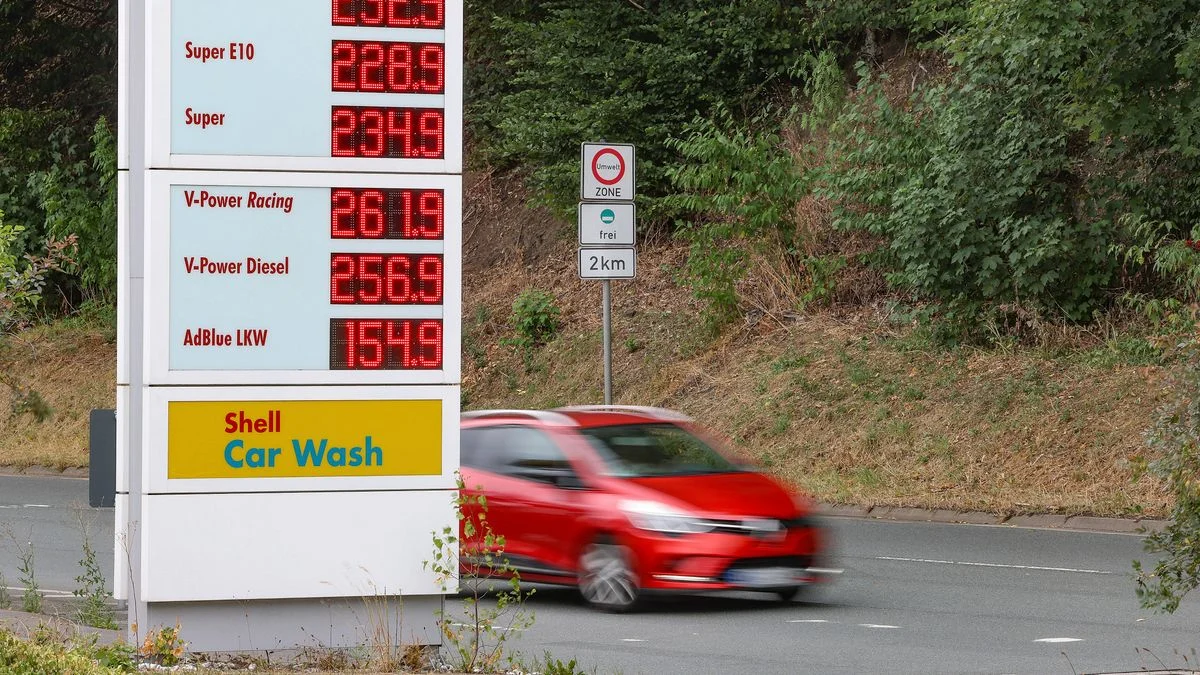
The data paints a sobering picture for the average consumer. As of the close of business this past Sunday, the nationwide daily average for Super E10 gasoline stood at 2.152 euros per liter, reflecting an incremental increase of 1.1 cents compared to Friday. Diesel, often the lifeblood of the logistics sector, saw an even steeper rise, climbing 1.6 cents to reach an average of 2.177 euros per liter.
These figures are not merely statistical noise; they represent a sustained trend that has persisted for over a week. The upward pressure is immediate and tangible, affecting everything from private household budgets to the overhead costs of small businesses that rely on freight transport.
Chronology: A Rollercoaster of Costs
To understand the current volatility, one must look at the timeline of the last month. Just two weeks ago, there was a fleeting sense of stabilization in the market. This followed the turbulent period immediately after the expiration of the government’s “tank discount” (Tankrabatt) on July 1st, which saw an immediate tax-induced hike of approximately 17 cents per liter.
When placed in a two-week comparative window, the severity of the current situation becomes clear:
- E10 Gasoline: Has surged by 13.6 cents per liter.
- Diesel: Has experienced a dramatic jump of 23.1 cents per liter.
Currently, E10 is hovering precariously close—within 4 cents—of the multi-year high recorded around the Easter period. More alarmingly, it is now only 5 cents shy of the all-time record set in the wake of the global energy supply disruptions in 2022. While diesel is currently trading below its April 7th peak of 2.447 euros per liter, the velocity of its recent ascent has market analysts expressing concern.
Supporting Data: The Global Energy Nexus
Why are prices rising despite the lack of a new, localized supply shock? The answer lies in the global oil market. The primary driver behind the current pump price surge is the steady, consistent rise in the price of crude oil that has been observed since the beginning of the month.
Global energy markets are notoriously reactive, and the correlation between the Brent crude benchmark and domestic retail fuel prices remains high. When global supply concerns—driven by production cuts from major exporters or geopolitical instability—filter through the refining process, the result is almost always felt at the local gas station within days.
However, the market is not without its minor fluctuations. By Monday morning, a slight cooling effect was observed. By 10:00 AM, both diesel and E10 were marginally cheaper than they had been at the same time on Sunday. Analysts suggest that this dip is a direct reflection of a minor downward correction in global oil prices during Monday’s early trading hours. While this provides a temporary reprieve for the consumer, it is far from a sign that the long-term inflationary trend has been broken.
Official Responses and Expert Outlook
The ADAC, which serves as the primary watchdog for consumer motoring interests, has issued a cautious outlook. Experts from the organization warn that if the current momentum in crude oil pricing continues, it is highly probable that the existing price records for E10 will be surpassed in the coming weeks.
"The market is in a state of high sensitivity," noted an analyst familiar with the ADAC’s fuel monitoring program. "While we have seen a minor retreat on Monday, the baseline remains elevated. The structural pressures—supply chain constraints and global demand—are still firmly in place."
The government, meanwhile, faces mounting pressure to address these costs. While the removal of the tank discount was intended to normalize tax revenues, the optics of 2.15-euro-plus fuel prices are creating significant political friction. The debate over whether to implement further subsidies or to provide direct financial relief to lower-income households remains a central theme in the national economic conversation.
Implications: The High Cost of Mobility
The implications of sustained high fuel prices extend far beyond the individual driver.
1. The Logistics and Supply Chain Impact
Diesel is the primary fuel for the trucking industry. When diesel prices rise by over 20 cents in two weeks, the impact is immediately passed down the supply chain. From the delivery of fresh produce to the transport of industrial materials, the cost of "moving goods" is increasing. This creates an inflationary cycle where the price of fuel eventually manifests in higher prices for consumer goods in supermarkets and retail stores.
2. Behavioral Shifts in Consumption
High fuel prices act as a regressive tax, hitting low-income households the hardest—specifically those who live in rural areas with poor access to public transport and who are essentially forced to use their vehicles for work. We are beginning to see a shift in consumer behavior, with many drivers reducing non-essential travel, engaging in "fuel tourism" (crossing borders to cheaper jurisdictions), and becoming increasingly strategic about when and where they fill up.
3. Economic Productivity
For small-to-medium enterprises (SMEs) that rely on a fleet of vehicles, the current price environment threatens profit margins. If companies cannot pass these costs on to their customers, they face the prospect of reduced investment or even downsizing. The cumulative effect of these micro-decisions can dampen overall economic growth.
ADAC’s Strategic Advice: How to Mitigate the Pain
Recognizing the burden on drivers, the ADAC has doubled down on its efforts to provide practical advice for fuel efficiency and cost-saving. While the driver cannot control global oil markets, they can exert control over their refueling habits.
Key Strategies for the Modern Driver:
- Avoid the Autobahn: One of the most effective ways to save is to avoid refueling at highway gas stations. According to recent ADAC investigations, the price differential between a station located directly on the Autobahn and one located just beyond the nearest exit averages a staggering 33 cents per liter. Taking the five-minute detour to a local gas station can result in savings of nearly 15-20 euros on a single full tank.
- Time Your Refueling: Data consistently shows that fuel prices fluctuate significantly throughout the day. Refueling in the evening—typically between 6:00 PM and 9:00 PM—is often cheaper than refueling during the morning rush hour.
- Drive with Efficiency: Beyond the pump, the ADAC emphasizes the importance of driving behavior. Maintaining steady speeds, checking tire pressure regularly, and removing excess weight from the vehicle are proven methods to improve fuel economy by several percentage points.
- Comparative Tools: The ADAC recommends that all drivers utilize mobile applications and online comparison tools to track real-time price changes in their immediate vicinity. In a market where prices change multiple times a day, information is the driver’s best defense.
Conclusion: A New Normal?
As the week progresses, the focus remains fixed on global oil benchmarks. Whether this current price peak is a temporary plateau or the beginning of a sustained ascent to new, uncomfortable highs remains to be seen. For now, the German motorist is caught in a familiar cycle of uncertainty, forced to navigate a market defined by global volatility and local economic pressure.
While authorities monitor the situation, the responsibility of navigating these costs falls largely on the individual. By adopting smarter refueling habits and maintaining a heightened awareness of market trends, consumers can at least insulate themselves from the most extreme price spikes. However, the broader question of energy security and the long-term cost of mobility remains a central challenge for policymakers and society at large as they look toward the remainder of the year.