In a development that has sent shockwaves through Washington and global financial markets, President Donald Trump has achieved a level of personal wealth accumulation during his time in office that is entirely without precedent in American history. As critics raise alarms over potential conflicts of interest, experts warn that the erosion of traditional ethical boundaries may permanently alter the office of the presidency.
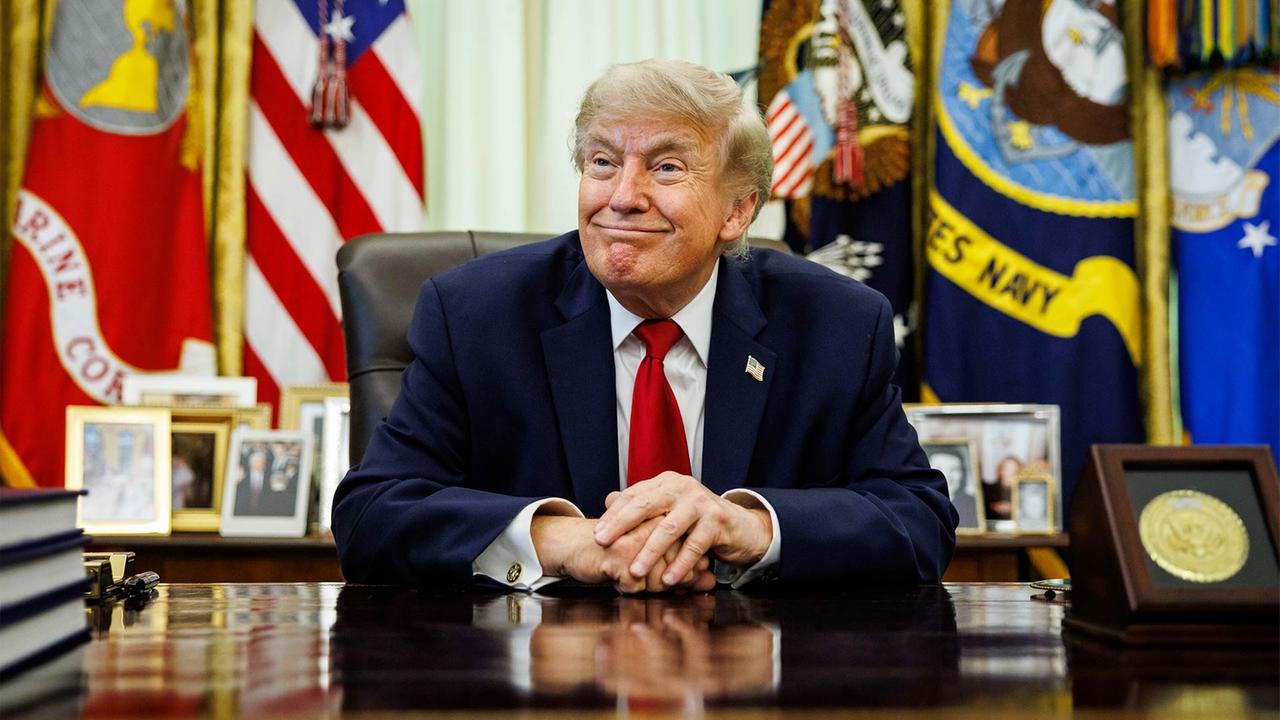
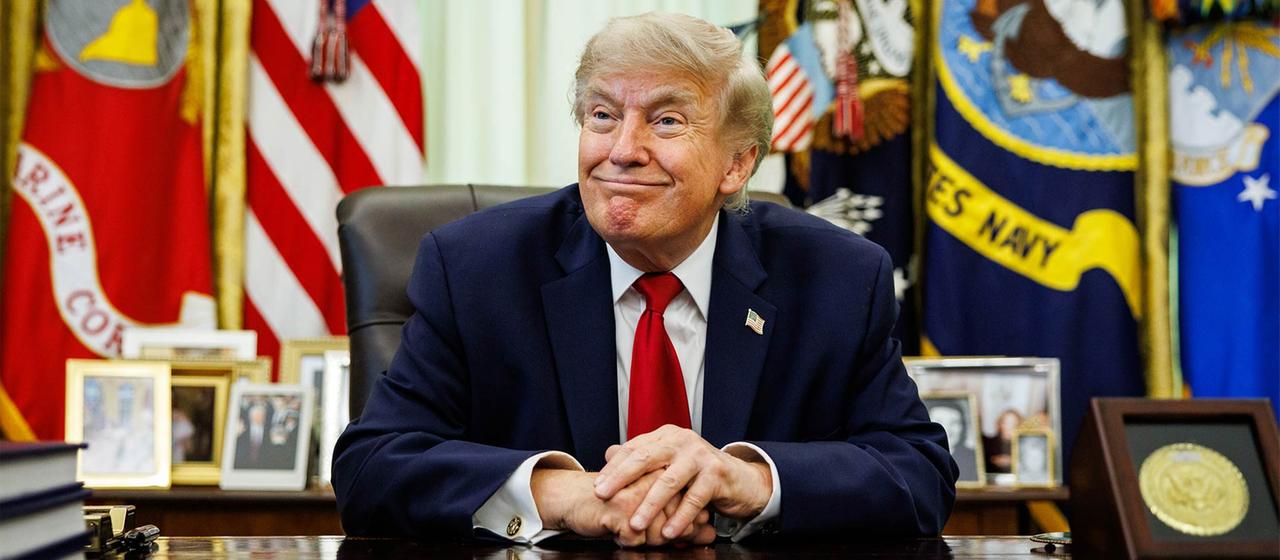
According to recent disclosures, President Trump’s personal income surged to $2.2 billion during his first year in the current term—a staggering increase from the $620 million reported in 2024, the year preceding his return to the White House. This unprecedented financial windfall has placed the administration at the center of a firestorm, with observers from the BBC to the New York Times noting that no previous commander-in-chief has utilized their tenure to so effectively bolster their private balance sheets.
The Breakdown of Norms: A Historical Shift
For decades, the American presidency operated under a tacit, albeit robust, tradition of "blind trusts" and divestment. From the post-Nixon era onward, presidents consistently distanced themselves from personal business investments to ensure that policy decisions were insulated from private profit motives.
Laura von Daniels, a leading expert on American economic policy at the Stiftung Wissenschaft und Politik (SWP), argues that President Trump has systematically dismantled this framework. "The unusual aspect here is the abandonment of the compromises that previous administrations made voluntarily," von Daniels explains. "Trump has explicitly rejected the notion that he should abandon his business interests, claiming that doing so in his first term caused him financial loss and that he sees no reason to repeat that ‘mistake’ in his second."
The "Crypto-President": A New Frontier of Conflict
The most striking component of the President’s recent wealth gain is his deep entanglement with the cryptocurrency sector. In 2025 alone, Trump reportedly generated over $1 billion from crypto-related ventures. The controversy is compounded by the fact that the President and his administration are currently tasked with drafting the very regulations that govern this nascent, high-stakes market.
The administration’s "Genius Act" has become a focal point of this scrutiny. By influencing the regulatory landscape for cryptocurrencies and stablecoins, the President is not merely a bystander; he is a primary stakeholder. Critics point to the administration’s decision to halt the development of a digital central bank currency in favor of private sector stablecoins as a clear case of policy being steered to favor personal investment portfolios.
Furthermore, the launch of a "national reserve" for Bitcoin and the promotion of projects like World Liberty Financial—in which the President’s sons and associates are heavily involved—have created a feedback loop. In this ecosystem, the President’s rhetoric fuels market valuations, which in turn benefits his private holdings. While the White House maintains that no conflict of interest exists, the sheer scale of the overlap suggests a new, blurred reality where the "bully pulpit" functions as a marketing tool.
Chronology of a Financial Surge
The acceleration of Trump’s wealth is not a coincidence but a sequence of calculated moves:
- 2024 (Pre-Inauguration): Trump reports a significant, yet "standard" for him, income of $620 million.
- Early 2025: The administration signals a pro-crypto shift, leading to a surge in market interest.
- Mid-2025: Trump introduces initiatives that favor private stablecoin issuers. His own venture, World Liberty Financial, sees exponential growth.
- Late 2025: Financial analysis from the Financial Times reveals 22,000 individual stock trades linked to the President’s accounts, occurring alongside his public policy announcements regarding major tech firms like Microsoft, Apple, and Nvidia.
- 2026 (Present): Total reported income hits $2.2 billion, drawing intense scrutiny from regulatory watchdogs and legal experts.
The "Meme-Coin" Disparity
A particularly troubling narrative has emerged regarding the President’s $TRUMP meme-coin. While the President netted $635 million from the sales of these assets, the Wall Street Journal reports that approximately two-thirds of the retail investors who purchased these tokens have seen their portfolios evaporate.
"There is a fundamental ethical question here," says von Daniels. "When a President uses his authority to promote highly speculative assets, he is essentially using his stature to drive market behavior. When the public loses their savings while the President profits, the optics are not just bad—they represent a total rupture of the social contract between an elected official and the citizenry."
Insider Trading and the Tech Giants
The Financial Times investigation into 22,000 trading transactions provides a complex map of the President’s portfolio management. Critics argue that the timing of these trades—often coinciding with market-moving statements or policy shifts regarding corporate taxation—borders on insider trading.
However, from a strictly legal standpoint, the defense remains difficult to crack. Because the President is not technically managing these funds himself—his children and designated proxies handle the day-to-day operations—the administration argues that there is no direct "knowledge" of the trades. This separation, however, is viewed by many ethicists as a thin veil. As von Daniels notes, "It is the classic strategy of maintaining deniability while reaping the rewards of proximity to power."
The Role of the Judiciary and the "Witch Hunt" Narrative
The path to holding an administration accountable for financial conduct is fraught with obstacles. Any investigation into the President’s finances is met with the familiar refrain of "Witch Hunt," a term the President uses to galvanize his base and delegitimize judicial oversight.
Compounding this is a recent Supreme Court ruling that grants the President broad immunity for actions taken as an "official" part of the office. This legal shield makes it incredibly difficult for the Department of Justice or independent prosecutors to prove that a specific economic policy was enacted solely for the purpose of personal enrichment.
"The judicial process is, by design, slow and meticulous," von Daniels explains. "The administration knows this. They understand that by the time a thorough investigation could potentially uncover hard evidence of misconduct, the political cycle will have moved on, and the precedent will have already been set."
Implications: The Future of the Office
The long-term implications of this financial behavior are profound. By treating the presidency as a profit-generating enterprise, the current administration is effectively rewriting the job description of the leader of the free world.
- Erosion of Public Trust: The constant conflation of public policy and private interest deepens the cynicism of the American electorate, potentially leading to lower engagement in democratic processes.
- Institutional Weakness: When the highest office in the land acts with a disregard for ethical standards, it sets a dangerous precedent for all lower-level government officials, suggesting that personal enrichment is a valid motivation for public service.
- Global Perception: The "Profit Presidency" alters how foreign governments interact with the U.S. If policy can be swayed by the right investment, the diplomatic integrity of the United States is undermined, leaving the country vulnerable to transactional foreign influence.
Conclusion: A Call for Political Change
As the nation looks toward upcoming elections, the question of whether this model of governance is sustainable remains at the forefront. According to von Daniels, the solution will not come from the courts alone. "The judiciary is hampered by immunity and political pressure. The only real check on this level of power is the political process itself."
For now, the country remains in uncharted territory. Whether the "Profit Presidency" becomes the new standard or is remembered as a historical anomaly depends entirely on the response of the American people and the ability of the legislative branch to re-establish the boundaries that were once thought to be ironclad. As the President continues to navigate his tenure, the world watches, wondering if the office of the presidency can survive the transformation from a public trust into a private portfolio.