ESSEN, Germany – The German stock market landscape witnessed a significant shift this week as construction giant Hochtief officially ascended to the DAX, Germany’s blue-chip index. As of Monday, the Essen-based engineering and infrastructure powerhouse has secured its position among the 40 most valuable and liquid companies listed on the Frankfurt Stock Exchange. This transition marks a historic milestone for the company, which has spent decades building some of the world’s most iconic infrastructure, and signifies a broader shift in market sentiment toward companies deeply embedded in the "new economy" of data and global infrastructure.
The move comes at the expense of Porsche SE, the major Volkswagen shareholder, which has been relegated to the MDax—the index for mid-sized companies—following a decline in its market capitalization and liquidity metrics.
Main Facts: A New Chapter for the Infrastructure Giant
Hochtief’s entry into the DAX 40 is not merely a symbolic victory; it is a recognition of the company’s dramatic financial resurgence. For the first time in its long history, Hochtief is recognized as a core component of the German benchmark index.
The criteria for inclusion in the DAX are rigorous and transparent. Deutsche Börse, the operator of the Frankfurt Stock Exchange, evaluates companies based on two primary pillars: the value of their free-float market capitalization and their exchange trading volume. The reshuffling of these indices occurs on a quarterly basis, ensuring that the DAX remains a representative snapshot of the most robust German enterprises.
By replacing Porsche SE, Hochtief has demonstrated that traditional sectors like construction and engineering can still command market dominance when they align their strategies with global technological and geopolitical trends.
Chronology: The Road to the Blue Chips
The journey to the DAX was paved by a series of strategic pivots and a meteoric rise in the company’s valuation over the last 18 months.
- Mid-2023: Market analysts began noting a divergence between Hochtief’s stock performance and the broader stagnant industrial sector. Increased demand for infrastructure, particularly in North America, began to reflect in the company’s quarterly order backlogs.
- Early 2024: The "AI Boom" began to transform the construction sector. As tech giants scrambled to build data centers, Hochtief—with its extensive experience in high-complexity engineering—positioned itself as the primary contractor for these hyper-scale facilities.
- June 2024: Deutsche Börse officially announced that Hochtief would be promoted to the DAX during the scheduled quarterly review. The market reacted positively, solidifying the stock’s upward trajectory.
- Late Summer 2024: Following a surge that saw the share price more than triple within a twelve-month window, the technical transition was finalized, setting the stage for Monday’s inclusion.
The Engine of Growth: Why Hochtief is Winning
While many industrial firms have struggled with the transition to a digital-first economy, Hochtief has successfully rebranded itself as a foundational pillar of the Artificial Intelligence (AI) revolution.
The Data Center Boom
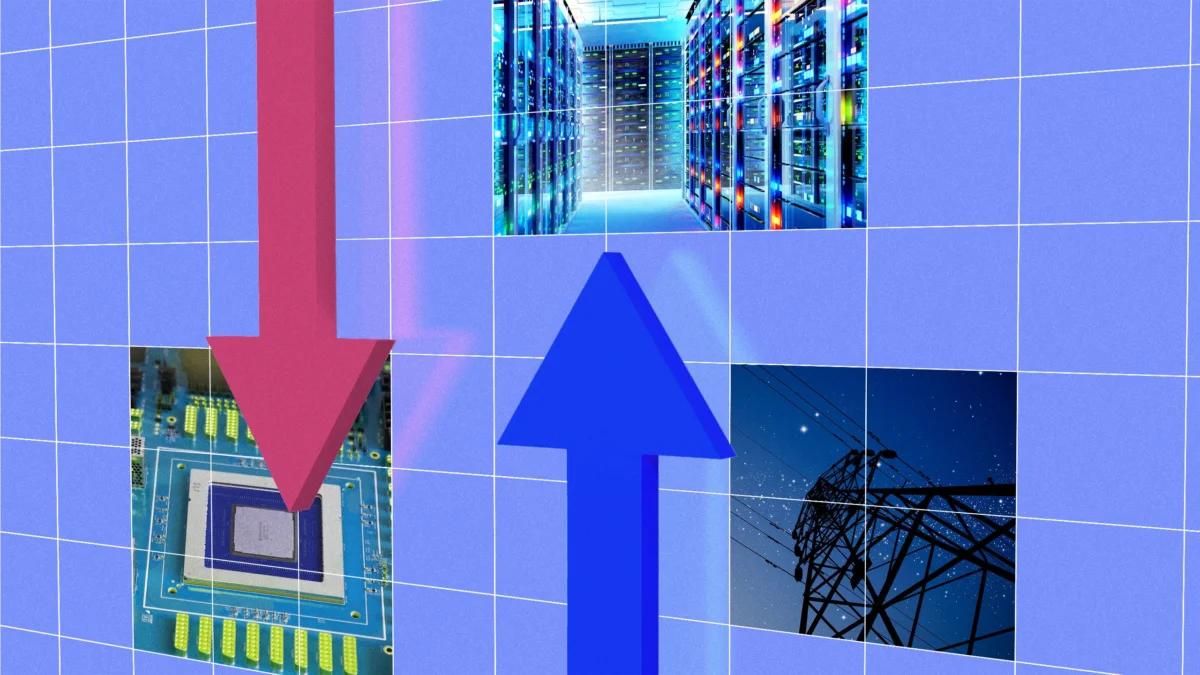
The most significant driver of Hochtief’s recent success is its dominance in the data center market. AI models require massive computational power, which in turn necessitates sprawling, high-security, and high-energy-efficiency data centers. Hochtief has leveraged its international presence, particularly in the United States, to secure lucrative contracts to build these facilities. These projects are characterized by high margins and long-term security, making them an ideal hedge against the cyclical nature of traditional civil engineering.
Infrastructure and Geopolitical Shifts
Beyond AI, the company is reaping the rewards of a global "super-cycle" in infrastructure spending. Governments across the West are currently pouring billions into upgrading crumbling transportation networks, energy grids, and public utilities. Furthermore, the global trend toward increased defense spending has provided an additional tailwind. Hochtief’s expertise in high-security construction projects has made it a preferred partner for government-backed initiatives, ensuring a steady stream of revenue that is largely decoupled from consumer sentiment.
Implications for Investors and the Market
The promotion of Hochtief into the DAX 40 triggers significant mechanical changes for the investment community.
Passive Investment Rebalancing
The most immediate impact is felt by Exchange Traded Funds (ETFs) and index-tracking funds. Since these funds are mandated to replicate the performance of the DAX, they must now sell their positions in Porsche SE and aggressively accumulate Hochtief shares. This massive, mandatory inflow of capital often provides a "technical floor" for the share price of a new DAX entrant, as institutional demand outstrips supply during the transition phase.
Increased Visibility
Being a DAX member brings a company into the spotlight of global institutional investors who focus exclusively on blue-chip indices. This enhanced visibility is expected to attract more international capital, potentially further driving up the valuation and lowering the cost of capital for future projects.
Official Responses and Corporate Strategy
In response to the news, Hochtief’s leadership emphasized that the DAX inclusion is a testament to the success of their "Value-Based Growth" strategy.
"Our inclusion in the DAX is a recognition of the hard work and foresight of our global teams," stated a spokesperson for the company. "We have focused on regions and sectors where the need for infrastructure is critical. Whether it is a sustainable transport network or the backbone of the AI cloud, we are building the assets that will define the next decade."
Industry analysts have praised the company’s decision to shift away from low-margin, high-risk construction projects in favor of high-complexity, "mission-critical" infrastructure. This strategic discipline is widely viewed as the primary reason why the company has outperformed its peers in the construction and engineering sector.
Supporting Data: By the Numbers
To understand the scale of Hochtief’s ascent, one must look at the data:
- Stock Performance: Within the last 12 months, Hochtief shares have experienced a growth rate exceeding 200%. This triple-digit return is exceptional for a firm in the industrial space.
- The AI Multiplier: Internal reports suggest that data center construction now accounts for a significant portion of the company’s order intake in North America, with forecasts indicating that this trend will continue through 2030.
- Market Cap: The company’s market capitalization has climbed steadily, comfortably surpassing the thresholds required to displace Porsche SE.
- Global Reach: While historically a German firm, the majority of the company’s current growth is derived from international markets, demonstrating its agility in adapting to the specific needs of the U.S. and Australian infrastructure markets.
A Look Ahead: Can the Momentum Hold?
The challenge for Hochtief now lies in maintaining its performance under the increased scrutiny of the DAX 40. As a blue-chip company, it will be expected to provide consistent dividends and transparent communication with a more diverse, global shareholder base.
The volatility inherent in the construction sector remains a risk. However, by positioning itself at the intersection of AI, energy transition, and national security, Hochtief has successfully insulated itself from the typical boom-and-bust cycles that plague the construction industry. As the company takes its place in the DAX, the markets will be watching closely to see if it can continue to turn concrete and steel into the digital gold of the 21st century.
For now, the mood in Essen is one of justified pride. The firm that began its life in the 19th century has proven that it is more than capable of shaping the architecture of the 21st, securing its legacy among the titans of the German economy.