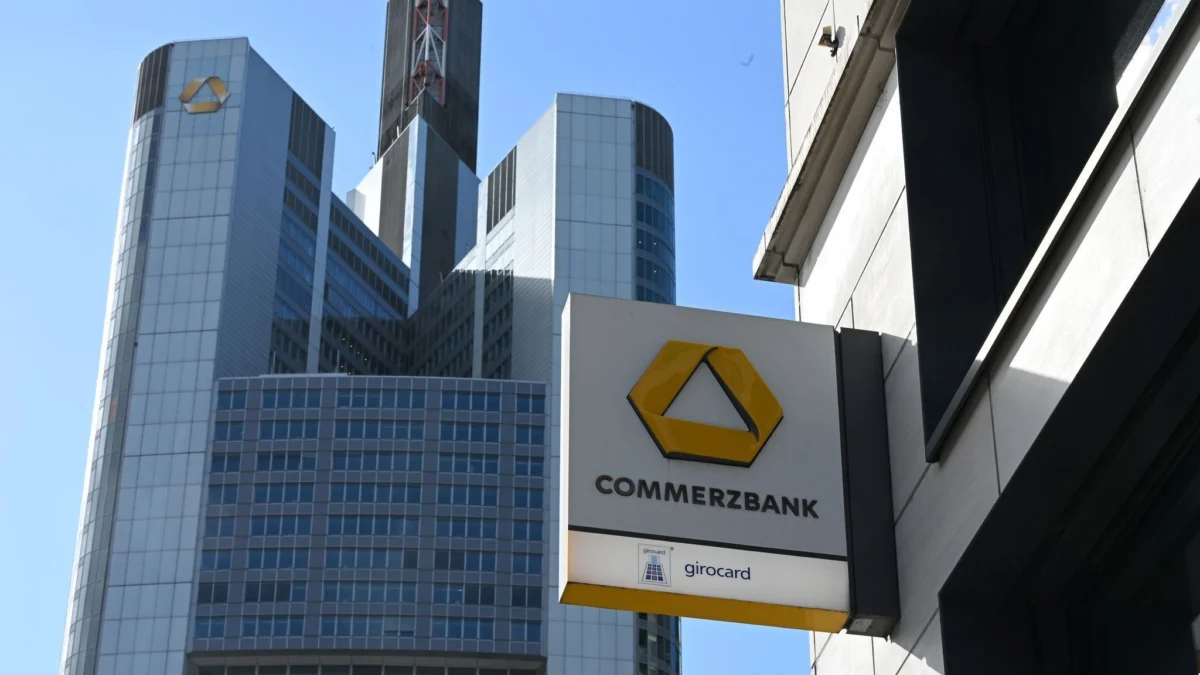
Berlin/Frankfurt. The tug-of-war for control over Commerzbank, Germany’s second-largest financial institution, has escalated into a high-stakes geopolitical and economic confrontation. As UniCredit CEO Andrea Orcel accelerates his aggressive pursuit of the Frankfurt-based lender, the German federal government has abandoned its diplomatic reserve, signaling a clear intent to block a full-scale takeover. By holding onto its 12% stake in the bank, Berlin is effectively placing a "poison pill" in the path of the Italian banking giant, complicating any plans for a delisting or a forced squeeze-out of minority shareholders.
The Core Conflict: Berlin’s Strategic Defiance
The tension between the German government and UniCredit reached a boiling point this week as reports from government circles confirmed that the state has no intention of divesting its remaining 12% stake in Commerzbank. This position serves as a strategic barrier to the integration plans envisioned by Andrea Orcel.
Under German corporate law, a "squeeze-out"—the mechanism by which a majority shareholder forces minority investors to sell their shares at a set price to gain total control—requires the controlling entity to own at least 90% of the company’s capital. By refusing to exit its position, the German government prevents UniCredit from reaching this threshold, thereby obstructing any path to total ownership and subsequent delisting from the stock exchange.
"Potential plans by UniCredit to take Commerzbank off the stock market are practically impossible to realize under the current structure," government insiders noted. While a corporation can theoretically be taken private via a management decision, the continued presence of the German government as a significant stakeholder ensures that any such move would face insurmountable political and governance hurdles.
Chronology of the Escalation
The current standoff is the culmination of a rapid series of maneuvers that caught the European financial sector by surprise.
- Initial Acquisition: UniCredit first disclosed a significant stake in Commerzbank, surprising the market and the German government alike.
- The Tender Offer: Following the acquisition of the initial stake, Orcel launched a formal tender offer to Commerzbank shareholders. The objective was initially communicated as a strategic stake-building exercise, with a goal of surpassing the 30% threshold.
- Aggressive Expansion: Contrary to earlier indications of a passive investment, UniCredit moved with unexpected speed. By the close of the initial acceptance period, the Italian bank had secured over 39% of the voting rights and announced its intention to increase this stake to 42.5%.
- Government Pushback: The German government, having previously signaled a desire to reduce its state-owned holdings, abruptly reversed its stance. Recognizing the existential threat to Commerzbank’s identity as a pillar of the German Mittelstand (small and medium-sized enterprise) economy, Berlin declared its intent to remain a long-term anchor investor.
Strategic Implications for the German Economy
The resistance from Berlin is not merely about protecting a national asset; it is fundamentally about the preservation of the German economic model. Commerzbank is widely regarded as the "house bank" for the German Mittelstand, the engine of the country’s industrial output.
The Risk to the Mittelstand
Critics of the UniCredit takeover, including representatives within the German government, argue that Orcel’s strategy of "trimming for efficiency"—which implies significant layoffs and a drastic reduction in foreign business operations—would fundamentally weaken the bank’s ability to serve domestic businesses.
"The Federal Government will continue to act in the interest of Commerzbank’s employees, the German Mittelstand, and the financial hub of Frankfurt," a government spokesperson emphasized. There is a palpable fear that an Italian-led merger would prioritize cost-cutting and shareholder dividends over the long-term credit needs of German manufacturers and service providers.
The "Aggressive Behavior" Critique
Berlin has taken a surprisingly sharp tone regarding UniCredit’s corporate culture. While Germany generally welcomes foreign investment and is home to numerous international financial institutions, the government has drawn a line at what it terms "aggressive" acquisition strategies.
"The fact that many foreign banks are active in Germany does not mean that every type of takeover is welcome without reservation," the government stated. "We categorically reject aggressive approaches." This rebuke suggests that Berlin views Orcel’s tactics as predatory rather than collaborative, a stance that complicates any future regulatory approval process.
The Role of Regulatory Gatekeepers
While the political drama unfolds, the ultimate fate of the takeover rests in the hands of independent regulatory bodies: the German Federal Financial Supervisory Authority (BaFin) and the European Central Bank (ECB).
Both institutions must review the merger from the perspective of systemic stability, capital adequacy, and competition law. The ECB, in particular, will need to determine whether the proposed integration meets the requirements of the European banking union.
The government’s stance acts as a significant "soft" pressure on these regulators. By framing the takeover as a risk to the German economic fabric, Berlin is ensuring that the regulatory review process will be subject to intense public and political scrutiny. The message to the ECB is clear: the integration of two major systemic banks requires more than just capital synergy; it requires a commitment to the socio-economic stability of the host nation.
Comparative Analysis: The Squeeze-out Dilemma
To understand the gravity of the situation, one must analyze the mechanics of the "squeeze-out" that Orcel is theoretically seeking.
- The 90% Threshold: In Germany, a squeeze-out allows a majority shareholder to consolidate 100% control, effectively ending the rights of minority shareholders. This provides the parent company with total freedom to restructure, rebrand, or liquidate parts of the target company without the interference of dissenting votes or the requirement for quarterly public disclosure.
- The Minority Shield: As long as the German government holds 12%, and as long as other institutional investors, employee pension funds, and private shareholders maintain their positions, UniCredit remains miles away from the 90% mark.
- Governance Stability: Even without a squeeze-out, an owner with a large stake can influence management. However, the German government’s refusal to sell acts as a permanent opposition seat in the boardroom, ensuring that any radical changes to Commerzbank’s business model will be met with active resistance.
Future Outlook: A Long-Term Stalemate
As the situation currently stands, the takeover attempt has devolved into a protracted stalemate. UniCredit has demonstrated its financial power and its appetite for European banking consolidation. However, in doing so, it has triggered a nationalist defense mechanism that it may not be able to overcome.
The Path Forward for UniCredit
Andrea Orcel faces a difficult decision. He can continue to purchase shares on the open market, but even if he reaches 45% or 50%, the presence of the German government and a potentially hostile Commerzbank board of directors makes a full merger virtually impossible. He must decide if a minority stake, which gives him influence but not control, is worth the reputational cost of the "aggressive" label currently being applied to his firm by the German government.
The Path Forward for Commerzbank
For the management of Commerzbank, the support from Berlin is a lifeline. It validates their insistence on independence and provides the political capital needed to reject further takeover overtures. However, this also puts pressure on the bank’s leadership to demonstrate that they can achieve the "efficiency" and growth that investors expect without being swallowed by a foreign giant.
Conclusion
The battle for Commerzbank is a defining moment for European banking. It tests the boundaries of the European Single Market against the realities of national economic interest. As Berlin doubles down on its commitment to the bank, the prospect of a cross-border merger—once seen as a logical step in the evolution of European finance—now appears to be an increasingly fraught political minefield.
For now, the German government’s message remains unequivocal: The heart of the German economy is not for sale, and the rules of the game are not solely defined by share prices, but by the stability and the strategic interests of the nation.