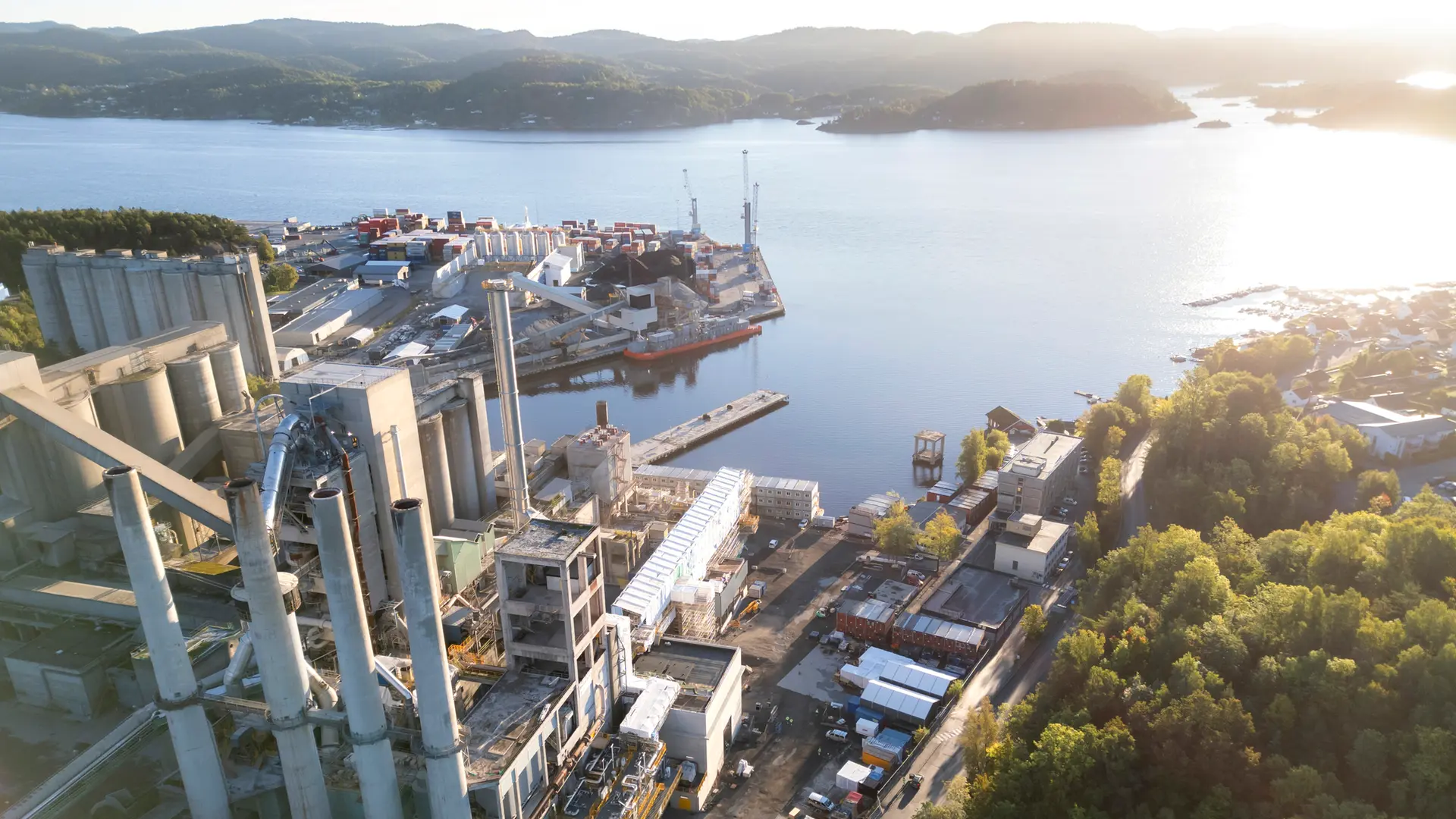
In the quiet industrial town of Brevik, Norway, a monumental shift in climate technology is unfolding. Amidst the coastal landscape, the world’s first large-scale carbon capture and storage (CCS) facility at a cement plant stands as a beacon of both hope and intense skepticism. For years, the notion of scrubbing CO2 from industrial exhaust and pumping it deep beneath the seabed was dismissed by many as a dangerous distraction. Today, it has become a reality, signaling a pivotal, albeit polarizing, shift in the global strategy to combat climate change.
Main Facts: The Mechanics of Industrial Decarbonization
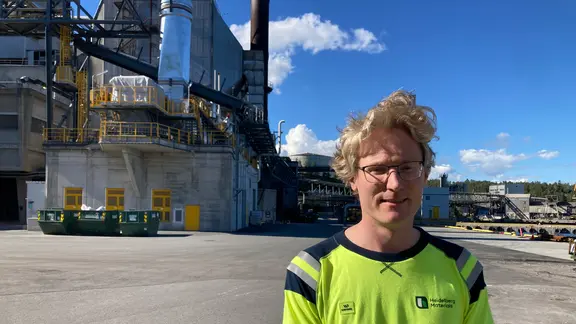
At the heart of the Brevik project is a sophisticated chemical process designed to halt carbon emissions at their source. Heidelberg Materials, the operator of the facility, utilizes an amine-based solvent to "scrub" carbon dioxide from the flue gases produced during the cement-making process.
Once the CO2 is chemically bound to the solvent, it is subjected to heat, causing it to separate in a concentrated, high-purity form. This gas is then compressed and liquefied, transitioning into a state described by project lead Anders Petersen as having the consistency of water. Once liquefied, the carbon is prepared for transport—initially by ship—to be injected into geological formations deep beneath the North Sea.
After one year of operation, the facility has successfully captured over 140,000 tonnes of CO2. With the plant currently ramping up to its full operational capacity, the goal is to sequester approximately 400,000 tonnes annually. This represents a significant technological milestone, proving that CCS is not merely a theoretical exercise for small-scale pilot programs, but a viable industrial-scale solution.
Chronology: From Fringe Concept to Political Reality
The path to the Brevik facility was anything but linear. For decades, the concept of CCS existed in the shadow of renewable energy expansion. Critics argued that focusing on "end-of-pipe" solutions provided a "moral hazard," potentially incentivizing industries to continue burning fossil fuels rather than transitioning to cleaner energy sources.
- Early 2000s: Research into carbon capture begins in earnest, but progress is hampered by high costs and lack of regulatory frameworks.
- 2010s: Public opposition to onshore carbon storage, particularly in Germany, effectively stalls many European projects. The technology is largely sidelined.
- Early 2023: A defining political moment occurs when a high-ranking European economic minister visits Norway. The visit signals a sea change in political attitudes; CCS is no longer viewed as a "dirty" compromise but as a necessary tool for "hard-to-abate" sectors.
- 2025/2026: The Brevik plant is inaugurated in a ceremony attended by Norwegian royalty, marking the first time a cement factory—an industry notoriously difficult to decarbonize—successfully integrates large-scale CCS into its operations.
Supporting Data: The Infrastructure Gap
Despite the success in Norway, experts warn that the transition to a global CCS network faces massive hurdles. Dr. Vicki Duscha, a researcher at the Fraunhofer Institute for Systems and Innovation Research in Karlsruhe, notes that Germany and the rest of Europe are essentially "starting at zero."
The primary bottleneck is not just technical, but infrastructural. To meet the ambitious climate goals set by international accords, Europe needs a massive network of pipelines and storage hubs. Recent studies from the Helmholtz Centre and the Federal Institute for Geosciences and Natural Resources suggest that the exclusive economic zones in the North Sea could store between 1 and 6 billion tonnes of CO2. To put this in perspective, Germany’s annual emissions hover around 650 million tonnes.
However, the physical capacity of geological storage is not infinite. There are strict limits on the rate at which CO2 can be safely injected into any single borehole. Experts estimate that an annual capacity of 10 to 40 million tonnes is realistic for the foreseeable future, which is a fraction of the total industrial output.
The Safety Debate: How Risky is Underground Storage?
One of the most persistent hurdles for CCS adoption is public perception. In Germany, memories of failed onshore storage projects have left a legacy of distrust. However, researchers like Dr. Duscha argue that these fears are largely misplaced when considering modern offshore applications.
Most of the proposed storage sites are depleted natural gas fields—reservoirs that have successfully contained pressurized gas for millions of years. Scientists argue that if these formations could hold methane for millennia, they are more than capable of containing CO2. Furthermore, when injected into basaltic rock, CO2 can undergo mineralization, turning into solid stone over time and effectively neutralizing the risk of leakage.
Even in the event of a breach, the Intergovernmental Panel on Climate Change (IPCC) estimates that the leakage rate from well-managed, deep-sea storage sites would be less than 0.001% per year. While local water acidification remains a concern, researchers note that the North Sea naturally absorbs roughly 35 million tonnes of CO2 annually; the impact of localized leakage would be statistically marginal in comparison.
Economic and Strategic Implications
The most significant barrier to widespread adoption is cost. Currently, carbon capture carries a price tag of between 150 and 300 euros per tonne. This is well above the current market price of carbon, making it economically unviable for most private firms without significant state subsidies or a massive hike in carbon taxes.

The "Hard-to-Abate" Reality
For industries like cement manufacturing, CCS is not just an alternative—it is a survival strategy. Cement production requires the chemical transformation of limestone, a process that releases CO2 as a byproduct regardless of the energy source used to heat the kiln. Even if the factory were powered by 100% renewable electricity, the chemical process itself would continue to emit carbon.
While companies like Heidelberg Materials are researching alternatives—such as replacing carbon-intensive clinker with calcined clay or recycled fly ash—these methods have physical limitations. Too much clay reduces the structural integrity of the concrete, and fly ash is becoming increasingly scarce as the world moves away from coal-fired power plants.
The Role of Negative Emissions
Looking toward the future, the conversation is shifting from simply "catching" emissions to "removing" them. Technologies like Direct Air Carbon Capture and Storage (DACCS) aim to filter CO2 directly from the atmosphere. While CCS prevents new carbon from entering the air, DACCS seeks to reverse past damage.
The IPCC has indicated that such "negative emission" technologies will be essential to meeting the 1.5-degree target, especially for balancing out residual emissions from aviation and agriculture. However, these technologies are currently even more energy-intensive and expensive than industrial CCS.
Official Responses and Ethical Considerations
Environmental organizations, including Greenpeace, remain vocal critics of the "CCS-first" approach. Their stance is that massive investments in carbon capture could lead to "lock-in" effects, where infrastructure built today keeps the world reliant on fossil-fuel-intensive industries for decades to come. They argue that capital should be redirected toward radical efficiency, circular economy models, and a complete transition away from combustion-based industrial processes.
Yet, the counter-argument, championed by industry leaders and an increasing number of policymakers, is one of pragmatism. If society continues to demand concrete for housing and infrastructure, and if there is no viable chemical substitute for limestone-based cement, then the only way to achieve "Net Zero" is to capture the emissions that are otherwise impossible to eliminate.
Conclusion: A Necessary Gamble?
The facility in Brevik is a microcosm of the global climate challenge. It demonstrates that the technology to solve the "impossible" emissions exists, but it also highlights the staggering complexity of implementing it at scale.
As the world grapples with the climate crisis, the debate over CCS is shifting from "if" to "how." The financial costs, the technical risks, and the potential for moral hazard are all significant. However, as the 1.5-degree goal slips further out of reach, the argument for CCS as a "necessary evil" is gaining traction. The ultimate success of projects like the one in Brevik will not be measured by the amount of CO2 they capture, but by whether they serve as a bridge to a truly sustainable future, or merely as a costly detour that delays the inevitable transition to a post-carbon economy.
For now, the world is watching Norway, waiting to see if the promise of the sea-bed holds up under the scrutiny of science, economics, and the unforgiving reality of a warming planet.