
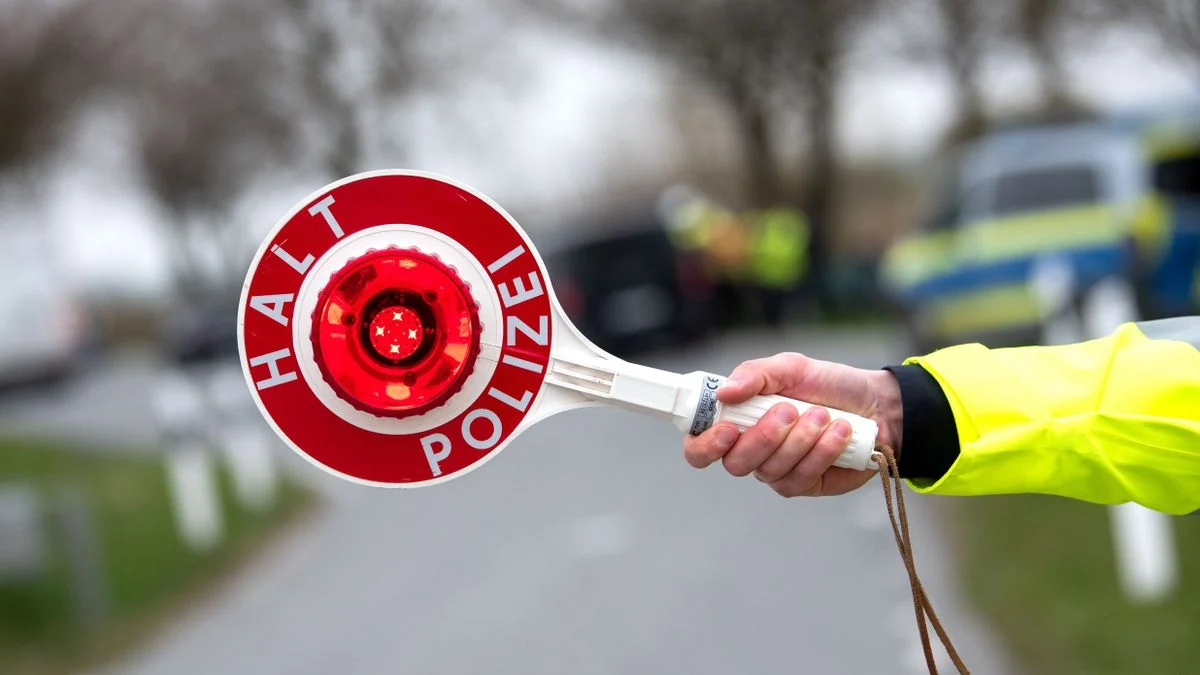
In an alarming display of disregard for road safety and human life, German authorities in Baden-Württemberg intercepted a vehicle near Hockenheim this past weekend that had been converted into a precarious mobile hazard. What began as a standard patrol operation transformed into a sobering encounter with one of the most extreme cases of passenger overloading reported in recent years. A total of 14 individuals—including seven children—were found crammed into a vehicle designed to carry no more than five people.
The incident has sparked a wave of concern among law enforcement and road safety advocates, highlighting a dangerous trend of negligence that could have easily resulted in a catastrophic tragedy.
The Discovery: A Tip-Off Leads to an Unbelievable Sight
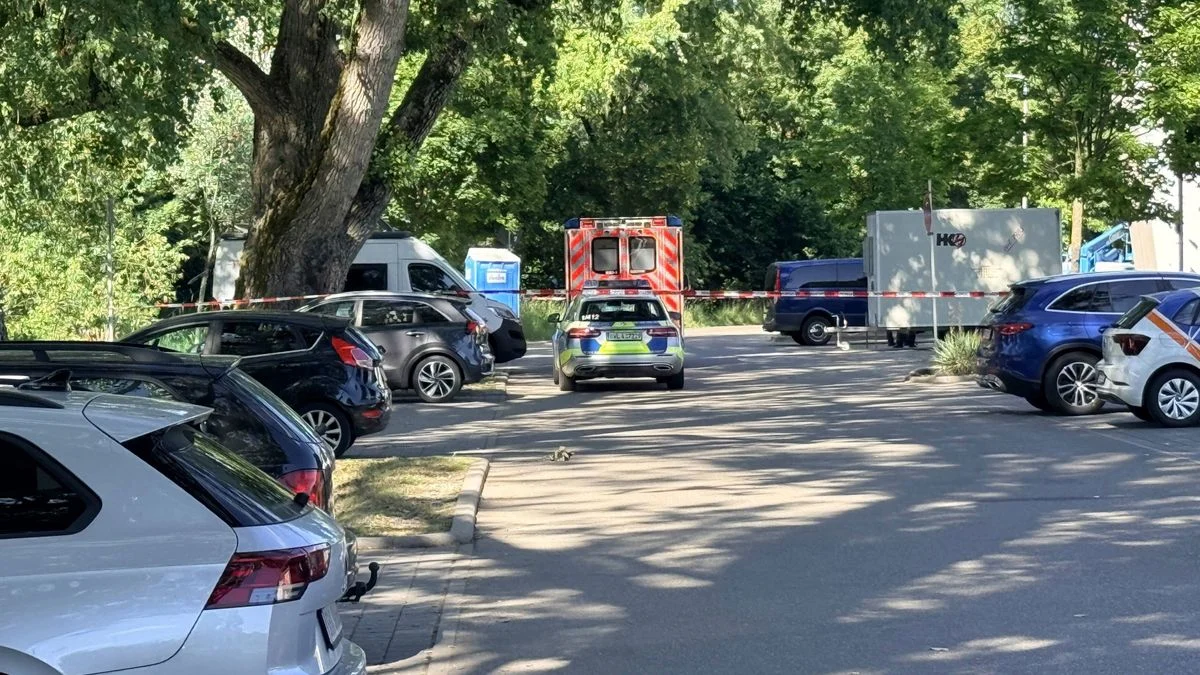
The events unfolded on Saturday evening along the Landesstraße 723, a thoroughfare known for moderate traffic flow near the city of Hockenheim. The intervention was not the result of a random check, but rather the vigilance of a member of the public.
An eyewitness, observing the vehicle struggling under the weight of its occupants and maneuvering in an erratic manner, recognized the immediate danger posed to the passengers and other motorists. The witness promptly alerted the local police, providing a description of the vehicle. Acting on this tip, a nearby patrol unit was dispatched to intercept the car.
When the officers pulled the vehicle over, they were met with a scene that defied standard automotive logic. As the doors were opened, the sheer scale of the violation became apparent. Packed into the standard five-seater cabin were 14 people. Behind the wheel was a 52-year-old man, who was accompanied by 13 passengers. The vehicle, clearly not designed for such a payload, was effectively a "human sardine can," with individuals squeezed into every available footwell, lap, and luggage space.
Chronology of the Intervention
The timeline of the incident reflects a swift and necessary police response:
- Saturday Evening (Approx. 19:00): An observant motorist witnesses the heavily overloaded vehicle on the L723. The driver’s behavior and the visible strain on the vehicle’s suspension raise immediate red flags.
- The Alert: The witness contacts local authorities, providing accurate location data and vehicle identification.
- The Interception: Police units locate the vehicle shortly after the initial report and perform a traffic stop.
- The Inspection: Officers perform a headcount and safety audit. The realization that 14 people are inside a five-seat vehicle shocks the responding officers.
- The Confrontation: The 52-year-old driver is confronted with the evidence. Despite the gravity of the situation, the driver refuses to provide a statement regarding his motivations or the circumstances leading to such a decision.
- Post-Stop Procedures: The vehicle is prohibited from continuing its journey in that state. An administrative offense procedure is initiated against the driver, and formal warnings regarding traffic safety regulations are issued.
The Severity of the Safety Violations
While the sheer number of passengers is the headline-grabbing aspect of this story, the technical violations are far more critical from a legal and safety perspective. Most alarming was the complete absence of appropriate child restraint systems.
Of the seven children present in the vehicle, not a single one was secured in a child seat, nor were they buckled in with the standard three-point seatbelts provided by the manufacturer. In the event of even a low-speed collision, these children would have essentially become projectiles within the cabin.
Furthermore, the vehicle’s gross vehicle weight rating (GVWR) was almost certainly exceeded. Exceeding a vehicle’s weight limit affects every aspect of its performance: braking distances are significantly extended, steering becomes unresponsive, and the risk of a tire blowout increases exponentially. The mechanical stress placed on the suspension and chassis of a five-seater vehicle carrying nearly triple its intended capacity makes it an unpredictable and dangerous machine on public roads.
Official Response: A Stern Warning from Law Enforcement
Following the incident, the local police department issued a strong statement, emphasizing that the rules governing seatbelts and child seats are not merely bureaucratic hurdles or minor traffic "formalities."
"Safety belts and appropriate child seats are life-saving measures," a police spokesperson noted in the official report. "Even at low speeds, traffic accidents can lead to severe or even fatal injuries. Children, in particular, are physically vulnerable and rely entirely on age- and size-appropriate protection to survive the forces of a crash."
The police statement went on to reiterate the legal and moral obligation of every driver to adhere to the maximum passenger capacity defined by the vehicle’s registration. The failure to do so is not just a regulatory breach; it is an act of gross negligence that places the lives of the most vulnerable passengers—children—at direct risk.
The Implications: Why Capacity Limits Exist
The incident in Hockenheim serves as a stark reminder of why automotive engineers and regulatory bodies enforce strict capacity limits.
1. The Physics of a Crash
When a car traveling at 50 km/h stops suddenly, the passengers continue moving forward at that same speed until they strike an object. Without seatbelts, that "object" is the dashboard, the windshield, or another passenger. In an overloaded car, the "internal collision" becomes a chaotic, multi-body impact where passengers are thrown into one another with lethal force.
2. The Failure of Passive Safety Systems
Modern vehicles are engineered with crumple zones and airbags calibrated for a specific number of occupants. When a car is packed with 14 people, the deployment of airbags—if they even trigger correctly—could cause more harm than good, as passengers would be positioned in areas where they were never intended to be.
3. Legal Consequences
The driver in this case faces an administrative offense procedure. Under German law (Ordnungswidrigkeitenverfahren), the penalties for such a flagrant disregard for safety can be substantial, including heavy fines and points on the driver’s license. Furthermore, if an accident had occurred resulting in injury, the driver could have faced criminal charges for negligent bodily harm, which carries the possibility of imprisonment.
A Wider Societal Concern
This incident raises broader questions about road safety awareness. Is this an isolated case of poor judgment, or does it reflect a lack of understanding regarding the necessity of seatbelts?
For years, road safety campaigns have focused on the "Click It or Ticket" mentality, but the Hockenheim incident suggests that for some, the fundamental understanding of why we buckle up has been lost. The fact that seven children were involved makes the situation particularly egregious. It highlights a failure of the adult guardian to prioritize the lives of those entrusted to their care.
Conclusion
The intervention by the Baden-Württemberg police likely prevented a disaster. By removing the vehicle from the road, they ended a journey that was, by every metric of physics and law, an accident waiting to happen.
As the legal process against the driver proceeds, the case stands as a chilling case study for driving schools, law enforcement agencies, and the general public. It serves as a reminder that a vehicle is not just a tool for transportation; it is a complex machine that demands respect. When that respect is abandoned, and when basic safety protocols are treated as optional, the consequences can be permanent and devastating.
The roads remain safe only as long as every participant respects the invisible lines drawn by safety regulations. In Hockenheim, those lines were crossed by a wide margin, but thanks to a vigilant citizen and a swift police response, a potential tragedy was averted.