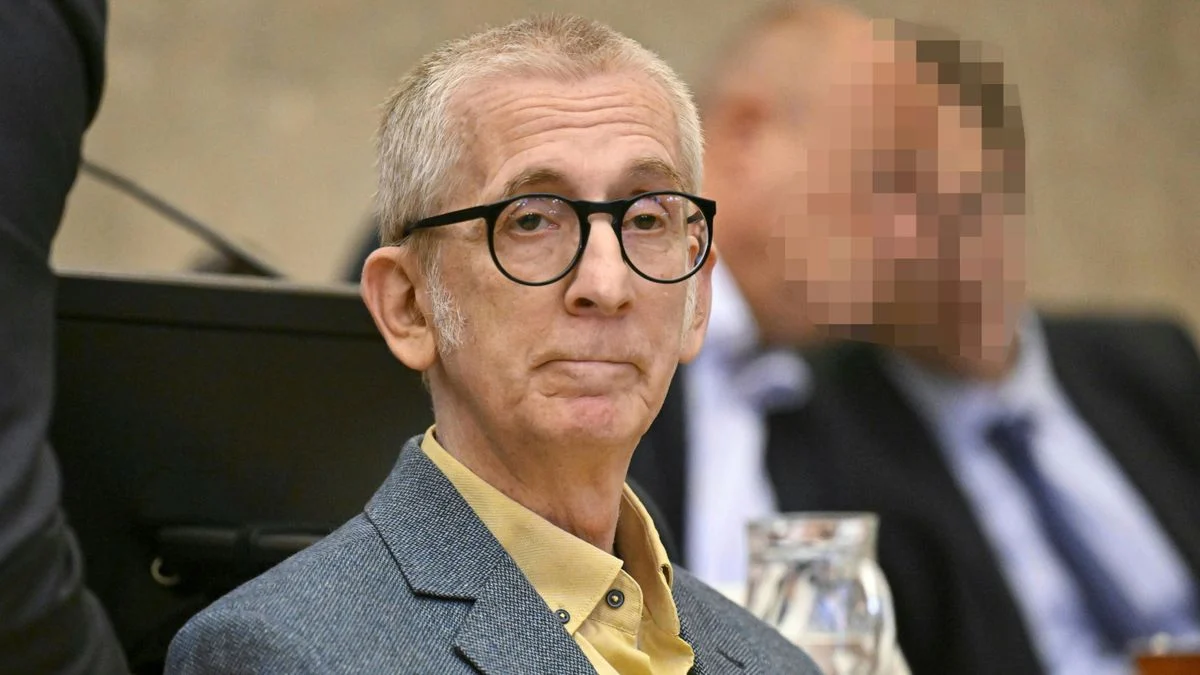
BERLIN – Nearly eighteen months after a chilling act of antisemitic violence shook the foundation of Germany’s commemorative landscape, the wheels of justice have turned once more. The Federal Public Prosecutor’s Office (Generalbundesanwalt) has formally indicted a 37-year-old Syrian national, identified as Khalaf A., for his alleged role in supporting the perpetrator of a 2024 knife attack at the Memorial to the Murdered Jews of Europe in Berlin.
The indictment, which marks a significant escalation in the state’s investigation into the network surrounding the attack, charges Khalaf A. with aiding and abetting attempted murder and dangerous bodily harm. As the legal system continues to process the echoes of that dark evening, the case serves as a somber reminder of the persistent threat posed by extremist ideologies and the long, meticulous process required to dismantle the networks that facilitate them.
Main Facts: The Indictment of Khalaf A.
The charges brought against Khalaf A. represent a critical development in the ongoing judicial scrutiny of the attack. According to the Federal Public Prosecutor’s Office, the 37-year-old is accused of providing essential support to Wassim al-M., the primary perpetrator who carried out the stabbing at the Holocaust Memorial.
Prosecutors allege that Khalaf A. was not merely a peripheral acquaintance but a vital component in the logistical and psychological preparation for the assault. The indictment highlights that the suspect played a role in facilitating the perpetrator’s actions, effectively serving as an accomplice in what authorities have categorized as a politically and religiously motivated act of terror. By aiding in the planning or execution phases of the crime, the prosecution argues that Khalaf A. shares culpability for the violence that transpired at one of Germany’s most significant sites of historical memory.
The legal standard for "aiding and abetting" in German law is rigorous, requiring proof that the accused intentionally provided assistance that facilitated the commission of a crime. By bringing these charges, the federal authorities are signaling that they have gathered sufficient evidence to suggest a deep-seated collaboration between the two men, rooted in a shared allegiance to extremist goals.
Chronology: From the Night of Terror to the Courtroom
The Attack
The incident occurred on a quiet evening in Berlin, a city that remains hyper-vigilant regarding antisemitic threats. The perpetrator, Wassim al-M., targeted the Holocaust Memorial, a site chosen for its symbolic weight. The attack, characterized by a sudden and violent use of a knife, sent shockwaves through the capital. Law enforcement agencies responded with exceptional speed, managing to locate and apprehend the assailant before he could inflict further harm or flee the immediate vicinity.
The Trial of Wassim al-M.
The investigation into the attack was swift and comprehensive. By March 2026, the Berlin Court of Appeal (Kammergericht) reached a landmark verdict. Wassim al-M. was sentenced to 13 years in prison for attempted murder and for his attempted membership in a foreign terrorist organization—specifically, the "Islamic State" (IS).
During the trial, evidence emerged that the perpetrator had sought to align himself with the global jihadist network, viewing the Holocaust Memorial as a prime target to express his virulent antisemitic ideology. The 13-year sentence reflected the severity of the crime and the court’s determination to punish both the act of violence and the underlying terrorist intent.
The Pursuit of Accomplices
While the primary attacker was behind bars, the investigation did not conclude. German intelligence and federal prosecutors continued to comb through digital footprints, communication logs, and social networks to determine whether the attack was an isolated act or the result of a coordinated effort. The indictment of Khalaf A. is the fruit of this long-term intelligence-led investigation, proving that the state’s commitment to pursuing those who enable terror remains steadfast, even years after the initial incident.
Supporting Data: The Rise of Antisemitism and Extremism
The attack at the Holocaust Memorial did not occur in a vacuum. It sits at the intersection of a rising tide of antisemitic incidents across Germany and the enduring threat posed by "lone-wolf" attackers who are often connected to broader, decentralized extremist networks.
Statistics of Concern
According to the Federal Office for the Protection of the Constitution (BfV), Germany has seen a measurable increase in politically motivated crimes targeting Jewish institutions and individuals. The motivation for such attacks often blends traditional far-right tropes with Islamist extremist narratives. The Holocaust Memorial, as the physical embodiment of Germany’s acknowledgment of its darkest history, has increasingly become a lightning rod for those seeking to disrupt the democratic consensus.
The Role of Digital Radicalization
One of the most concerning aspects of modern terror investigations is the reliance on encrypted communication and digital propaganda. Intelligence reports indicate that perpetrators like Wassim al-M. often undergo a process of "remote radicalization." Khalaf A.’s alleged involvement highlights the danger of "enablers"—individuals who may not carry the weapon themselves but provide the ideological validation and logistical support that embolden an attacker to move from rhetoric to action.
Official Responses and Political Implications
The indictment of Khalaf A. has been met with a firm response from the German political establishment, which views the protection of memorial sites as a fundamental duty of the state.
The Judiciary’s Stance
The Federal Public Prosecutor’s Office has maintained a "zero-tolerance" policy regarding attacks on Jewish life in Germany. The lead prosecutor on the case noted that the prosecution of accessories is just as vital as the prosecution of the primary perpetrator, as it serves to dismantle the infrastructure of extremist cells. By holding accomplices accountable, the state seeks to send a clear deterrent message: support for terrorism will be met with the full force of the law, regardless of the time elapsed.
Government and Civil Society
Government officials have frequently cited the need to reinforce security at sites like the Holocaust Memorial, but they also emphasize that physical security is only part of the solution. The broader challenge, according to spokespeople for the Interior Ministry, is to counter the "normalization" of antisemitic discourse in public and private spaces.
Jewish community leaders in Berlin have welcomed the continued legal action but have also expressed a need for deeper societal reflection. The attack, they argue, was not just a crime against individuals, but an assault on the collective memory of the nation. The successful prosecution of those involved is viewed as a necessary step toward restoring a sense of safety and dignity for the community.
Implications: The Long Road to Security
The case of Khalaf A. raises profound questions about the nature of modern security threats in an open society. As Germany continues to grapple with the integration of refugees and the rise of extremist movements, the judiciary is forced to balance the rule of law with the need for national security.
A Test for the German Legal System
The reliance on "aiding and abetting" charges is a strategic legal choice. It allows prosecutors to expand the scope of liability beyond the individual who committed the act. However, it also requires high evidentiary standards, as the defense will undoubtedly argue the extent of Khalaf A.’s knowledge and intent. The upcoming trial will be a test of whether German courts can effectively navigate the complexities of digital communication and informal radicalization networks.
Protecting the Memory
The Holocaust Memorial remains one of the most visited sites in Berlin, a place where the gravity of the past is intended to inform the ethics of the present. When such a site is attacked, it strikes at the core of the democratic project. The legal pursuit of Khalaf A. is more than just a bureaucratic necessity; it is a symbolic defense of the values that the memorial represents. By ensuring that the legal system leaves no stone unturned, the state reaffirms that history—and the lessons drawn from it—cannot be silenced by violence.
Future Challenges
As the trial of Khalaf A. approaches, the German authorities must also look toward the future. The threat of terror is evolving, shifting from large-scale organizational planning to smaller, harder-to-detect collaborations. The lesson from the Holocaust Memorial attack is clear: vigilance must be constant, and the commitment to justice must be as enduring as the monuments that extremists seek to desecrate.
In conclusion, the indictment of Khalaf A. brings the horrific events of eighteen months ago back into the public consciousness. While Wassim al-M. serves his sentence, the case of his alleged accomplice reminds us that the fight against terror is a prolonged effort—one that demands not only the vigilance of police and intelligence services but the continued resolve of a society committed to protecting its history, its institutions, and its future.