Date: June 22, 2026 | Analysis by Financial Desk
The global financial markets find themselves at a precarious crossroads this week. As the DAX (Deutscher Aktienindex) struggles to maintain its footing above the 25,000-point threshold, European investors are holding their breath, looking toward the reopening of the New York Stock Exchange for definitive market direction. Despite a slight softening in oil prices and progress in diplomatic negotiations between Iran and the United States, a pervasive sense of caution—exacerbated by ongoing instability in the Levant—continues to suppress bullish momentum in Frankfurt.
The State of Play: A Fragile Equilibrium
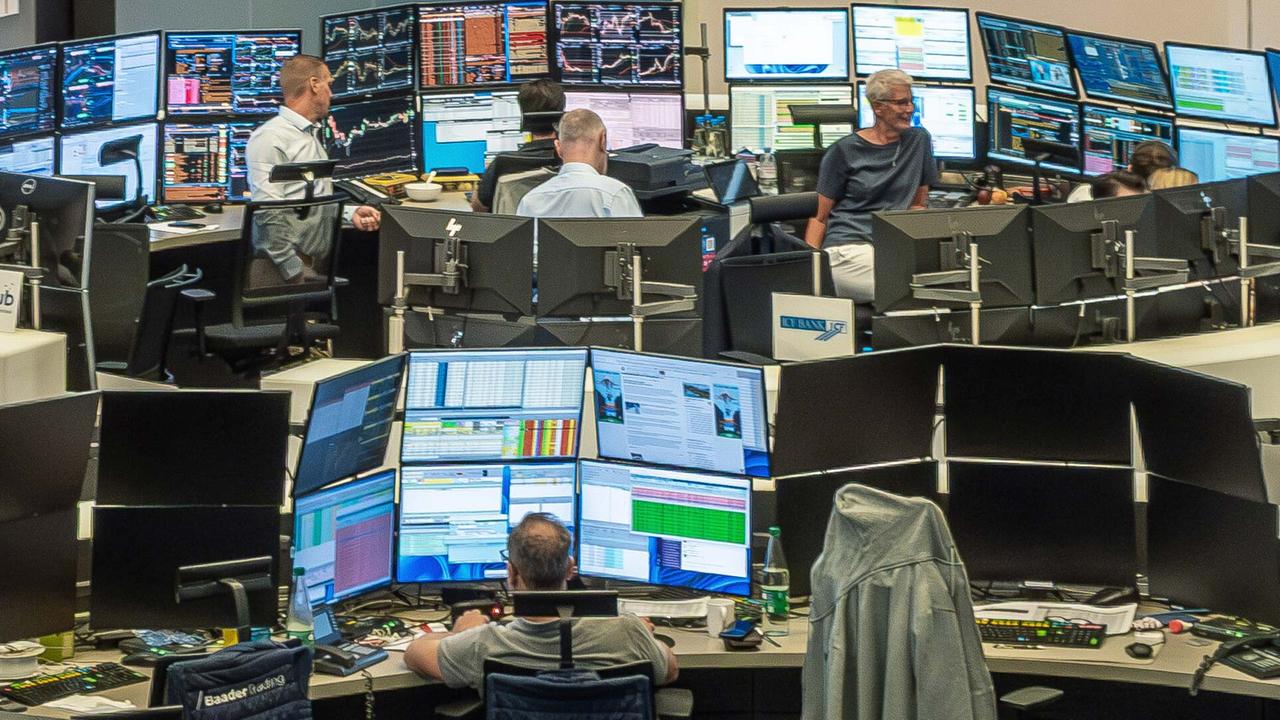
The trading session on June 22, 2026, saw the DAX open with optimism, briefly reclaiming the 25,000-point mark before retreating. By mid-morning, the index was trading at 24,970 points, a marginal decline of 0.1%. This performance follows a lackluster conclusion to the previous week, where the DAX closed at 24,985 points, down 0.2%, despite an intra-day push toward record highs of 25,173.
The prevailing mood on the Frankfurt trading floor is one of "wait and see." While the underlying technical indicators suggest a market with significant upside potential, the geopolitical risks are acting as a structural anchor. Market participants are balancing the enthusiasm surrounding Artificial Intelligence (AI) and the normalization of energy markets against the stark reality of regional conflicts that threaten to disrupt global supply chains.
Chronology of Market Sentiments
To understand the current stagnation, one must look at the progression of the last few months:
- Q1 2026 – The AI-Driven Surge: Global indices, led by the tech-heavy Nasdaq and the Nikkei, experienced a massive rally fueled by the rapid integration of AI into industrial applications.
- Early June 2026 – The SpaceX Catalyst: The successful IPO of the space exploration giant SpaceX acted as a psychological milestone, reinforcing the belief that high-tech growth could continue to justify premium market valuations.
- Mid-June 2026 – Geopolitical Friction: Diplomatic tensions in the Middle East reached a fever pitch, leading to a temporary spike in energy prices and a cooling off in European equity sentiment.
- June 22, 2026 – The Current Standstill: With the U.S. markets returning from a break, liquidity is expected to return to global exchanges, potentially providing the volatility necessary to break the current deadlock.
The "Damocles Sword" of the Levant
Perhaps the most significant factor dampening investor confidence is the situation in the Levant. While the recent roadmap for a peace agreement between the U.S. and Iran has been met with relief, the situation remains volatile. Christian Henke, a prominent market observer at broker IG, aptly describes the current regional crisis as a "Damocles sword" hanging over the negotiation table.
Investors fear that even if a formal agreement is reached, the implementation phase will be fraught with delays. The fragility of the peace process means that any sudden escalation could send energy markets—and by extension, the broader industrial indices—into a tailspin. This risk premium is currently being priced into the DAX, preventing it from sustaining a breakout above the 25,000-point barrier.
The "Heat Test": Geopolitics vs. AI Euphoria
Timo Emden, head of Emden Research, suggests that global equity markets are currently undergoing a "heat test." This test comprises three distinct, often contradictory, pressures:
- Geopolitical Uncertainty: The persistence of conflict, particularly concerning energy transit routes, keeps energy costs volatile.
- Monetary Policy Ambiguity: With central banks providing limited forward guidance, investors are forced to guess the trajectory of interest rates, leading to increased portfolio defensiveness.
- The AI Valuation Debate: Perhaps the most critical long-term question is whether the massive valuations assigned to tech-heavy firms are sustainable. As the "AI gold rush" matures, investors are beginning to scrutinize bottom-line profitability rather than just potential.
Emden notes that while the "geopolitical file" remains open, the market is beginning to question how long AI-driven momentum can compensate for these broader structural concerns.
Global Context: The Japanese Miracle
While Frankfurt remains in a holding pattern, other global markets have seen meteoric rises. The Nikkei 225, for instance, surged past the 72,000-point mark today—a staggering contrast to its level of 40,000 just one year ago. This represents a near 90% gain in twelve months. This rally has been primarily driven by a domestic industrial renaissance and the massive influx of capital into the Japanese tech sector, serving as a beacon of what is possible when structural reform meets high-growth demand.
Energy Markets: The Long Road to Normalization
The oil market remains the heartbeat of global economic health. Today, both Brent and WTI crude are trading below the $80-per-barrel mark. While this decline is ostensibly positive for industrial output and inflation control, experts warn against premature celebration.
Jörg Krämer, Chief Economist at Commerzbank, offers a sobering assessment of the energy landscape. "One should not be overconfident," Krämer warns. "It will likely take until the middle of next year before oil prices return to their pre-war levels of approximately $70."
According to Krämer, the recovery is not merely a matter of diplomacy but of logistics. The Strait of Hormuz, a critical chokepoint for global oil, is seeing only a tentative return to normal shipping volumes. The process of de-mining, restoring production capacity, and replenishing global strategic reserves is a medium-term endeavor, not a short-term fix.
Structural Shift: Hochtief Enters the DAX
In a notable development for the German index, the composition of the DAX is undergoing a significant change. Porsche SE, the investment holding company, is set to be replaced by the construction giant Hochtief. This move highlights a broader market trend: the blurring lines between "traditional" industry and the digital economy.
Hochtief’s rise into the DAX is a direct result of the company’s pivot toward high-tech infrastructure. The firm has secured massive contracts for the construction of multi-billion-euro data centers—the physical backbone of the AI revolution. Consequently, Hochtief’s market capitalization has tripled within a year to roughly 40 billion euros, proving that old-economy firms can capture the "AI dividend" if they align their business models with the digital transformation.
Implications for Investors
The current market climate requires a nuanced approach. Investors are advised to consider the following:
- Diversification beyond Tech: While AI remains a powerful driver, the recent shift in the DAX composition suggests that "infrastructure as a service" companies, such as construction firms building data centers, offer a more stable path to exposure.
- Monitoring Energy Logistics: The price of oil is a proxy for geopolitical stability. Until physical shipping lanes in the Middle East are fully normalized, volatility in energy stocks is expected to remain high.
- The Wall Street Correlation: As the primary driver of global liquidity, the reopening of the U.S. market is the most critical event for the remainder of the week. Any unexpected movement in the Dow Jones or S&P 500 will likely dictate the next 500-point move for the DAX.
As the markets look forward, the consensus remains one of cautious optimism. The fundamental strength of the global economy is undeniable, but the external pressures of geopolitics and energy supply chains will continue to challenge market stability in the coming months. For now, the DAX remains a index in wait, balanced between the promise of technological advancement and the shadows of a volatile world.