The quiet woods between the German towns of Eberstadt and Grantschen have long been a place of refuge for hikers, wildlife, and nature enthusiasts. However, for several months in 2024, these forests became the stage for a dangerous confrontation—a battle of wills that shifted from civil disagreement to criminal intent. A local gardener and hunting leaseholder now stands before the court, accused of transforming a popular, albeit illegal, mountain biking route into a lethal obstacle course. The case has sent shockwaves through the region, highlighting the growing, often violent friction between outdoor recreationalists and those who manage the forest.
The Charges: A Calculated Danger
Between June and August 2024, the suspect allegedly installed a series of wire traps across the "Dachstrail," a narrow, winding path frequently utilized by mountain bikers. According to the prosecution, these were not mere nuisances or warning signs; they were calibrated hazards designed to cause serious injury or death.
During the initial phase of his campaign, the suspect allegedly strung thin wires across the trail. While some of these initial barriers snapped upon impact—fortunately resulting in no injuries—the suspect’s response was not to cease his activities but to escalate them. Investigators discovered that he eventually installed a much thicker, more durable cable at a height of approximately 1.20 meters. At that elevation, the wire would strike a cyclist in the chest or neck area, creating a high probability of a catastrophic fall at high speed.
The prosecution has leveled serious accusations against the defendant, arguing that his actions fulfill the legal criteria for "insidiousness" (Heimtücke), a hallmark of murder charges under German law. By setting a trap that was intentionally designed to be invisible to approaching cyclists, the state argues, the defendant sought to weaponize the terrain against unsuspecting users.
A Chronology of Escalation
The incident did not occur in a vacuum; it was the culmination of a long-standing, simmering resentment.
- Pre-2024: The defendant, a professional gardener and local hunting leaseholder, reports years of frustration regarding the unauthorized use of the forest. He alleges that he attempted to communicate his concerns to the mountain biking community, seeking to curb the use of the "Dachstrail," which he claims disrupted wildlife and damaged sensitive ecosystems.
- June–August 2024: The "trapping" phase begins. The defendant allegedly installs multiple wires across the trail, hoping to physically block access to the path.
- Late August 2024: A mountain biker discovers a wire just in time to brake, narrowly avoiding a potentially fatal collision. This discovery prompts an immediate police investigation.
- September 2024: The defendant is arrested. Following an initial period of detention, the court decides to suspend the arrest warrant, allowing the man to remain on free footing while the trial proceeds.
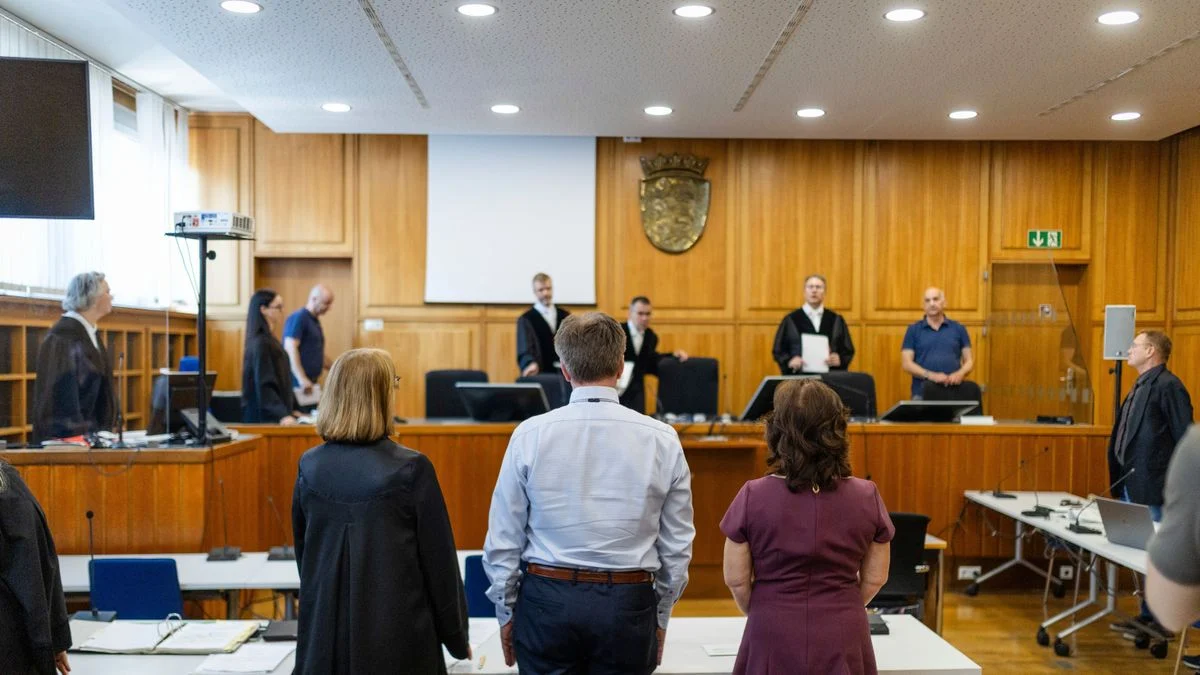
- Late 2024/Early 2025: The case reaches the courtroom, where the defendant admits to the installation of the wires but claims his motives were rooted in a misguided desire to protect the forest.
The Defendant’s Defense: A Plea of Frustration
In a statement read by his defense attorney, the defendant sought to frame his actions as a desperate, albeit admitted, "wrong decision" born from helplessness. "I experienced the increasing use of the trail as a massive problem for wildlife and other forest visitors," the statement read.
The defendant claimed that for years he had attempted to resolve the issue through legal and social channels. He noted that despite his repeated attempts to engage with the biking community, he was met with what he perceived as a total lack of reaction. According to the defendant, the intensity of the trail’s use only increased, leading him to take matters into his own hands. While he acknowledged in court that placing the wires was "an absolutely wrong decision," the defense is clearly attempting to pivot the narrative away from malice and toward a frustrated individual who felt abandoned by the system.
The "Two-Meter Rule": The Catalyst of Conflict
To understand why a local resident would resort to placing traps in a public forest, one must look at the legal framework governing Baden-Württemberg’s woodlands. The region remains the only German state that enforces the "Two-Meter Rule"—a law enacted in 1995 that prohibits cycling on any path narrower than two meters.
For the modern mountain biker, who often seeks the thrill and technical challenge of narrow, winding "singletrails," this law effectively renders the vast majority of forest paths off-limits. Because the state’s current coalition government (a "Green-Black" alliance) has shown little interest in reforming this regulation, the divide has only widened.
This legal rigidity creates a "forbidden fruit" dynamic. Mountain bikers, feeling that their sport is being unfairly criminalized, move to informal, unsanctioned trails like the Dachstrail. Conversely, hunters, foresters, and private landowners—who are responsible for the management of the land—view these bikers as trespassers who disturb wildlife, threaten the safety of hikers, and degrade the forest floor. The result is a perpetual cycle of defiance and anger.
The Legal and Ethical Implications
The trial of the hunting leaseholder poses a profound question for the German legal system: How should society balance the rights of recreational users against the property rights and management responsibilities of those who steward the land?
The Prosecution’s View
The prosecution is taking a firm stance, emphasizing that the "insidiousness" of the act is not mitigated by the defendant’s grievances. By creating a lethal hazard on a path where they knew others would travel, the suspect moved beyond the realm of "civil disobedience" and into the realm of violent crime. The state is keen to set a precedent, ensuring that those who attempt to "police" the forest through violence are met with the full weight of the law.
The Perspective of Stakeholders
- The Mountain Biking Community: Advocates for cycling argue that the Two-Meter Rule is an antiquated policy that fails to account for modern recreational habits. They argue that if the state provided more legal, well-managed trails, the pressure on the forest would dissipate, and incidents like the Dachstrail traps would become obsolete.
- Forestry and Hunting Interests: Representatives for hunters and landowners emphasize that the forest is not a public theme park. They argue that unauthorized trail building destroys habitat, causes "flight stress" in deer and other animals, and creates liability issues for landowners. They view the illegal trails as an act of arrogance by users who refuse to respect nature or the law.
Conclusion: A Path Toward De-escalation?
As the trial continues, the case of the Dachstrail traps serves as a cautionary tale. The legal outcome will undoubtedly provide a sense of justice for the bikers who narrowly escaped injury, but it will not resolve the underlying tension.
The conflict in Baden-Württemberg is indicative of a broader struggle in modern Europe: as urbanization increases, the pressure on natural spaces to serve as playgrounds for a growing number of diverse users creates a zero-sum game. If the state refuses to update its regulations—such as the Two-Meter Rule—the burden of enforcement often falls on individuals. When those individuals reach their breaking point, the result can be catastrophic.
For now, the woods between Eberstadt and Grantschen serve as a somber reminder. While the legal proceedings address the criminal actions of one man, the systemic issue remains: a forest divided by laws that no longer fit the reality of its users, leaving behind a trail of resentment that, if left unaddressed, may lead to further, darker chapters in the battle for the woods.