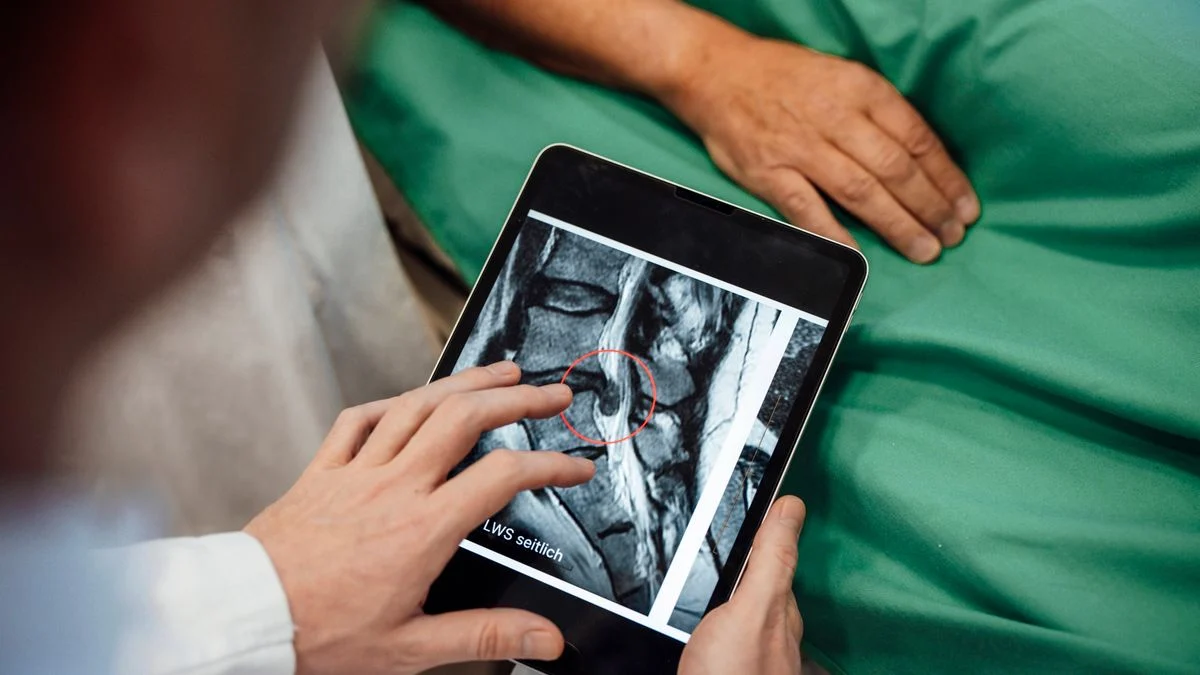
The integration of Artificial Intelligence (AI) into clinical settings has been heralded as the most significant medical breakthrough since the discovery of antibiotics. From diagnostic imaging to predictive genomics, algorithms are processing data at speeds and depths human physicians cannot replicate. However, a growing consensus among bioethicists, clinicians, and regulatory bodies suggests that the autonomous application of AI in medicine is not just premature—it is potentially life-threatening.
As healthcare systems across the globe rush to digitize and automate, the critical question remains: Can an algorithm ever be held accountable for a life-or-death decision, and what happens when the "black box" gets it wrong?
The Core Conflict: Efficiency vs. Accuracy
At the heart of the debate is the tension between operational efficiency and clinical safety. AI models are trained on massive datasets—electronic health records (EHRs), radiological scans, and genetic markers. When these models function correctly, they reduce the burden on overburdened medical staff and catch anomalies that might escape a tired human eye.
Yet, the primary danger lies in "automation bias." This occurs when human practitioners place excessive trust in computer-generated suggestions, often overriding their own clinical judgment. When an AI system presents a diagnosis with high statistical confidence, the social and professional pressure on a physician to disagree is significant. If the AI is flawed—due to biased training data or "hallucinations"—the result can be a catastrophic misdiagnosis or inappropriate treatment plan.
A Chronology of the AI Integration Era
The Early Promise (2010–2015)
The era began with high-profile victories in pattern recognition. AI models proved highly effective at identifying malignant skin lesions and screening retinal images for diabetic retinopathy. These early, narrow-focus applications set a precedent of success, leading to significant venture capital investment.
The Scaling Phase (2016–2020)
Healthcare systems began integrating AI into broader workflows. Predictive analytics for sepsis detection and hospital readmission rates became standard. During this period, the focus shifted from simple image analysis to complex, multi-variable patient monitoring.
The Regulatory Awakening (2021–Present)
As AI implementation widened, so did reports of failure. Investigations revealed that algorithms used in US hospitals to allocate care were systematically biased against Black patients, as the software used "healthcare spending" as a proxy for "illness severity," ignoring systemic inequalities in access to care. Today, the focus has shifted toward explainability, accountability, and the "Human-in-the-Loop" (HITL) requirement.
Supporting Data: Where the Algorithms Fail
The performance of AI in medicine is often touted in terms of "Area Under the Curve" (AUC) metrics. However, these metrics often mask critical failures.
- The Data Drift Problem: AI models are static, while biological systems are dynamic. A model trained on data from a hospital in 2018 may become ineffective in 2024 due to changes in patient demographics, new pathogens, or evolving diagnostic standards.
- Algorithmic Bias: Studies have shown that models trained on specific patient cohorts (e.g., Caucasian males) perform significantly worse when applied to minority populations. In dermatology, this has led to higher false-negative rates for skin cancers on darker skin tones.
- The "Black Box" Dilemma: In deep learning, neural networks arrive at a conclusion through layers of computation that are often opaque. When a doctor cannot see the "why" behind a diagnosis, they cannot verify the validity of the conclusion, turning the physician into a passive messenger for an opaque machine.
Official Responses and Regulatory Frameworks
Regulatory bodies, including the European Medicines Agency (EMA) and the US Food and Drug Administration (FDA), are currently playing catch-up. The European Union’s AI Act represents the most aggressive attempt to classify medical AI as "high-risk," requiring rigorous documentation, human oversight, and quality management systems.
"We are not opposed to innovation," says a representative from a leading medical ethics board. "But we are opposed to the abdication of clinical responsibility. A machine can provide an opinion; it cannot take an oath."
Major medical associations are now advocating for a mandatory "Human-in-the-Loop" protocol. Under this framework, AI serves only as a decision-support tool. It is explicitly forbidden for an algorithm to trigger automated drug administration or finalize a surgical plan without a secondary, independent verification by a licensed human practitioner.
Implications: The Future of Medical Liability
The legal implications of AI-driven errors are currently a murky territory. If an AI misses a tumor that a human radiologist would have caught, who is liable? The hospital? The software developer? The physician who signed off on the report?
The legal consensus is trending toward "Physician Responsibility." Courts are increasingly viewing AI as a "sophisticated stethoscope"—a tool that aids the professional, but one that does not absolve the professional of their duty of care. This places an immense burden on the medical community to undergo "AI literacy" training. Physicians must be taught not just how to use these tools, but how to effectively challenge them.
The Human Element
The future of medicine will not be defined by AI replacing doctors, but by doctors who use AI replacing those who do not. However, this transition requires a fundamental shift in medical education. We must move away from rote memorization—which AI does better—and toward critical thinking, empathy, and the ability to detect when an algorithm has entered the realm of the absurd.
Conclusion: A Cautionary Path Forward
The potential for AI to democratize healthcare, reduce costs, and improve diagnostic accuracy is immense. But we must avoid the trap of technological determinism—the belief that because something can be automated, it should be.
If we allow AI to operate in isolation, we risk turning our hospitals into high-tech factories where the patient is just another data point to be processed. Medicine is fundamentally a human-to-human encounter. It requires the ability to understand context, social nuance, and the subtle, non-quantifiable signs of patient distress.
As we integrate these powerful tools into our clinical workflows, we must ensure that the silicon remains subservient to the scalpels and the stethoscopes—and, most importantly, to the human judgment that guides them both. The goal is not to create a robotic physician, but to augment the human one with tools that are as safe as they are powerful. Until we can guarantee the transparency, equity, and reliability of these systems, the human hand must remain the final arbiter of life and death.
Key Takeaways for Stakeholders
- For Patients: Always ask if an AI tool was used in your diagnosis and what the human verification process was.
- For Clinicians: Maintain healthy skepticism. If an AI output contradicts your clinical intuition, perform a manual investigation.
- For Developers: Prioritize "Explainable AI" (XAI). A model that provides a justification for its findings is infinitely more useful and safer than a black box.
- For Policy Makers: Enforce strict auditing standards for clinical AI, focusing on the diversity of training data and the potential for demographic bias.
As technology continues its rapid ascent, the medical community stands at a crossroads. The choice is between a future of efficient, machine-driven diagnostics or one where technology is a partner in a human-centric system. The former is a risk to patient safety; the latter is the only sustainable path forward.