As the transition from summer to autumn settles over the Northern Hemisphere, stargazers are turning their eyes toward the heavens. Following a disappointing August for many in Central Europe, where thick cloud cover obscured both the full moon and a rare partial lunar eclipse, the skies in late September 2026 promise a much more rewarding display.
Main Facts: The September Lunar Event
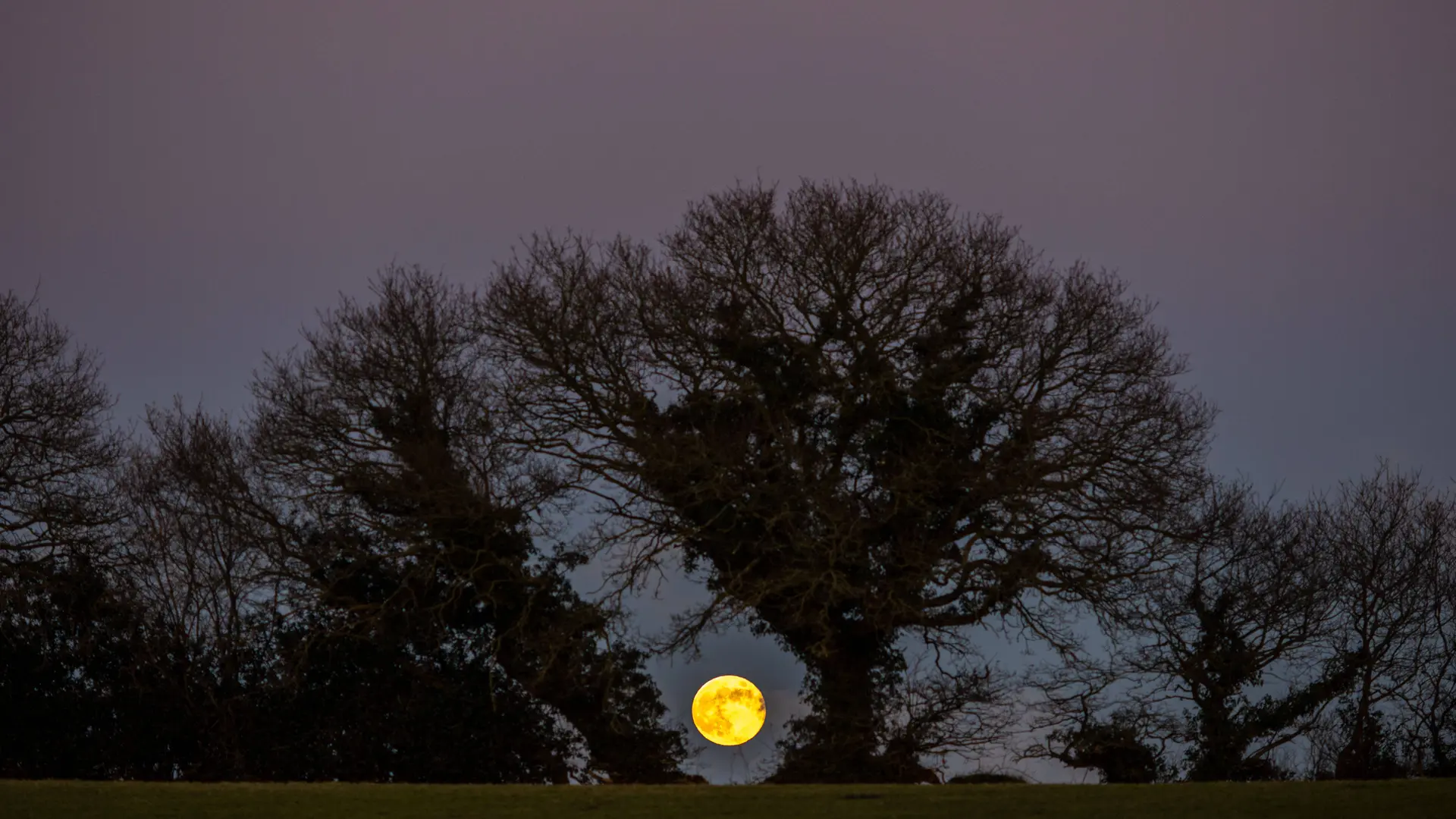
On September 26, 2026, at precisely 18:49 UTC, the Moon will reach its peak illumination, gracing the night sky as a brilliant, full orb. This celestial event marks the monthly culmination of the lunar cycle, providing a bright, natural beacon that will be visible throughout the night, weather permitting.
The September full moon is steeped in cultural and historical significance. Often referred to as the "Harvest Moon," it is uniquely tied to the rhythm of the agricultural calendar. Historically, the bright light of this specific full moon allowed farmers to continue their work in the fields well into the night, facilitating the collection of crops as the days grew shorter and the autumn harvest reached its peak. While the astronomical beginning of autumn—the autumnal equinox—officially falls on September 23, the full moon serves as a poetic, glowing herald of the changing season.
Chronology of the Event
For observers tracking the celestial movements, the evening of September 26 serves as the focal point. As the Sun dips below the western horizon, the Moon will rise in the east, beginning its slow, majestic traverse across the night sky.
- Sunset: As twilight fades, the Moon emerges, appearing larger and brighter than usual due to the "moon illusion"—a psychological phenomenon where the Moon appears bigger when near the horizon.
- The Midnight Zenith: By the middle of the night, the Moon will reach its highest point in the sky, providing optimal visibility for those with a clear view of the southern meridian.
- The Saturn Connection: One of the most captivating aspects of this month’s event is the proximity of Saturn. Throughout the night, the ringed planet will appear to trail the Moon, creating a rare "photographic" opportunity for amateur astronomers. This pairing of the Earth’s natural satellite with one of the solar system’s most iconic gas giants adds a layer of depth to the evening’s observation.
Supporting Data: Weather and Visibility
The potential for a clear night remains the primary concern for enthusiasts. In regions like Central Europe, statistical data suggests that September is characterized by an average cloud coverage of approximately 50 percent. While this is a significant improvement over the volatile weather patterns often seen in late August, it remains a "toss-up" for those planning their observation sessions.
Meteorologists suggest that high-pressure systems currently moving over the continent could provide the necessary stability to clear the skies. For those hoping to catch a glimpse, experts recommend finding a location away from urban light pollution. Even with the brightness of the full moon—which can wash out fainter stars—the proximity of Saturn will be easily detectable to the naked eye as a steady, golden-hued light source.
For those interested in technical observation, the following guidelines are recommended:
- Naked Eye: Saturn will appear as a bright, non-twinkling "star."
- Binoculars: A steady pair of 10×50 binoculars will reveal that Saturn is not a perfect point of light, hinting at its unique oval shape caused by its ring system.
- Telescopes: To discern the rings clearly, a telescope with at least 50x magnification is required. The rings of Saturn, composed primarily of ice particles and rock, are currently angled in a way that makes them particularly striking for viewers in the Northern Hemisphere.
Historical and Cultural Implications
The naming conventions of the September full moon extend beyond the "Harvest Moon." Depending on the region and the cultural tradition, it is also frequently known as the "Barley Moon" or the "Fruit Moon." These titles reflect the bounty of the harvest season, acknowledging the peak of agricultural productivity before the dormancy of winter.
For indigenous populations in North America, this phase was often called the "Corn Moon," marking the traditional time for the maize harvest. These names are not merely ornamental; they represent a deep, historical link between human civilization and the observation of the sky. Before the advent of modern clocks and calendars, the phases of the moon were the primary tools used by society to manage the logistics of survival, trade, and community life.
The Science of the "Harvest Moon"
Astronomically, the Harvest Moon is defined by the proximity of the full moon to the autumnal equinox. Because the ecliptic (the path of the Sun) makes a narrow angle with the horizon in the autumn, the Moon appears to rise at roughly the same time for several consecutive nights. This results in an extended period of bright, moonlit evenings, which is the physical basis for the traditional agricultural benefits associated with the name.

Implications for Astronomy and Public Engagement
The recurring interest in the full moon serves a vital role in public science education. Astronomical events of this nature act as a "gateway" for many to take an interest in the wider field of space exploration and astrophysics.
MDR Wissen and other scientific institutions emphasize that the night sky belongs to everyone, regardless of professional training. By observing the Moon and its companion planets, the public maintains a connection to the vast, largely unexplored reaches of our solar system. As researchers continue to study the rings of Saturn and the lunar surface, these monthly cycles remind the public that the universe is not a static background, but a dynamic, ever-changing environment.
Expert Perspectives
Astronomers note that while the Moon is a constant companion, the dynamic pairing with Saturn offers a unique educational moment. Dr. Elena Vance, an astrophysicist, notes: "When we see the Moon and Saturn together, we are seeing two distinct modes of planetary existence. The Moon is a cratered, geologically quiet world, while Saturn is a violent, gas-giant environment defined by extreme pressure and complex dynamics. Seeing them together in one field of view forces us to appreciate the diversity of our local cosmic neighborhood."
Conclusion: Preparing for the Night
As September 26 approaches, enthusiasts are encouraged to prepare their equipment and monitor local weather forecasts. Whether observing from a city balcony or a rural hillside, the event serves as a reminder to pause and reflect on the celestial mechanics that have governed human life for millennia.
If the clouds do break—as they often do in the crisp, cooling air of autumn—the sight of the bright Harvest Moon trailing the golden light of Saturn will be a fitting celebration of the transition into the darker, cooler, and ultimately more contemplative half of the year. The cycle continues, and for one night in late September, the focus of the world will be directed upward, toward the silent, silver dance of the spheres.