While the Artificial Intelligence sector continues to post record-breaking revenue figures within the tech ecosystem, a palpable sense of anxiety has permeated Wall Street. The central issue is no longer just about model performance; it is about the "Great Disconnect"—the widening chasm between the massive capital expenditures pouring into AI infrastructure and the tangible, profit-generating utility of these tools across the broader economy. As Anthropic prepares for a landmark IPO, the financial world is asking whether the AI boom is a foundational shift or a modern-day iteration of the Dotcom bubble.
The Anthropic IPO: A Litmus Test for the Industry
The filing of the S-1 registration with the U.S. Securities and Exchange Commission (SEC) by Anthropic has finally brought transparency to one of the most enigmatic players in the generative AI space. With an ambitious valuation target of up to $2 trillion, the company is positioning itself as a titan of the next industrial age.
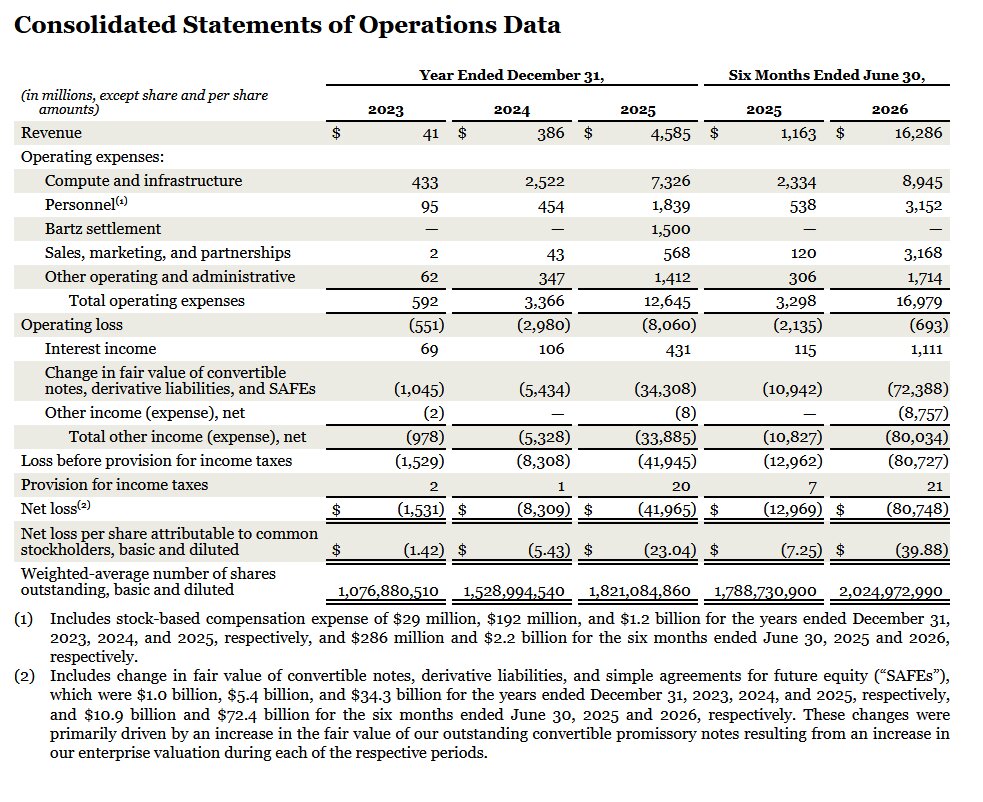
However, the public disclosure of its financials has provided a sobering look at the economics of frontier AI. The headline figure—a net loss of $80.7 billion in the first half of 2026—initially sent shockwaves through the market. A deeper analysis, however, reveals that $72.4 billion of this loss stems from the accounting treatment of convertible notes and various financial instruments, rather than pure operational burn.
When filtering out these non-cash accounting complexities, the picture is more nuanced. Anthropic reported an operational loss of $693 million for the first half of 2026, a significant improvement over the $2.13 billion loss recorded in the same period of 2025. This narrowing of the loss gap is largely driven by the explosive adoption of "Claude Code," which propelled revenue from $1.16 billion in the first half of 2025 to $16.29 billion in the first half of 2026.
Despite this revenue surge, the company’s capital requirements remain staggering. With infrastructure commitments reaching up to $750 billion, Anthropic is effectively "betting the house" on sustained demand. The IPO serves as the ultimate test: if the market responds with skepticism, it could trigger a wider reassessment of the entire AI sector’s valuation.
Chronology of the AI Infrastructure Gold Rush
To understand the current tension, one must look at the rapid acceleration of investment over the last three years:
- 2023: The "Eureka Moment." Following the viral success of early LLMs, corporations began experimental pilot programs, largely focused on coding assistants and creative text generation.
- 2024: The Infrastructure Phase. Hyperscalers and startups engaged in a massive race to secure GPU supply and build data centers, leading to record-breaking capital expenditures.
- 2025: The Revenue Expansion. Companies like Anthropic saw revenue explode as "Claude Code" and similar enterprise coding tools became industry standard, proving the utility of AI in software development.
- 2026: The Reality Check. As of the second half of 2026, the industry faces the "Productivity Gap." While software engineers report massive gains, the impact on general office work, manufacturing, and healthcare remains statistically elusive. The IPO of Anthropic now serves as the defining event of this transition period.
Supporting Data: The Productivity Disconnect
The fundamental concern for analysts is the lack of "cross-sector contagion"—the failure of AI utility to spread beyond the tech and software-coding circles.

The Gartner Warning
In mid-October 2026, Gartner released a sobering forecast regarding AI infrastructure. While $1 trillion was funneled into infrastructure this year, an additional $6 trillion is projected for 2027 through 2030. According to Gartner’s Senior Director Analyst, Will Sommer, the math simply does not add up. To justify the current level of investment, the AI industry would need to generate approximately $8.5 trillion in revenue by 2030. Gartner’s projections, however, suggest that the total market will likely peak at $3.6 trillion—a shortfall of nearly $5 trillion.
The "Magnificent 7" Monopoly
Torsten Slok, Chief Economist at Apollo, highlights a stark reality in his recent analysis: the financial benefits of AI are currently sequestered within the "Magnificent 7" (Apple, Microsoft, Amazon, Alphabet, Meta, Nvidia, and Tesla). Outside of these tech behemoths, the rest of the economy has yet to see a meaningful boost in productivity. For most businesses, spending on AI is currently categorized as a "cost center" that compresses margins rather than a growth engine that expands them.
Adoption Bottlenecks
Data from the firm Ramp paints a picture of a market top-heavy with a few massive spenders. While the top 1% of enterprise customers spent $9,567 per employee on AI services in September 2026, the median expenditure across all companies remains a paltry $15.70. Crucially, the growth rate of spending among those top-tier "whale" customers has begun to plateau.
The Utility Problem: Frontier Models vs. Small Models
A growing consensus among industry experts suggests that the "frontier model" approach—building increasingly massive, expensive-to-run AIs—may be reaching a point of diminishing returns for the average business.
As noted by telecom expert Craig Moffett, the rapid progress in model efficiency means that smaller, cheaper, and faster models are becoming "good enough" for most corporate tasks. If a company can solve 90% of its administrative needs with a lightweight, inexpensive model, the rationale for purchasing access to an exorbitantly priced "frontier" model evaporates.
This presents an existential threat to companies like Anthropic, whose business models rely on the assumption that enterprise demand for high-end AI will continue to scale linearly. If businesses decide that the "frontier" is unnecessary for their day-to-day operations, the projected revenue growth for AI labs may collapse.
Implications: A Looming Market Correction?
The prevailing sentiment on Wall Street is one of cautious, if not panicked, observation. The Anthropic IPO is not merely a fundraising event; it is a referendum on the sustainability of the current AI business model.
The "House of Cards" Risk
Investor and Sapphire Ventures co-founder Jai Das has drawn direct parallels to the telecom and Dotcom bubbles of the late 1990s. During that era, massive capital was poured into the infrastructure of the internet—laying fiber-optic cables and building server farms. While the technology was undeniably transformative, the companies that built the infrastructure often went bankrupt before the rest of the economy was ready to utilize the capacity.
"If the IPO underperforms, it could trigger a tech reset," Das warned in an interview with CNBC. The risk is that the industry is currently "over-built," with supply significantly outpacing the actual, realized demand of the broader economy.
The Path Forward
For AI to avoid a "bubble-pop" scenario, the industry must move beyond the "coding and tech" silo. The next 18 to 24 months are critical. Companies must demonstrate that:
- Productivity gains are real in non-technical fields like healthcare, logistics, and legal services.
- Infrastructure costs are manageable through model optimization and energy-efficient computing.
- Revenue growth is broad-based, coming from a diverse set of industries rather than just the tech giants buying each other’s services.
The world is watching Anthropic. If the company can successfully bridge the gap between its current multi-billion dollar costs and a sustainable, profit-generating future, it will validate the last three years of intense investment. If it fails, the "AI Revolution" may be forced to undergo a painful, albeit necessary, contraction—a transition from a speculative gold rush to a more sober, utility-focused era of software development.
As the markets wait for the final verdict, the message to AI firms is clear: the era of "growth at any cost" is ending. The era of "demonstrable value" has begun.