In an era of increasing urban density and a shift toward diverse mobility solutions, the question of alcohol consumption and traffic safety has returned to the center of German public policy debates. A newly released study by the TÜV Association (TÜV-Verband) has reignited discussions regarding the feasibility and public acceptance of a "zero-promille" (zero-tolerance) policy for all road users. As Germany grapples with evolving traffic patterns, the tension between personal liberty and public safety is becoming increasingly pronounced.
Main Facts: The Pulse of Public Opinion
The TÜV Mobility Study 2026, conducted by the polling institute Forsa, provides a comprehensive snapshot of how German adults perceive alcohol in the context of road safety. According to the data—which surveyed over 2,500 individuals—there is broad support for stricter regulations, though this support varies significantly depending on the mode of transport.
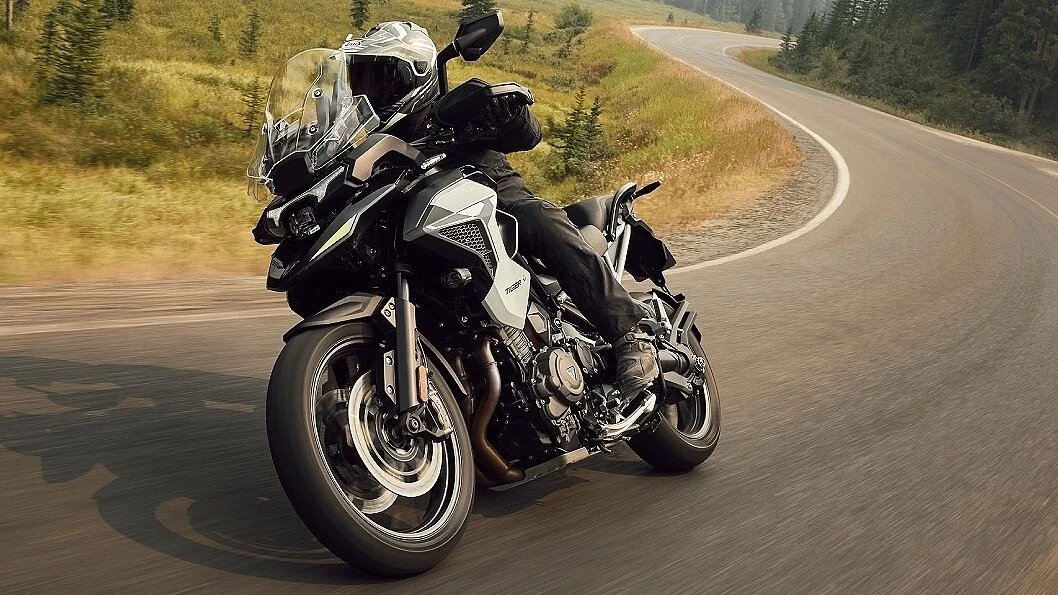
Approximately 71% of German adults advocate for an absolute alcohol ban for car drivers. This sentiment remains high for motorized two-wheelers, such as motorcycles and mopeds, which garnered a 74% approval rate for a zero-tolerance policy. However, as the focus shifts to more personal or "light" modes of transport, the consensus thins. E-scooter users face 67% support for a ban, while for cyclists, the number drops to 54%.
When asked about a universal ban that would apply to all traffic participants regardless of vehicle type, 49% of respondents expressed support for a zero-promille threshold. These findings provide the foundation for the TÜV-Verband’s latest legislative recommendations: a universal zero-tolerance policy for all motor vehicle operators and a significant tightening of the rules governing cyclists.
Chronology: A Multi-Year Shift in Policy Focus
The current debate did not emerge in a vacuum. It follows a series of incremental steps toward stricter road safety standards.
- Pre-2026: Germany has long operated under a 0.5-promille limit for motor vehicle drivers, established under Section 24a of the Road Traffic Act (StVG). Exceptions exist for novice drivers in their probationary period and those under 21, who are already subject to a zero-tolerance policy.
- January 2026: The 64th German Traffic Court Day (Deutscher Verkehrsgerichtstag) signaled a major turning point, recommending that regulators move to penalize intoxicated cycling. They proposed a fine and a penalty point system for cyclists operating at 1.1 promille or higher.
- March 2026: The German Bundestag formally requested that the federal government examine the potential for lower alcohol thresholds and the introduction of administrative fines (Bußgeld) for cyclists, moving the issue from academic discourse to the parliamentary agenda.
- April 2026: The publication of the TÜV Mobility Study 2026 provided the empirical backing for these legislative ambitions, confirming that public appetite for stricter safety measures is at an all-time high.
Supporting Data: The Physics of Risk
The push for a zero-promille limit is driven by compelling, albeit complex, data regarding human physiology and accident risk. The TÜV-Verband relies heavily on research from the European Road Safety Observatory (ERSO) to justify its stance.
Epidemiological evidence suggests that the risk of being involved in an accident begins to climb long before a driver hits the current 0.5-promille legal threshold. Data shows that at 0.5 promille, the general accident risk is roughly 1.4 times higher than that of a sober driver. The danger scales exponentially, however, when considering fatal accidents. At 0.3 promille, the risk of a fatal crash is estimated to be twice as high as that of a sober person. By 0.5 promille, that risk increases fivefold, and at 0.8 promille, it is ten times higher.
A 2023 meta-analysis by Alena Høye and Ingeborg Storesund Hesjevoll, which synthesized findings from 60 international studies, confirmed this near-exponential relationship between blood alcohol concentration and crash risk. These findings underscore the "zero-tolerance" argument: since there is no clear "safe" threshold for alcohol consumption behind the wheel, a total ban is the only policy that effectively eliminates the variable of impairment.
Official Responses and Institutional Perspectives
The TÜV-Verband has emerged as the leading advocate for this regulatory overhaul. Fani Zaneta, the association’s expert on traffic safety, argues that the current legal framework for cyclists is dangerously outdated. Currently, cyclists are only deemed "absolutely unfit to drive" at 1.6 promille—a level she describes as a "full-blown state of intoxication."
"We need a zero-promille limit for everyone operating a motor vehicle," Zaneta stated during the study’s launch. Regarding cyclists, the association supports the recommendation of the Traffic Court Day: lowering the threshold to 1.1 promille and introducing a concrete fine structure.
However, the industry and legal experts are divided on the implementation. There is a clear distinction between the average bicycle and the growing number of high-speed e-bikes and cargo bikes. Legal experts point out that the current, colloquial use of the term "E-Bike" is insufficient for law enforcement. To implement these changes, legislators must clearly differentiate between standard bicycles, pedal-assisted e-bikes (limited to 25 km/h), and S-Pedelecs (which are already legally classified as motor vehicles).
The nuance of the survey data itself suggests that the public is not entirely convinced that a universal ban is the right path. While 71% want zero tolerance for cars, the drop to 49% for a "blanket ban" suggests that many Germans still wish to maintain a distinction between the danger posed by a two-ton vehicle and the risks associated with a bicycle.
Implications: A Future of Stricter Enforcement
If the government moves forward with the proposed changes, the implications for the average citizen would be significant.
The Regulatory Path
- Motor Vehicles: A potential move from 0.5 to 0.0 promille would align Germany with several of its European neighbors, such as the Czech Republic and Hungary. This would simplify enforcement, as police would no longer have to navigate the grey areas of "impaired but under the limit."
- Cyclists: The introduction of a 1.1-promille limit would create a new category of traffic offense. This would likely be paired with a penalty point system, forcing cyclists to treat their commute with the same legal gravity as motorists.
- Medical-Psychological Assessment (MPU): Currently, the MPU (often called the "idiot test" in Germany) is typically reserved for extreme cases or repeat offenders. The proposal to trigger an MPU for cyclists at 1.1 promille would represent a massive escalation in the consequences for "drunk cycling."
The Societal Impact
The cultural implications of these changes are significant. For decades, the "Feierabendbier" (after-work beer) and the bicycle ride home have been staples of German social life. A legal threshold for cyclists could alter the social habits of millions of commuters. Critics argue that such laws could discourage cycling, which is currently promoted as an environmentally friendly and healthy alternative to car travel.
Furthermore, the demographic divide is stark. The study revealed that 78% of women support a zero-promille limit for cars, compared to only 63% of men. Age also plays a role, with 59% of those over 60 supporting a universal ban, compared to only 31% of 18- to 29-year-olds. This suggests that the policy debate is not just about safety, but also about a generational shift in attitudes toward alcohol and personal responsibility.
Conclusion
The TÜV Mobility Study 2026 has successfully put the issue of alcohol-related traffic safety back on the front burner. As the Bundestag continues to evaluate the proposed legislative changes, the challenge will be to balance the empirical reality of accident risk with the practical realities of urban mobility. While the data suggests that alcohol is an undeniable factor in traffic danger, the path toward a zero-promille society remains a complex negotiation between the mandate to protect public life and the preservation of the freedoms associated with modern transport.
For now, the consensus remains fragmented: Germany is largely in favor of keeping cars sober, but remains hesitant to impose the same standards on its cyclists. Whether the government decides to bridge this gap will be a defining question for German traffic policy in the coming years.