The search for a new, life-saving medication is often likened to finding a needle in a haystack. It is an arduous, multi-year, and exorbitantly expensive endeavor that consumes billions in capital and frequently ends in disappointment. For decades, the pharmaceutical industry has focused its technological prowess on the discovery phase—the identification of promising molecules. However, industry insiders are increasingly recognizing that the real bottleneck is not the chemistry, but the design of clinical trials.
As the era of "tokenmaxxing"—the indiscriminate consumption of AI computing power—fades, the pharmaceutical sector is shifting its focus toward a more pragmatic metric: "Return on AI." This is the era of measurable, tangible outcomes from artificial intelligence investments. Leading this charge is the Basel-based startup Atlas Bio, which has emerged from stealth mode with an $11 million seed funding round to tackle the industry’s most persistent failure: the clinical trial.
The Core Challenge: The "Valley of Death" in Drug Development
The pharmaceutical industry has poured billions into "tech-bio" ventures—biotech firms that leverage advanced data analytics and machine learning. While the potential is immense, the question of whether these investments yield a genuine return remains open. Phase II clinical trials, the middle stage of drug development, represent the most critical and expensive hurdle. Historically, roughly 70 percent of these trials fail. Pharmaceutical companies spend millions of dollars on these studies, often without knowing if a candidate molecule will actually prove effective in a human subject until years of testing have elapsed.
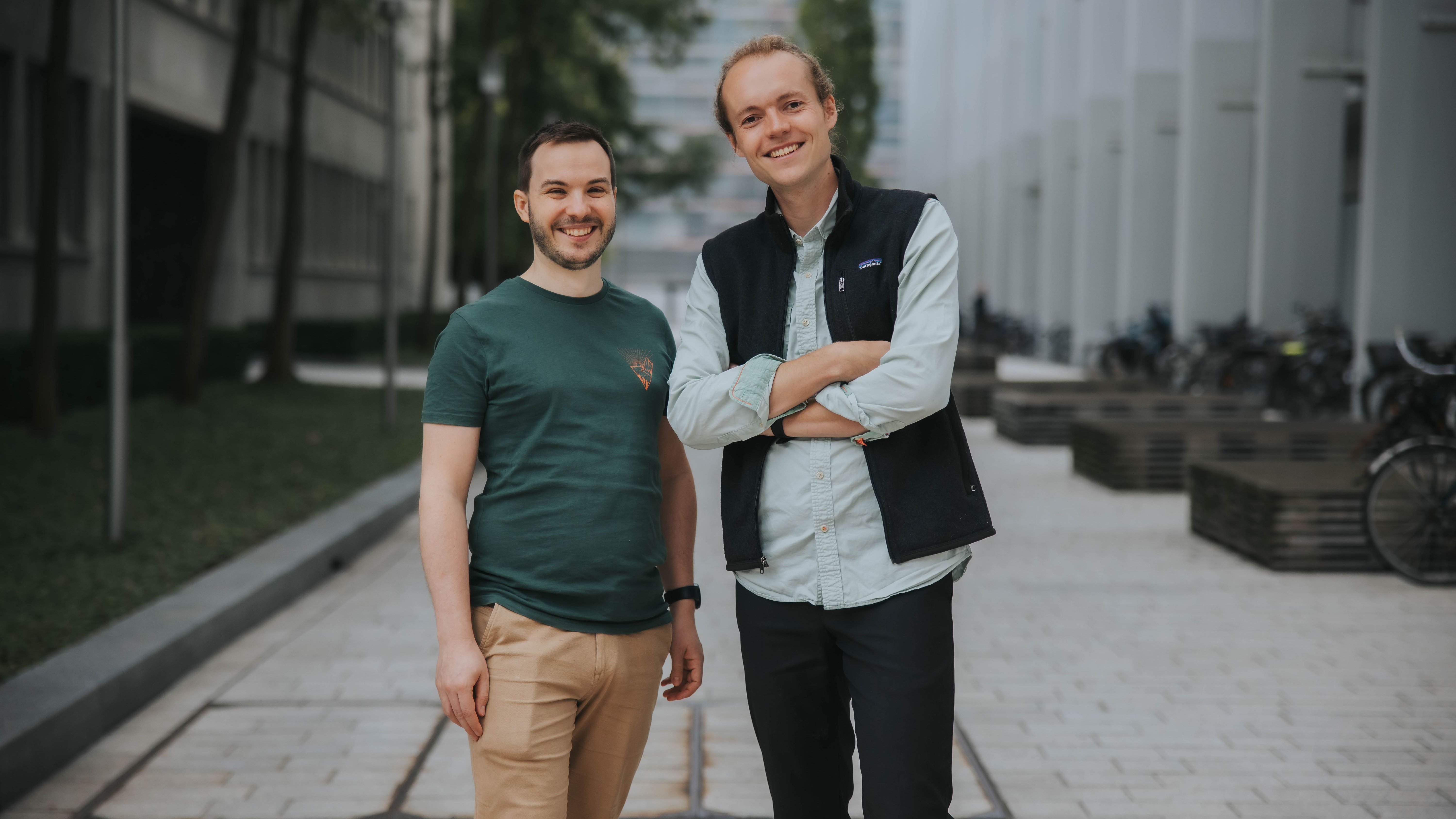
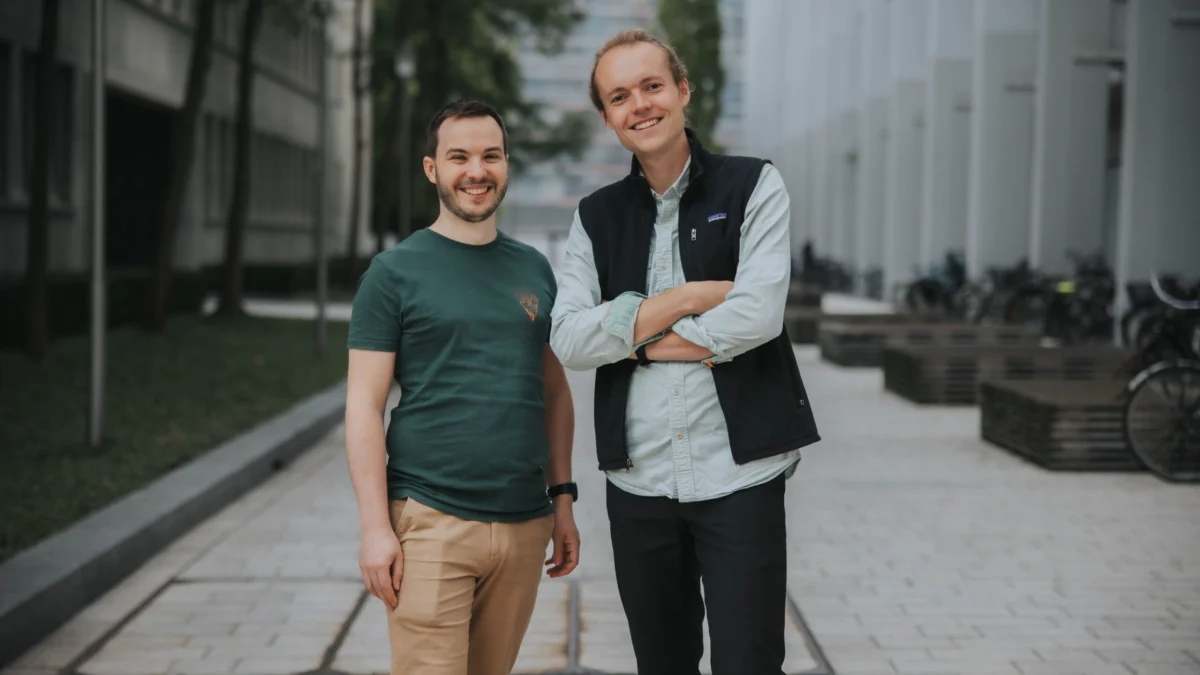
"The defining question is no longer whether we can identify good molecules, but how rapidly we can validate their efficacy in clinical settings," says Simon Romanski, co-founder and CEO of Atlas Bio. The company’s mission is to dismantle the status quo, which Romanski describes as a system built around the "paradigm of clinical failure."
Chronology: From Autonomous Vehicles to Life Sciences
Atlas Bio was founded in late 2024 by two AI engineers with a background in autonomous driving. The team, including Chief Technology Officer Sebastian Bayer—formerly a software engineer at Google—applied the logic of simulation-based engineering to biology.
Romanski, who studied at Stanford University and the École Polytechnique Fédérale de Lausanne (EPFL), spent an entire year conducting deep-dive interviews with pharmaceutical executives. He arrived at a striking realization: the professional discipline of "simulating clinical trials" essentially did not exist. To change that, he and Bayer decided to build the infrastructure themselves.

The company’s growth has been swift. After securing $11 million in a seed round led by the prominent Swedish investor Creandum—known for backing unicorns like Spotify, Klarna, and Trade Republic—Atlas Bio has already begun collaborating with one of the world’s top ten pharmaceutical giants and several other high-growth biotech firms. The startup is currently valued at approximately $60 million, supported by a roster of angel investors including founders from Black Forest Labs and the US-based tech-bio firm Chai Discovery, which counts OpenAI’s Sam Altman among its backers.
Supporting Data: The Power of Virtual Simulation
Atlas Bio’s approach relies on a proprietary AI model trained on millions of data points derived from human tissue. Unlike traditional approaches that require the collection of sensitive, often fragmented patient data, Atlas Bio’s model simulates clinical trials entirely in a digital environment.
Key Technical Advantages:
- Speed: Virtual trials can be conducted in under twelve weeks.
- Versatility: The platform tests a single active ingredient against a vast spectrum of diseases simultaneously.
- Predictive Accuracy: The model identifies which patient populations are likely to benefit from a drug before a physical trial even begins.
- Due Diligence: The technology allows for the rigorous verification of third-party assets, such as those being acquired from international markets, to determine if they are biologically suited for Western genotypes.
Romanski draws an insightful parallel to the automotive industry. "For a long time, car manufacturers made design decisions based on physical prototypes that they literally crashed into walls," he explains. "Eventually, they moved to virtual simulations for these collisions. Clinical trials are currently at that ‘pre-simulation’ stage. Many trials fail simply because the wrong patients were enrolled. We can identify those mismatches early on in the virtual space."

Official Perspectives and Industry Implications
The emergence of Atlas Bio coincides with a massive shift in how major pharmaceutical companies view the coming decade. With a "patent cliff" looming—a period where many blockbuster drugs will lose their patent protection—pharma giants are investing heavily in AI to accelerate their R&D pipelines.
Strategic Partnerships
The industry trend is clear:
- Eli Lilly is working with Nvidia to build a dedicated supercomputer for drug discovery.
- Novo Nordisk has entered a strategic partnership with Anthropic.
- Dozens of other pharmaceutical firms have inked AI-related collaborations in the last twelve months alone.
Katharina Wilhelm, a partner at Creandum, notes that while the first wave of AI in pharma focused on "target discovery" (finding the molecule), the market is now demanding a focus on "clinical development."

"The bottleneck is shifting," Wilhelm says. "We are going to see a flood of new drug candidates. As this happens, the second wave of AI adoption will focus on the efficiency of clinical trials. The market is large enough to support firms that can successfully navigate this transition."
The Ethical and Long-Term Horizon
Beyond the financial metrics of "Return on AI," Atlas Bio is positioning itself at the forefront of a shift toward more ethical research practices. Animal testing, currently the first stage of most clinical trials, is notoriously inefficient and often fails to predict human reactions to drugs.
"Animal models do not always accurately predict how humans will respond," Romanski observes. "Currently, the only way to find out is to give a patient a drug and wait years for the results." Atlas Bio has already seen partners transition away from certain animal testing models, opting instead for their digital simulations.

The ultimate vision for Atlas Bio is a radical one: to eliminate the "guessing game" in medical research. If the failure rate of clinical trials can be reduced, drug candidates that were previously deemed commercially unviable—particularly those targeting rare diseases—could suddenly become viable assets.
Conclusion: A Paradigm Shift in Pharma
The pharmaceutical industry is notoriously risk-averse, yet the pressure of failing in Phase II trials is forcing a culture change. Atlas Bio’s decision to base its operations in Switzerland was tactical; by setting up shop in Basel, the company has placed itself in the heartbeat of the European pharmaceutical industry, in close proximity to giants like Novartis and Roche.
As the company continues to scale, its challenge will be to maintain the "small team" mentality that defined its founding. Romanski remains focused on the core mission: "The goal is that we no longer have to guess what works and what doesn’t. The clinical trial should be used for validation, not for discovery. If we achieve that, we haven’t just built a better business; we’ve changed the way humanity treats disease."

By moving the industry from a reactive, trial-and-error model to a proactive, simulation-driven strategy, Atlas Bio is not just seeking a return on investment—it is seeking to redefine the limits of what is possible in modern medicine.