DRESDEN, Germany – The historic walls of the Taschenbergpalais in Dresden recently bore witness to a display of precision, tension, and extraordinary culinary artistry. As the premier venue for Stefan Kastenmeier’s celebrated gastronomy, the palace served as the temporary training ground for Germany’s National Youth Culinary Team. With the clock ticking toward the "Culinary World Cup" in Luxembourg—the pinnacle of international youth cooking competitions—the team is pushing the boundaries of modern cuisine to ensure their place on the podium.
The atmosphere in the kitchen was one of hushed intensity. There were no raised voices, only the rhythmic sounds of sharp steel against cutting boards, the gentle hiss of induction ranges, and the focused murmurs of chefs executing complex plates. This was not a standard dinner service; it was a high-stakes dress rehearsal, a final opportunity to refine technical execution and timing before facing the scrutiny of the world’s most demanding judges.
Main Facts: A Path to the World Cup
The Culinary World Cup (Villeroy & Boch Culinary World Cup) is arguably the most prestigious event for young professional chefs globally. Held in Luxembourg, it attracts the finest talent under the age of 25. For the German delegation, this is more than a competition; it is a demonstration of the country’s commitment to the future of gastronomy.
The team, composed of the brightest apprentices and young professionals selected from across Germany, has spent months in a rigorous training cycle. The Dresden sessions at Kastenmeier’s were specifically designed to simulate the exact conditions they will face in Luxembourg: the pressure of a timed, multi-course service, the requirement for flawless plating, and the need for seamless communication under extreme stress.
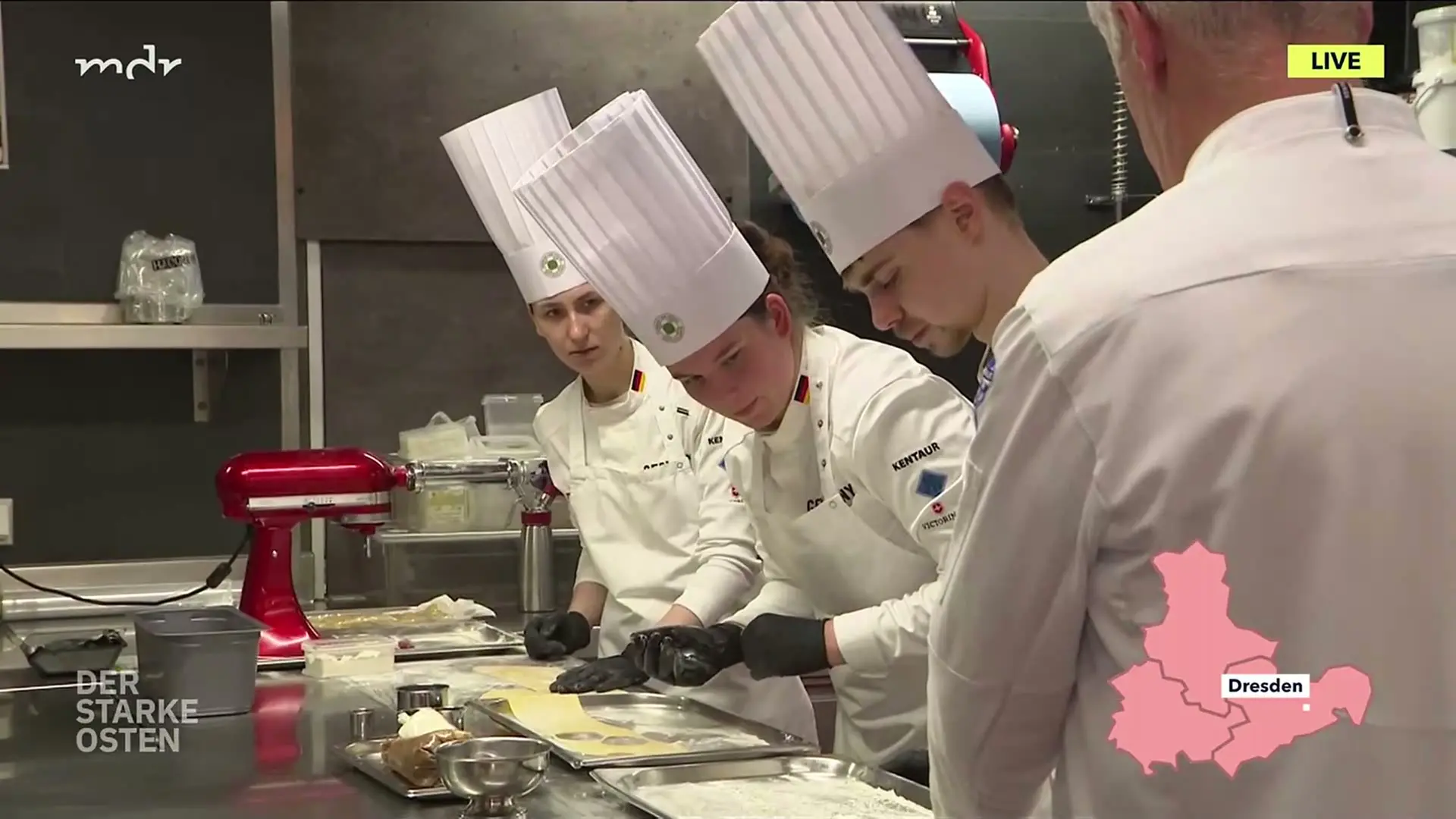
The primary goal is the "Hot Kitchen" category, where the team must prepare a three-course menu for a large number of guests within a strictly defined time frame. The challenge lies in balancing classical French techniques—the backbone of professional culinary training—with the modern, sustainable, and experimental approaches that currently define the avant-garde of the global food scene.
Chronology of Preparation: From Selection to Final Polish
The journey to the World Cup began long before the gathering in Dresden. The development of this elite squad follows a structured, multi-year path:
- Early 2025 – Recruitment and Selection: The German Chefs Association (Verband der Köche Deutschlands, VKD) conducted nationwide tryouts. Candidates were judged on technical proficiency, knife skills, flavor profiles, and, crucially, their ability to work within a team.
- Mid-2025 – Concept Development: Once the final roster was set, the team began the grueling process of menu design. Every element—from the amuse-bouche to the dessert—is scrutinized. Ingredients are sourced, tested, and re-tested to ensure maximum seasonality and flavor impact.
- Late 2025 – Iterative Training Camps: The team held several regional camps, but the Dresden sessions in late October 2026 marked the critical transition from "experimental" to "competition-ready."
- October 26, 2026 – The General Probe: Held in the heart of Dresden, this served as the final assessment of the logistical flow. Every movement—from the preparation of the protein to the final wipe of a sauce-smeared plate—was timed and critiqued.
- November 2026 (Upcoming): The team departs for Luxembourg, where they will undergo final equipment setup before the official competition begins.
Supporting Data: The Anatomy of a Winning Menu
In modern culinary competitions, the margin between gold and silver is often measured in microns. Judges look for "technicity"—the demonstration of difficult, classical skills—combined with contemporary aesthetics.
The team’s menu for the upcoming World Cup focuses on "Modern German Heritage." This involves taking traditional ingredients like river fish, forest mushrooms, and local root vegetables, and elevating them using modern molecular gastronomy techniques, such as low-temperature sous-vide cooking, precision fermentation, and unique texture contrasts.
According to preliminary data from the training sessions, the team has successfully reduced their "mise-en-place" (preparation) time by 15% compared to their previous training cycles. This efficiency is critical, as it allows the chefs to spend more time on the final aesthetic presentation, which accounts for a significant portion of the total score. Furthermore, the team has focused heavily on reducing food waste, aligning with global trends toward "zero-waste" kitchens, which is now a scored criteria by the World Association of Chefs Societies (Worldchefs).
Official Responses and Mentorship
The success of the youth team relies heavily on the guidance of seasoned mentors. Stefan Kastenmeier, the host of the Dresden training sessions, emphasized the importance of this mentorship during a post-service briefing.
"What you see here is not just about the recipe," Kastenmeier stated. "It is about the mindset. These young people are the future of our industry. When they come to my kitchen, I don’t just teach them how to cook; I teach them how to maintain their composure when the heat is on and how to respect the product. The pressure in Luxembourg is immense, but if they can perform here, in front of their peers, they can perform anywhere."
The German Chefs Association (VKD) has also been instrumental in providing logistical support. A spokesperson for the association noted, "The training in Dresden is the cornerstone of our preparation. By utilizing top-tier facilities like those at the Taschenbergpalais, we ensure our team is acclimated to working in a high-pressure environment that mirrors the competition floor."
The Implications: Why the Culinary World Cup Matters
The stakes for these young chefs extend far beyond the trophy. Success at the World Cup acts as a powerful career accelerant. Many past participants in the German National Youth Team have gone on to head kitchens in Michelin-starred establishments, open their own award-winning restaurants, or lead culinary research and development labs for global food brands.
However, the implications are also societal. The culinary industry is currently facing a global labor shortage. By showcasing the artistry, science, and intense discipline required to compete at this level, the youth team serves as a beacon for the next generation of potential chefs. It transforms the perception of kitchen work from a "labor-intensive job" into a "highly skilled craft" that demands creativity, intelligence, and physical stamina.
Furthermore, the team’s performance influences national branding. Gastronomy is a pillar of tourism and cultural identity. A strong performance in Luxembourg reinforces Germany’s position as a hub of culinary innovation, proving that the nation is not just home to traditional dishes, but a leader in the culinary arts.
The Final Countdown
As the team prepares for their departure to Luxembourg, the mood is one of quiet confidence. They have logged hundreds of hours of practice, debated every garnish, and synchronized their movements to the second.
The Dresden general probe was not merely about perfecting a menu; it was about building a cohesive unit capable of overcoming the unforeseen obstacles that inevitably arise on competition day. In the high-pressure world of professional cooking, the difference between a masterwork and a failure is often the ability to adapt.
Whether they return with gold, silver, or bronze, the members of the German Youth National Culinary Team have already achieved a significant victory: they have pushed themselves to the limit of their craft. In the world of professional kitchens, where the pursuit of perfection is an unending journey, this experience in Dresden will remain a defining chapter in their careers.
As the international culinary community turns its eyes toward Luxembourg next month, the focus will be on the innovation, the technique, and the raw talent displayed by these young chefs. They are carrying the expectations of a nation, but more importantly, they are carrying the future of the culinary arts on their shoulders.
In the quiet, methodical work of these young professionals, there is a profound message: gastronomy is a living, breathing discipline, one that thrives on the courage to experiment and the dedication to master the fundamentals. As they pack their knives and prepare to face the world’s best, the German Youth National Culinary Team stands ready—not just to compete, but to define the next generation of global cuisine.