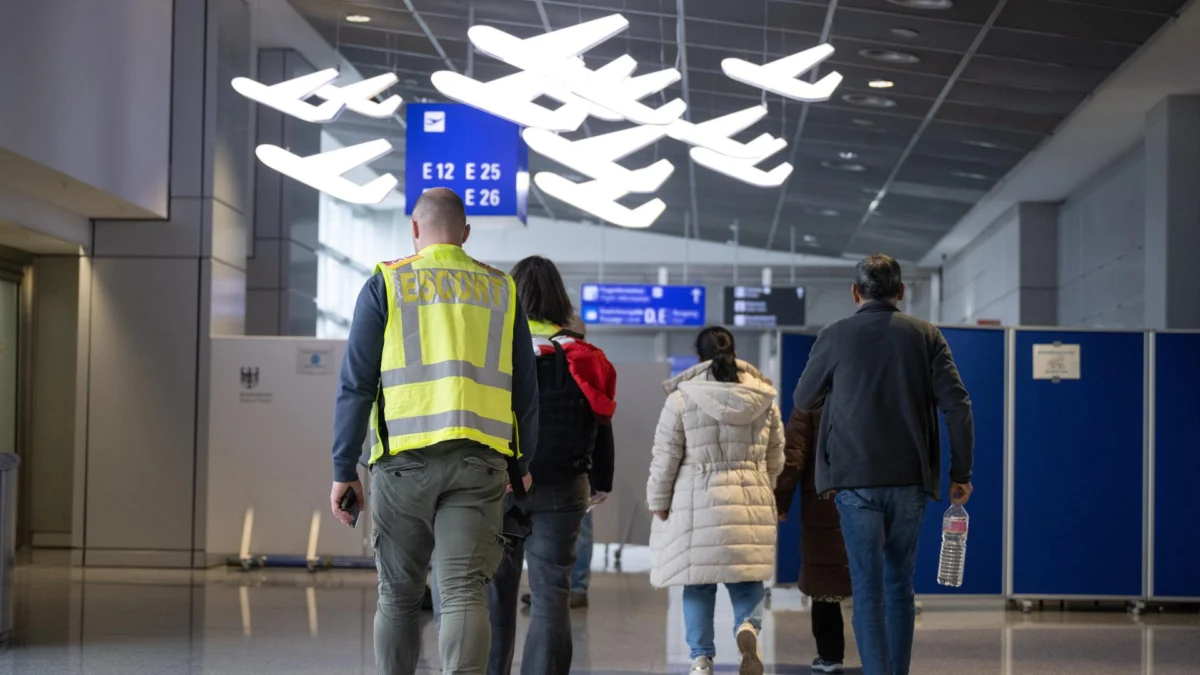
Frankfurt Airport, the primary aviation hub of Germany, currently processes more deportations than any other facility in the country. However, the operational epicenter for these state-mandated removals is set to undergo a significant transformation. By May 2027, the Federal Police (Bundespolizei) will relocate its "return operations" center from its current, somewhat improvised location in the shuttered Terminal 2 to a sprawling new facility situated on the western edge of the airport grounds.
The move, described by authorities as a necessary modernization to meet rising demand, has ignited a fierce debate. While the federal government views the expansion as a vital component of its migration strategy, human rights activists and legal experts warn that the project represents an alarming shift toward the institutionalization and "invisible" scaling of deportations.
Main Facts: A Shift to the Western Perimeter
The new facility is currently under construction within the former headquarters of the chemical company Ticona. Located several kilometers away from the main passenger terminals, the site offers a strategic advantage to the Federal Police: complete isolation from the public eye.
Jörg Martienßen, spokesperson for the Federal Police at Frankfurt Airport, notes that the current facility in Terminal 2 is no longer viable due to ongoing renovation work in that part of the airport. However, he emphasizes that the relocation is driven by more than just construction logistics. "Increased requirements in recent years have made the certification and construction of a new return facility necessary," Martienßen stated.
The statistics underlying this move are substantial. The new site will more than double the floor space of the current operations center. Once fully operational, the facility is designed to handle approximately 100 deportations per day—a two-fold increase over current capacity. Furthermore, the site will feature its own dedicated access to the tarmac, allowing for two weekly charter deportation flights to be processed entirely outside the view of the general public and regular airport operations.
A Chronology of Escalation
The expansion of deportation infrastructure did not happen in a vacuum. It is the culmination of a multi-year trend in German migration policy aimed at streamlining the removal of individuals who are legally obligated to leave the country.
- Pre-2023: Deportations were largely integrated into standard police operations within active terminals, often leading to friction with passengers and public oversight.
- 2024: The federal government intensified its rhetoric regarding "consequent enforcement" of residency obligations. As political pressure mounted to increase return rates, the Federal Police identified the need for a dedicated, permanent, and larger infrastructure.
- Mid-2025: Official government data revealed that in the first half of the year, 3,650 individuals were deported from Frankfurt to third countries or their countries of origin. While this averages out to roughly 20 people per day—well below the 100-person capacity planned for 2027—the government insists the infrastructure must be prepared for future spikes in demand.
- May 2027: The projected opening of the new, standalone deportation center.
Supporting Data: The Reality of Return Operations
The disparity between the current operational reality and the projected future capacity is a focal point of the current discourse. According to a formal response provided by the German federal government to a parliamentary inquiry from the Left Party (Die Linke), the actual daily average of deportations remains modest compared to the planned capacity.

However, the government points to the broader picture: as of September 30, there were 256,873 individuals in Germany classified as "obligated to leave." For the Ministry of the Interior, this figure justifies the expansion. The goal, as articulated in the current coalition agreement, is to enforce the law more consistently.
The data also reveals the frequency of charter flights, which are currently conducted within the gate area of the airport. The move to the new building will shift these high-stakes, large-scale operations to a private, secure, and isolated environment, effectively removing the process from the sphere of public observation.
Official Responses and Political Justification
The project has received staunch defense from high-ranking political figures. Hessian Interior Minister Roman Poseck (CDU) has positioned the expansion as a cornerstone of a functional, modern rule of law.
"Hessen stands for a migration policy that combines humanity with consistency," Poseck wrote in an official statement. "Deportation and detention pending deportation are indispensable for the enforcement of our rule of law."
The federal government echoes this sentiment, framing the expansion as a technical necessity to fulfill a legal mandate. However, the government remains opaque regarding the exact financial costs of the project. When queried by local media, both the Federal Ministry of the Interior and the Hessian state government redirected questions, claiming either a lack of finalized budget data or a lack of jurisdiction over the federal project.
Implications: The Risks of "Invisible" Deportations
The move to the remote western edge of the airport has drawn sharp criticism from civil society organizations, most notably the initiative "Welcome United," which recently held nationwide demonstrations against the expansion of "deportation infrastructure."
The Loss of Public Oversight
Doro Köhler, a representative of Welcome United, argues that moving the center to a remote location effectively severs the link between the individuals being deported and the "critical public." "There is no access for independent observers, no possibility for independent legal or humanitarian support, and no opportunity for supporting contacts," Köhler asserts.

Legal and Humanitarian Concerns
Maximilian Pichl, an expert in asylum law at the Frankfurt University of Applied Sciences, raises concerns about the "separation from regular operations." He warns that this segregation creates a "black box" environment where the rights of the individuals involved may be harder to protect.
Pichl points to reports from the church-based deportation monitoring services, which have documented instances where individuals arrived at the airport in states of distress—sometimes lacking adequate clothing, food, or water. In the current terminal-based system, supporters or volunteers have occasionally been able to intervene in these final minutes to provide basic necessities like water or baby formula. "If this all takes place far away from the terminal, such support becomes completely impossible," Pichl explains.
The Role of Independent Observers
Melisa Ergül-Puopolo, a church-based deportation monitor working on behalf of the Diakonie Frankfurt and Offenbach, provides a unique perspective. She is among the few individuals with authorized access to the Federal Police’s operations. She notes that her work covers only a small fraction of total deportations, but what she witnesses is increasingly concerning.
"I have met many people with employment contracts and families with children," Ergül-Puopolo says. She acknowledges that the current facilities in Terminal 2 are outdated and lack dignity, specifically noting the absence of private rooms for families. "There are shackles, resistance, and trauma—things that children should not have to see."
In a rare concession to these humanitarian concerns, the Federal Police have agreed to include a dedicated "family room" in the new facility, partially funded by the Diakonie. Jörg Martienßen confirmed that the new layout will include separate areas for individual measures and charter operations to improve the overall process.
Conclusion: A Balancing Act of Values
The construction of the new deportation center at Frankfurt Airport is a microcosm of the broader tension in European migration policy. On one side, the state argues that a modern, efficient, and secure infrastructure is a prerequisite for a credible migration policy that maintains the integrity of the law. On the other, human rights advocates warn that in the quest for efficiency, the state is creating a system that prioritizes the "logistics of removal" over the protection of human dignity and the transparency required by a democratic society.
As 2027 approaches, the debate is unlikely to subside. Whether the new facility will, as the government claims, lead to a more "humane and consistent" process, or whether it will result in the further dehumanization of the most vulnerable, remains a question that will continue to challenge Germany’s political and moral landscape. For now, the construction site on the western perimeter stands as a physical manifestation of a policy that is becoming increasingly isolated from the society it claims to protect.