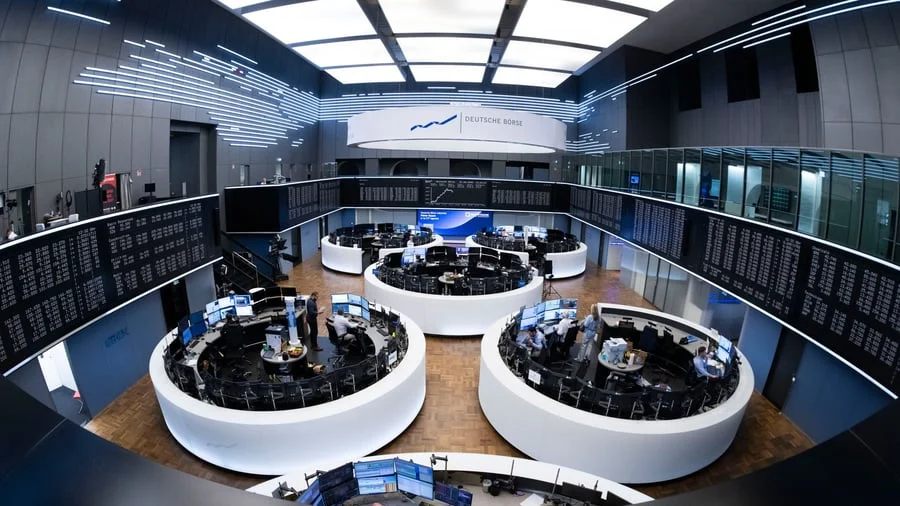
Frankfurt/New York – In a move that signals a paradigm shift for European financial infrastructure, Deutsche Börse has officially announced the launch of 24/7 trading for DAX-listed equities. This development marks the first time a major European financial institution has enabled round-the-clock access to "blue-chip" stocks, effectively dismantling the traditional boundaries of market opening hours.
As global markets become increasingly interconnected and digital-first, the move by the German exchange giant is not merely a technical upgrade; it is a fundamental challenge to the historical conventions of the European stock exchange ecosystem.
The Core Facts: Trading Beyond the Bell
Effective immediately, investors can engage with DAX-listed stocks at any hour of the day or night, seven days a week. The initiative, spearheaded by Deutsche Börse manager Eric Leupold, positions the Frankfurt-based firm as a pioneer in the European landscape.
"We are the first European financial market infrastructure to enable a 24/7 offering for classic blue-chips," Leupold stated during the announcement on Tuesday.
How It Works: The "360X" Mechanism
The service is facilitated through 360X, a subsidiary of Deutsche Börse. It is crucial for market participants to understand that this is not an extension of the traditional, centralized electronic trading system known as Xetra.
Unlike the high-speed, order-driven environment of Xetra—where buy and sell orders from all participants are matched in real-time—the 24/7 offering utilizes a Request for Quote (RfQ) model. In this setup, when a client wishes to trade a DAX equity during off-market hours or over the weekend, they must request a price from active "Market Makers." These designated dealers provide a specific quote, which the client then accepts or rejects.
Chronology of Market Evolution: From Trading Floors to Digital Streams
To appreciate the gravity of this shift, one must look at the historical progression of market accessibility.
- The Era of Physical Presence (Pre-1990s): For centuries, trading was restricted to the physical constraints of the trading floor. Trading was localized, manual, and strictly limited to specific business hours, reflecting the realities of human-dependent systems.
- The Xetra Revolution (1997): Deutsche Börse launched Xetra, a fully electronic trading system. This drastically increased efficiency and liquidity, but it still adhered to the traditional "9 to 5" (later 9:00 to 17:30) framework.
- The Rise of Retail Accessibility (2000s–2010s): The digital age brought a surge in retail brokerage apps. Many banks began offering "after-hours" trading by taking the counterparty risk onto their own balance sheets or routing trades through OTC (Over-the-Counter) markets.
- The 24/7 Paradigm Shift (2024): By integrating a formal infrastructure like 360X into the institutional exchange framework, Deutsche Börse is formalizing what was previously an fragmented, opaque, and often inefficient retail-only practice.
Supporting Data and Market Context
While the move is historic, it is important to delineate what this does and does not change regarding the German market.
The Index Paradox
A critical technical note for investors is that the DAX index itself remains tethered to the traditional trading day. The calculation of the German blue-chip index continues to take place exclusively during the core trading hours of 9:00 AM to 5:30 PM CET.
This creates a unique environment:
- Individual Stock Price Discovery: Investors can trade individual equities based on real-time global news or overnight events.
- Lack of Index Movement: Even if a constituent stock like SAP or Siemens moves significantly on a Sunday night, the official DAX index value will not update until the Monday morning opening bell.
The Competitive Landscape
Historically, investors seeking 24/7 exposure had to rely on "off-exchange" liquidity. Banks and brokers often facilitated this by acting as the counterparty—meaning if a client bought a stock at 11:00 PM on a Saturday, the bank essentially sold them the stock from its own inventory. This often came with wider "spreads" (the difference between the buy and sell price) to compensate the bank for the risk of holding the asset during non-liquid hours.
By utilizing 360X, Deutsche Börse is attempting to bring these transactions into a regulated, transparent, and standardized infrastructure, potentially narrowing spreads and increasing the reliability of off-hours pricing.
Official Responses and Strategic Implications
Deutsche Börse’s move is widely viewed by industry analysts as a defensive and offensive strategic play.
Why Now?
The rise of retail trading platforms and the global "gamification" of stock trading has set a new expectation among investors. The younger demographic of retail traders—many of whom are accustomed to the 24/7 nature of cryptocurrency markets—view the closure of stock markets on weekends as an archaic inconvenience.
By offering 24/7 access to DAX stocks, Deutsche Börse is attempting to retain retail interest within its own ecosystem rather than losing it to decentralized platforms or international brokers who offer synthetic exposure to these stocks.
The Institutional Perspective
While retail investors are the immediate target, the long-term implication involves institutional flow. If market makers can efficiently price risks on weekends, it could lead to more stable market openings on Monday mornings. By allowing price discovery to happen gradually over the weekend, the "gap" between Friday’s close and Monday’s open—a common source of volatility—could theoretically be mitigated.
However, some market veterans warn of the risks. "Liquidity fragmentation is the primary concern," says one Frankfurt-based analyst. "When you spread liquidity across 168 hours a week, you risk lower depth during the ‘quiet’ hours, which could lead to flash-price anomalies that do not reflect the true fair value of the asset."
Implications: The Future of Global Finance
The decision by Deutsche Börse sets a precedent that will likely pressure other European exchanges—such as Euronext or the London Stock Exchange—to evaluate their own operating models.
1. Transparency vs. Efficiency
The RfQ model via 360X provides a level of regulatory oversight that standard OTC "internalization" (trading on a bank’s internal books) lacks. This is a win for market regulators, as it brings more trade data into the light, providing better audit trails and investor protections.
2. The Global Interconnectivity
With the rise of 24/7 trading, European blue-chip stocks are becoming more integrated into the global "always-on" economy. Investors in Asia or the Americas who wish to adjust their portfolios in response to European developments no longer have to wait for the Frankfurt bell to ring.
3. A Warning for the Unwary
Investors must remain cognizant of the limitations. Trading outside of core hours involves significantly lower liquidity. The absence of the broader market participants—such as large institutional funds and high-frequency trading firms—means that prices can be more volatile and spreads wider than during the standard trading day.
Conclusion: A Step Into the Unknown
Deutsche Börse’s move is a bold experiment in the modernization of capital markets. By bridging the gap between traditional exchange reliability and the modern demand for constant access, the company is betting that the future of finance is sleepless.
As this rollout continues, the financial world will be watching closely. If successful, this could be the catalyst for a broader move toward a fully continuous global market, where the concept of "market hours" becomes a relic of the past, replaced by the relentless, unceasing flow of capital. For the average investor, the barrier to entry has never been lower, but the requirement for diligence has never been higher. As the bells of Frankfurt ring less frequently, the screens of the world are beginning to light up 24/7.