The global financial landscape is currently defined by a divergence in corporate fortunes. As companies navigate the complexities of shifting consumer behavior, geopolitical instability, and the relentless evolution of digital infrastructure, the latest round of quarterly reports paints a complex picture of resilience and vulnerability. From the luxury fashion houses of France to the industrial titans of Germany and the banking giants of Hong Kong and London, the corporate world is in a state of recalibration.
This report synthesizes the latest financial disclosures, tracking how major players—including Ceconomy, Beiersdorf, HSBC, Porsche, and Novartis—are reacting to a year marked by both localized economic pressure and significant growth opportunities.
1. Executive Summary: Diverging Paths to Profitability
The current reporting season reveals a common theme: the ability to maintain margins in the face of cooling consumer demand. For companies like Ceconomy, the parent of MediaMarktSaturn, the focus has shifted toward operational efficiency and a successful pivot toward high-demand categories such as household appliances and mobile devices. Conversely, traditional consumer goods giants like Beiersdorf are finding the road to growth steeper as inflation-weary consumers become increasingly price-sensitive, forcing the company to rethink its strategy for its flagship Nivea brand.
In the financial sector, the picture is equally mixed. While high interest rates have provided a tailwind for banking institutions like HSBC and Barclays, the volatility in asset management and investment banking highlights a cautious market sentiment. Meanwhile, the industrial sector—represented by companies like Porsche and Krones—is contending with supply chain disruptions and a cautious capital expenditure environment, forcing leadership to revise guidance and tighten their belts.

2. Detailed Corporate Chronology: A Snapshot of Key Performances
The Retail and Consumer Goods Sector
- Ceconomy (MediaMarktSaturn): The electronics retailer reported a robust fiscal year 2025/2026. Adjusted EBIT surged by 27% to 515 million euros, marking the 15th consecutive quarter of profitability growth. Revenue climbed by 5.3% to 24 billion euros.
- Beiersdorf: The skincare giant is facing a cooling market. Third-quarter organic sales fell by 1.3% to 2.4 billion euros. Nivea, the company’s cornerstone, saw sales decline by 4.9%, though this was an improvement over the 7.5% drop seen in the first half of the year.
- L’Oreal: Bucking the broader retail trend, the French cosmetics leader exceeded expectations with a 7.7% organic sales increase in the third quarter, driven by a surge in demand for luxury perfumes and high-end skincare, particularly in China and emerging markets.
- Hermes: The luxury house faced a "painful" quarter, with shares sliding 8% after failing to meet growth targets. While leather goods remained resilient, the accessories segment in China proved a significant drag on performance.
Banking and Financial Services
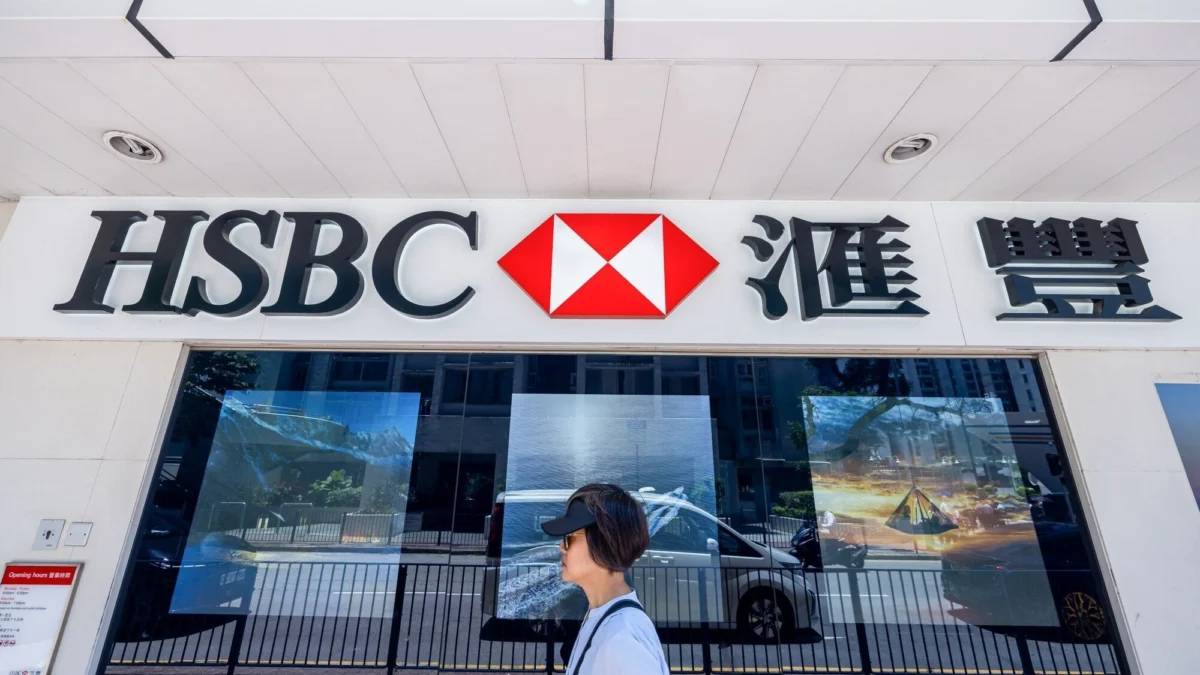
- HSBC: Despite a 32% jump in pre-tax profit to 9.6 billion dollars, driven by lower credit defaults and a favorable interest rate environment, shares in Hong Kong fell 6%. The disappointment stemmed from stagnant performance in the firm’s asset management division.
- Barclays: The British lender reported a 12% rise in pre-tax profit to 2.3 billion pounds. However, the bank’s investment division showed a stark divide: equities trading revenue soared by 47%, while fixed-income trading fell by 19%, leaving investors with a mixed outlook.
- Munich Re: The reinsurer raised its full-year profit guidance to 6.6 billion euros, thanks to a historically light season for natural catastrophes and strong capital investment returns.
Industry and Technology
- Porsche: The luxury car manufacturer is stabilizing its margins despite a 16% drop in sales volume. By focusing on higher-margin models, the company managed to limit the revenue decline to just 6%, reporting an operating profit of 1.74 billion euros.
- Novartis: The pharmaceutical giant raised its core operating profit outlook for the year, citing strong demand for its drug portfolio.
- Volvo Cars: The automaker faced a challenging quarter, sliding into a 333 million euro loss. Management announced a further 2,500 job cuts as it struggles with the production launch of its new EX60 electric SUV and soft demand in the U.S. and China.
- Cancom: The IT service provider lowered its revenue guidance for the year, citing longer decision-making cycles among its clients.
3. Supporting Data and Financial Metrics
| Company | Key Metric | Result / Change |
|---|---|---|
| Ceconomy | Adjusted EBIT | +27% (515m EUR) |
| HSBC | Pre-tax Profit | +32% (9.6bn USD) |
| L’Oreal | Organic Revenue | +7.7% |
| Volvo Cars | Quarterly Result | -333m EUR (Loss) |
| Munich Re | Net Profit Goal | 6.6bn EUR (Increased) |
Data compiled from Q3 2026 preliminary disclosures.
4. Official Responses and Strategic Adjustments
The Pivot to Efficiency
For many corporations, the prevailing strategy is cost optimization. Volvo Cars CEO Hakan Samuelsson described the current year as "far more challenging than originally anticipated," necessitating a total of 5,500 global job cuts to protect the balance sheet. Similarly, Beiersdorf is responding to price-sensitive consumers by increasing its marketing budget by 100 million euros in the second half of the year, hoping to defend its market share through increased brand visibility and lower-priced product entries.
The Rise of the "Special Effect"
Several companies are utilizing non-recurring events to manage investor expectations. Fraport, the operator of Frankfurt Airport, beat analyst expectations by selling a 50% stake in its medical services subsidiary, providing a 24 million euro boost to its bottom line. SGL Carbon also leaned on asset liquidation, selling its closed U.S. production site for 70 million dollars, providing a significant cash-flow boost, even if the gain is considered a one-time event.
Tech and AI as Growth Drivers
Nokia provided a rare bright spot in the telecommunications infrastructure sector, reporting that its sales to AI and Cloud customers surged by 123% year-over-year. This underscores a broader trend: companies that have successfully integrated AI-ready infrastructure are seeing immediate bottom-line benefits, even while traditional legacy hardware demand remains sluggish.

5. Implications: What This Means for the Global Economy
The "Selective Consumer" Phenomenon
The disparity between L’Oreal’s success and Hermes’ struggles illustrates a "k-shaped" recovery in luxury. While high-end beauty and perfumes remain "affordable luxuries" that consumers continue to purchase, high-ticket items like luxury accessories are being hit by the broader slowdown in the Chinese economy. Companies that cater to the middle-class aspiration for luxury are winning, while those dependent on high-volume, high-price luxury goods are finding the market saturated.
The End of "Easy" Growth
For IT providers like Cancom and industrial manufacturers like Krones, the era of post-pandemic tailwinds has ended. We are entering a phase of "wait-and-see" capital expenditure. Corporate clients are lengthening their procurement cycles, causing revenue volatility. This suggests that businesses with high recurring revenue models—such as software-as-a-service or essential maintenance contracts—will likely outperform those relying on large, one-off capital projects.

Banking Stability vs. Market Volatility
The banking sector’s results indicate that while interest rate margins are still strong, the engine of the global economy—asset management—is stuttering. The volatility seen in HSBC’s and Barclays’ trading desks confirms that institutional investors are currently risk-averse. The stability of the global financial system remains intact, but growth in the financial services sector will likely be muted until there is more clarity regarding central bank interest rate trajectories.
Outlook for Q4 and Beyond
As we approach the end of the year, the market is bracing for a period of consolidation. The companies that will thrive in the coming months are those that have demonstrated:

- Pricing Power: The ability to pass costs to consumers without losing volume (as seen in L’Oreal).
- Agility: The capacity to pivot resources toward growth areas (AI/Cloud at Nokia, household goods at Ceconomy).
- Capital Discipline: Tight control over operational costs to offset revenue dips (Porsche, Volvo).
The current reporting season serves as a wake-up call. The global economy is not in a freefall, but it is moving into a more disciplined, value-conscious phase. Executives are no longer being rewarded for raw growth; they are being rewarded for their ability to protect margins in an environment where consumers and business clients alike are increasingly selective.