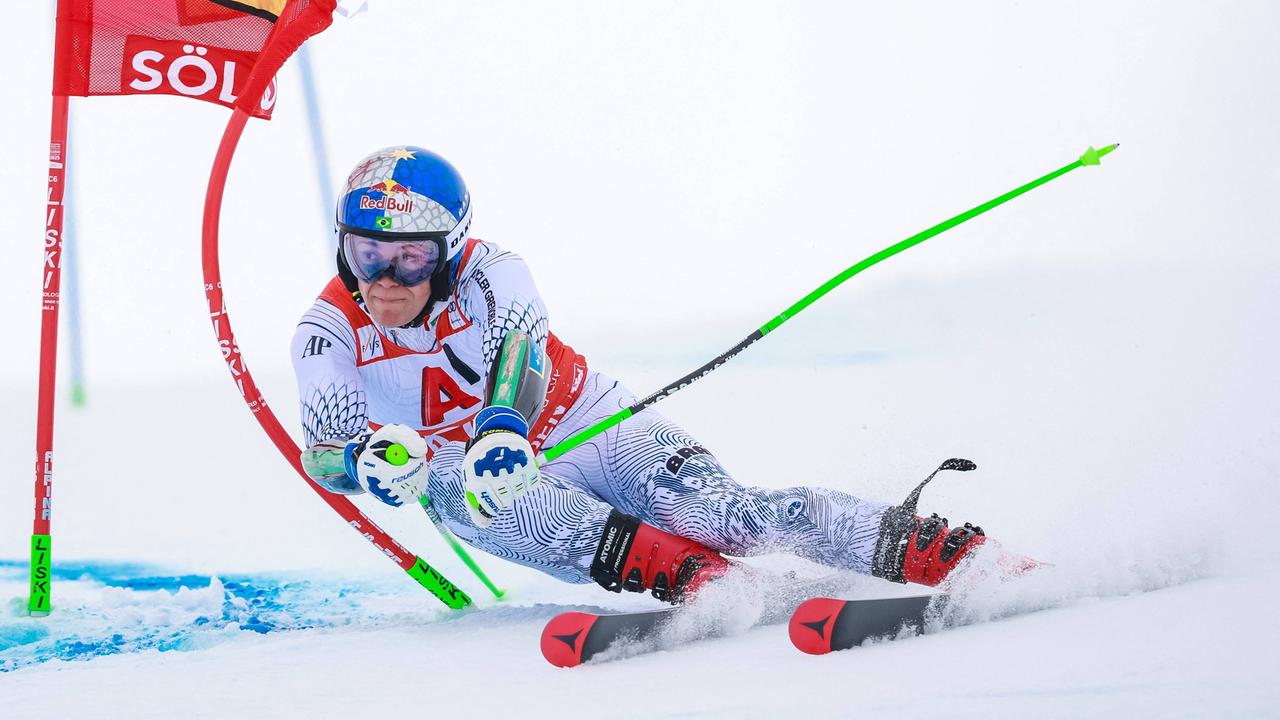
SÖLDEN, AUSTRIA – The Rettenbach Glacier, a venue synonymous with the high-stakes drama of the Alpine Skiing World Cup, bore witness to a seismic shift in the men’s circuit this Saturday. In a performance that validated his ambitious transition to competing for Brazil, Olympic champion Lucas Pinheiro Braathen claimed a resounding victory in the season-opening giant slalom, signaling a direct challenge to the established order of the sport.
With a final time that left the Swiss powerhouse duo of Loic Meillard and Marco Odermatt trailing in his wake, Braathen’s triumph was more than just a race win; it was a statement of intent. For a sport long dominated by Alpine nations, the sight of a Brazilian flag atop the podium in the Austrian Tyrol serves as a watershed moment that will likely redefine the narrative of the 2026/27 World Cup season.
The Main Facts: A Masterclass in Pressure
The race took place under challenging conditions, with heavy winds on the upper slopes forcing race officials to move the start gate lower down the Rettenbachferner. Despite the shortened course, the intensity remained undiminished.
Braathen, 26, executed two flawless runs that showcased his signature blend of technical precision and athletic flair. He crossed the finish line 0.49 seconds ahead of runner-up Loic Meillard, with the perennial favorite and five-time consecutive overall World Cup champion, Marco Odermatt, rounding out the podium in third.
The victory was not merely a matter of speed; it was a psychological victory. Braathen, who had openly declared his intent to dethrone Odermatt this winter, backed up his words with actions. As he crossed the line, he sprawled his arms wide, soaking in the adulation of the crowd before erupting into a celebratory shout toward the cameras—a clear message to his rivals that the king has a serious challenger.
Chronology of the Race
The day began with a sense of nervous anticipation. The summer training blocks had been long, and the field was eager to see if any athlete had closed the gap on the dominant Odermatt.
- Morning Session: The opening run saw Braathen immediately assert himself. While the wind threatened to disrupt the rhythm of the early starters, Braathen handled the technical terrain with poise, establishing a narrow lead over the Swiss contingent.
- The Adjustment: Due to escalating wind gusts in the upper reaches of the glacier, the jury made the decision to utilize the reserve start. This compressed the race, putting a higher premium on explosive power out of the gate and flawless execution through the middle section.
- The Final Run: As the shadows lengthened across the glacier, the pressure mounted. Meillard put down a blistering time, but Braathen, skiing with the confidence of a man on a mission, managed to find time in the lower flat sections where others faltered. His victory lap was met with a roar from the spectators, marking a triumphant start to the winter.
Supporting Data: The German Perspective
While the podium belonged to Braathen and the Swiss, the German contingent had reason to celebrate as well. Fabian Gratz, 29, delivered a career-defining performance, finishing in sixth place. This result marks the second-best World Cup finish of his career, trailing only his fifth-place finish in Alta Badia last December.
For Gratz, the Sölden opener is often a barometer for the season. "The feeling here is always a bit different," Gratz remarked following his run. "After the long summer break, you never quite know where you stand relative to the rest of the world. It took me a few gates to find my rhythm, but once I locked in, I felt very comfortable on the skis."
Other German finishers included Anton Grammel, who secured a solid 15th place, and Alexander Schmid, who finished 21st. For Schmid, the result is a testament to his resilience, having navigated a series of health setbacks and injuries that have plagued his career over the past several seasons.
Official Responses and Tactical Insights
The mood in the finish area was a mix of surprise and professional respect. Marco Odermatt, who has enjoyed a monopoly on the overall crystal globe for half a decade, was gracious in defeat. While he is accustomed to victory, the Swiss superstar acknowledged that the game has changed.
"Lucas has brought a new energy to the circuit," said a member of the Swiss coaching staff. "His style is aggressive, and he has clearly spent the off-season refining his equipment and his tactical approach. Today, he was simply the better skier."
Braathen, for his part, remained focused on the long-term goal. In his post-race interview, he emphasized that while winning in Sölden is a dream start, the season is a marathon, not a sprint. "I have a lot of respect for Marco and the entire field," Braathen noted. "But I came here to win, and I’m happy that the work we put in during the summer has paid off on such a grand stage."
Implications: A Shift in the Alpine Hierarchy
The victory of a Brazilian skier at the highest level of Alpine skiing is an outlier that challenges the traditional hegemony of Austria, Switzerland, and Norway. This win serves as a major narrative driver for the 2026/27 season, suggesting that the "Odermatt Era" may finally face a sustained, multi-faceted challenge.
1. The Battle for the Crystal Globe
The 0.49-second gap between Braathen and Odermatt is significant. In a sport decided by hundredths, this margin indicates a performance gap that will force the Swiss camp to re-evaluate their technical setup. If Braathen can maintain this consistency, the fight for the overall World Cup title will be the most competitive it has been in years.
2. Marketing and Global Reach
Beyond the technical implications, Braathen’s victory is a massive win for the sport’s global marketing efforts. His unique background and personality have already made him a fan favorite. By diversifying the winner’s circle, the International Ski Federation (FIS) can leverage this success to grow the sport in non-traditional markets, particularly in South America.
3. The German Resurgence
For the German Alpine team, Gratz’s success provides a much-needed morale boost. With the season just beginning, having an athlete consistently pushing into the top ten provides a foundation upon which to build. If Gratz can maintain his form, Germany could become a spoiler in the team events and potentially challenge for podiums in the remaining giant slalom races throughout the winter.
Looking Ahead
As the World Cup circuit moves to the next venue, the questions posed in Sölden will dominate the pre-race discourse. Can Odermatt adapt to the challenge? Is Braathen’s performance a one-off or a sustainable level of excellence? And how will the other contenders, such as the Norwegian and Austrian teams, respond to the pressure?
One thing is certain: the Sölden opener has injected a new level of excitement into the Alpine world. The 2026/27 season is no longer just about maintaining the status quo; it is about the emergence of new icons and the potential for a power shift that could reshape the history of the sport. As the athletes pack their gear and head toward the next destination, the memory of Braathen’s celebration on the Rettenbachferner will linger—a reminder that in the world of professional skiing, the only thing that remains constant is the relentless pursuit of speed.
The season has officially arrived, and if this opening act is any indication, the winter ahead promises to be one of the most thrilling in recent memory.