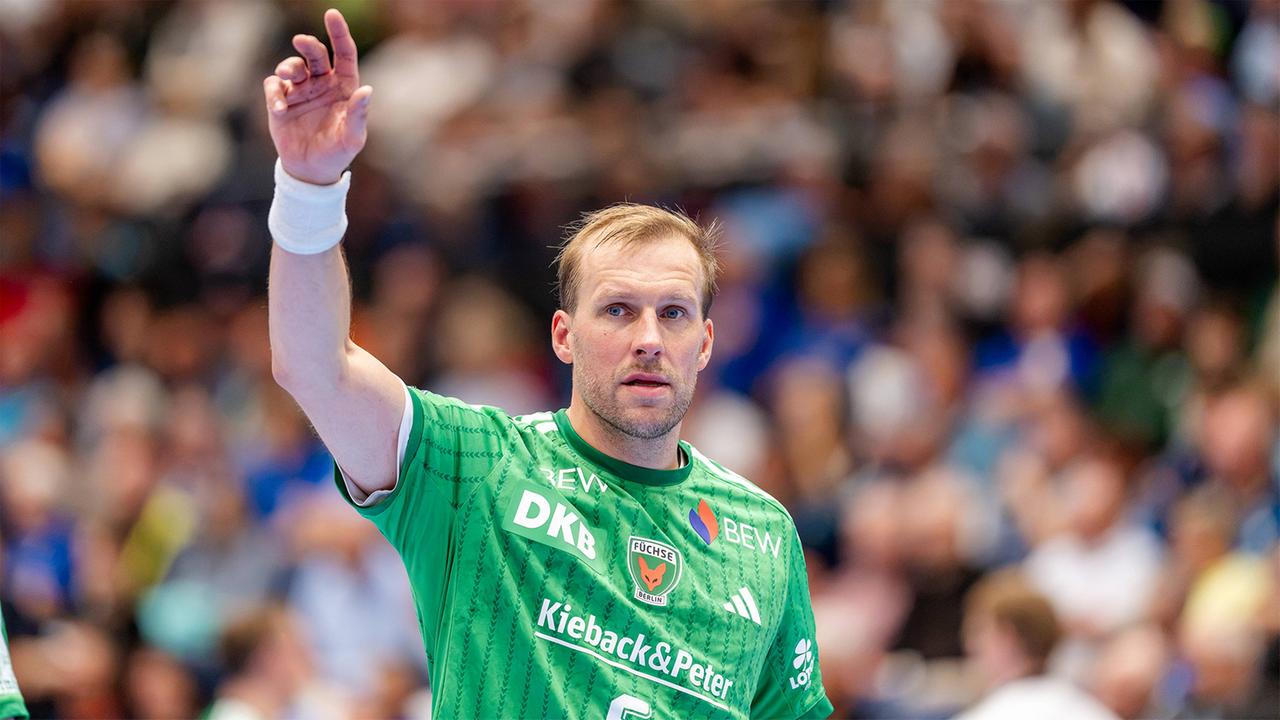
BERLIN – The landscape of German handball is set for a significant shift as the Füchse Berlin organization confirmed on Sunday that team captain and stalwart defensive anchor, Max Darj, will depart the club at the conclusion of the 2026/2027 season. The decision marks the end of a highly successful five-year tenure for the Swedish international, signaling a period of transition for the capital city club as they look to reshape their squad for the future.
The Core Announcement: An Era Concludes
The announcement, made public on October 25, 2026, confirmed that the Füchse Berlin management has elected not to trigger a contract extension clause for the 35-year-old line player. With his current deal set to expire in the summer of 2027, the move brings a definitive end to a chapter that has seen the club ascend to the pinnacle of both domestic and European handball.
For the Füchse, the decision is not one born of dissatisfaction with performance, but rather a calculated step in a broader strategic initiative to rejuvenate the playing roster. By parting ways with one of their most experienced leaders, the club is signaling a clear intent to prioritize youth development and tactical evolution as they aim to remain competitive in an increasingly demanding Handball-Bundesliga (HBL) environment.
A Chronology of Success: Five Years in the Capital
To understand the magnitude of this departure, one must look at the trajectory of Max Darj’s career in Berlin since his arrival in 2022. Joining from the Bergischer HC, Darj was initially viewed as a stabilizing force, a defensive specialist capable of anchoring a high-intensity system.
- 2022: The Arrival: Darj arrives in Berlin with a reputation as one of the most reliable and disciplined defenders in the league. His integration into the squad is near-instantaneous.
- 2025: The Historic Peak: The crowning achievement of his tenure occurs in the summer of 2025, when the Füchse secure the German Championship. Darj’s presence in the heart of the defense is cited by analysts as a primary factor in the team’s defensive dominance throughout that campaign.
- 2026: Stepping into Leadership: Following the heartbreaking retirement of club legend Paul Drux due to recurring injuries, Darj is named team captain in October 2024. He assumes the mantle of leadership during a period of extreme instability, helping bridge the gap during the transition of coaching leadership.
- 2026: The DHB-Pokal Triumph: Further cementing his legacy, Darj lifts the DHB-Pokal, adding a prestigious domestic cup title to his trophy cabinet and solidifying his status as a fan favorite at the Max-Schmeling-Halle.
Strategic Implications: Why Now?
The departure of a captain is rarely a simple affair, and the Füchse’s management has been transparent about the motivations behind the move. The club is currently undergoing a systemic shift, moving away from the veteran-heavy roster that defined the middle of the decade.
The Krickau Era
The influence of head coach and sporting director Nicolej Krickau cannot be overstated. Since taking the reins in September 2025—a move that followed the departure of long-time sporting executive Stefan Kretzschmar—Krickau has been tasked with building a team for the next half-decade.
Industry experts suggest that Krickau’s vision involves a faster, more transition-oriented game that requires a different profile of physical stamina and mobility from the line-player position. While Darj remains an elite defensive asset, the club appears to be betting on younger, more versatile options to fulfill the requirements of Krickau’s high-octane tactical blueprint.
Official Responses: Respect and Gratitude
In an official statement, the club hierarchy was quick to emphasize that the split is amicable and rooted in professional necessity rather than personal conflict.
"We are not just saying goodbye to a player; we are bidding farewell to an outstanding human being," stated Nicolej Krickau. The coach, who has leaned heavily on Darj during his own transition into the head coaching role, highlighted the Swede’s intangible contributions. "When I arrived in September 2025, Max was the bridge between the coaching staff and the locker room. He was an absolute key figure in our stability during a time of immense pressure."
Darj himself has responded with grace, acknowledging the weight of his time in Berlin. "I am incredibly proud of what we have achieved as a team and as a club over the last five seasons," Darj said in a press release. "Winning the championship and the cup are memories I will carry forever. However, I understand the nature of professional sports. I remain 100% committed to the goals we have set for this final season."
Analyzing the Statistical Impact
While the "intangibles" are often cited, the statistical profile of Max Darj is equally impressive. Over his tenure, Darj has maintained one of the highest defensive efficiency ratings in the HBL. His ability to read the opponent’s offensive flow and his proficiency in blocking shots and forcing turnovers have been the backbone of the Berlin defense.
However, the modern handball game is evolving. The reliance on the line player to contribute significantly in offensive transitions has increased. In recent data sets, younger candidates for the position have shown higher agility metrics in fast-break scenarios—an area where the club hopes to gain a competitive edge. The departure of Darj effectively opens up a significant portion of the salary cap, allowing the Füchse to pursue younger international talents who fit the specific physical profiles favored by Krickau’s coaching staff.
The Road Ahead: What’s Next for the Füchse?
The departure of the captain leaves a leadership vacuum that the club must address in the coming months. The Füchse have a history of developing internal leadership, and names such as the current vice-captains and emerging young stars are already being floated as potential successors.
Furthermore, the club is currently in the midst of a broader structural review. Following the shakeup of the sporting executive board in late 2025, the organization has been aggressive in its pursuit of modernization. The exit of a figure as synonymous with the club as Darj serves as the clearest indicator yet that the "Old Guard" of the championship-winning team is being systematically replaced by a new generation.
What’s Next for Max Darj?
As of late 2026, the future of the 35-year-old remains subject to speculation. While there has been no official word on whether Darj intends to retire or seek one final challenge at another European club, his experience at the highest level makes him a valuable commodity. His tactical intelligence and experience in winning championships ensure that he will not be short of suitors should he choose to continue his playing career.
For now, however, the focus remains on the "long goodbye." The fans at the Max-Schmeling-Halle are expected to give their captain a hero’s farewell as he plays out the final months of his contract.
Conclusion: A Legacy of Integrity
The departure of Max Darj is a watershed moment for Füchse Berlin. In an era where player loyalty is often fleeting, Darj provided five years of unwavering consistency, professional integrity, and championship-caliber performance.
While the club is undoubtedly moving toward a future defined by new tactical philosophies and a younger core, the shadow cast by Darj will remain for some time. As the Füchse prepare for the 2027/2028 season, they will do so with the lessons imparted by their outgoing captain—a man who helped define what it means to wear the jersey of the capital city.
The story of the 2026/2027 season, therefore, is not just one of competition, but one of transition. For Max Darj, the objective remains clear: to finish his tenure at the summit of the sport, leaving the club not in a state of disarray, but in a position of strength, ready for the next evolution of their journey.