The political discourse in Berlin has taken a sharp, unsettling turn. Following the announcement of a proposed coalition agreement between the Left Party (Die Linke), the Greens, and the Social Democrats (SPD), a debate has erupted that transcends traditional policy disagreement. At the heart of the controversy is a proposal to extend local and state-level voting rights to residents of Berlin who do not hold German citizenship.
While the proposal itself—intended to grant democratic participation to the more than one-quarter of Berlin’s population currently excluded from the electoral process—is a matter of legitimate democratic debate, the response from the conservative and center-right establishment has been anything but constructive. Instead of engaging with the complexities of constitutional law or the implications of municipal governance, prominent figures within the CDU and even segments of the SPD have adopted rhetoric that mirrors the "Great Replacement" conspiracy theory, long a staple of the far-right fringe.
The Chronology of a Rhetorical Shift
The escalation of this debate can be traced back to the publication of the coalition’s exploratory findings. As the prospective government outlined its intent to pursue a Bundesrat initiative to expand voting rights, the reaction from the opposition was immediate and inflammatory.
- The Exploratory Phase: The coalition partners proposed a modernization of Berlin’s electoral law, arguing that those who live, work, and contribute to the city’s social fabric should have a voice in its political future.
- The Media Catalyst: Shortly after, Anna Schneider, a lead reporter for the national newspaper Die Welt, characterized the move as the realization of the "Great Replacement" theory. She argued that the Left Party was essentially "importing" a new voter base to consolidate power.
- Conservative Amplification: Stefan Evers, a leading candidate for the CDU, escalated the rhetoric by labeling the proposal an "immigrant turbo," suggesting it was a cynical ploy to secure electoral dominance through demographic engineering.
- The SPD’s Internal Fracture: Perhaps most concerning to political analysts was the intervention of Franziska Giffey, a prominent SPD figure, who warned of "shocking scenes like those in France," suggesting that granting non-citizens the vote would lead to social instability and chaos.
Understanding the "Great Replacement"
To understand why this rhetoric is considered so dangerous, one must look at the historical and ideological origins of the "Great Replacement" (le grand remplacement). Originating in extremist circles, the theory posits that "globalist elites"—a term historically used as a coded reference to Jewish people—are orchestrating the deliberate replacement of the white, Christian majority in Western nations with immigrants from Muslim-majority countries.
The term implies a violent, forced displacement. In the German context, it echoes the Nazi-era term Umvolkung (re-peopling), which was used to describe the ethnic cleansing and forced assimilation policies in occupied territories during the Second World War. By adopting this vocabulary, mainstream politicians are not merely expressing skepticism about a policy change; they are legitimizing a narrative that views demographic change as an existential, orchestrated threat rather than a natural sociological process.
Supporting Data and Sociological Reality
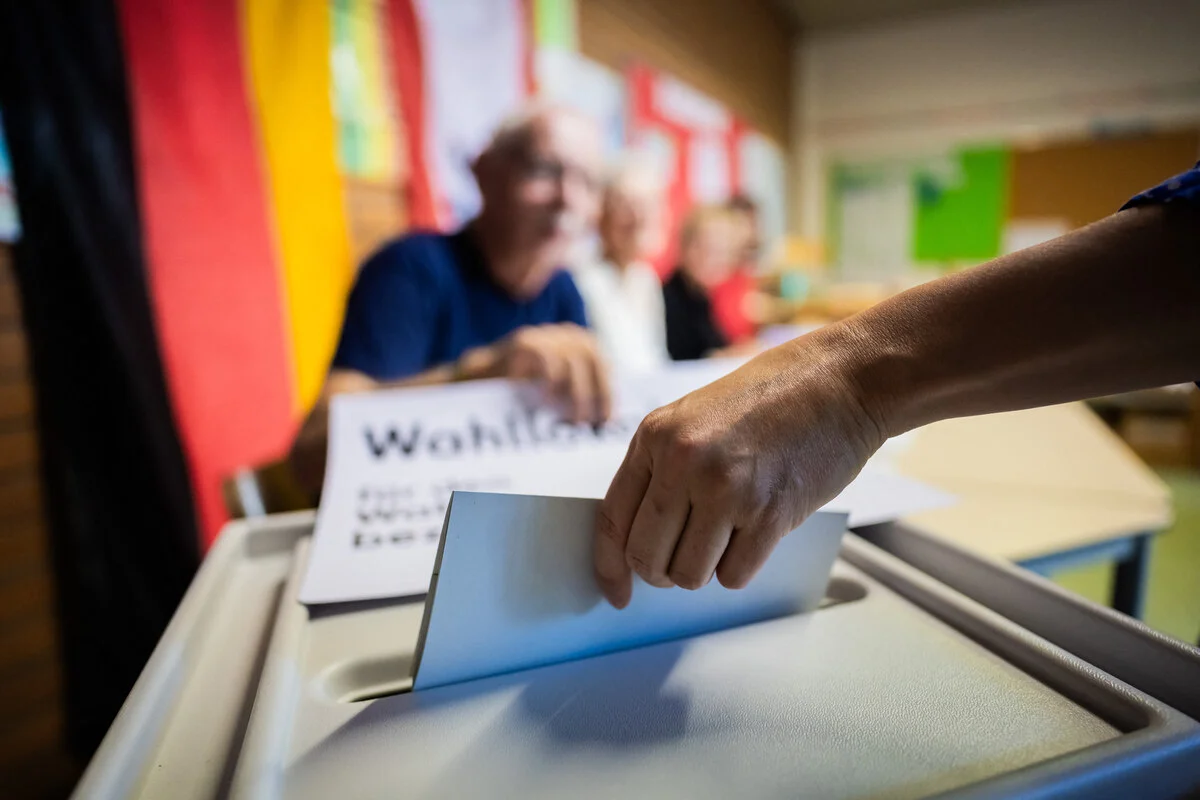
The push for voting rights is rooted in the reality of Berlin’s modern demographic composition. According to recent data, more than 25% of Berliners were denied the right to vote in the September state elections. These are taxpayers, parents, employees, and community members who are directly impacted by municipal decisions on housing, transportation, education, and infrastructure, yet have no formal mechanism to hold their representatives accountable.
Proponents of the reform argue that democracy is strengthened, not weakened, when the governed have a say in their governance. They point to the "stakeholder" model, where the right to vote is tied to residency rather than the arbitrary possession of a national passport.
Conversely, critics argue that the German constitution (the Basic Law) ties voting rights to citizenship, and that changing this at the state level would create a legal and constitutional crisis. While this is a valid legal point for debate, the current discourse has largely abandoned legal analysis in favor of alarmist warnings about the "erasure" of the existing population.
Official Responses and Political Polarization
The reaction from the political center has been characterized by a distinct lack of nuanced debate. When the CDU leadership framed the proposal as an "immigrant turbo," they effectively signaled to their base that the issue was not one of constitutional law, but of "us versus them."
This strategy of "othering" serves to galvanize a specific demographic of the electorate—those who feel threatened by the rapid changes in urban environments. However, by validating the vocabulary of the far-right, the center-right is inadvertently eroding the "firewall" (Brandmauer) that has traditionally separated mainstream conservative parties from extremist ideologies like the AfD.
The SPD’s internal dissent, represented by Giffey’s comments, highlights a broader crisis within center-left parties across Europe: the struggle to balance progressive social goals with the perceived anxieties of a traditionalist working class. By pivoting to rhetoric that mimics the far-right’s obsession with "foreign infiltration," the SPD risks alienating its diverse base and further legitimizing the xenophobic narratives it should be actively countering.
Implications for Democracy and Social Cohesion
The implications of this shift in rhetoric are profound. When mainstream political figures adopt the tropes of conspiracy theories, they do more than just win a news cycle; they normalize a worldview that perceives fellow residents as enemies.
The Mirror of Projection
Sociologists have noted that the current hysteria over "demographic replacement" is often a form of psychological projection. In the context of Berlin, the actual displacement of people is a daily occurrence, but it is driven by market forces, not immigrants. Over 2,000 evictions occur annually, and the city’s housing market is characterized by a constant turnover of tenants driven by rent hikes and the conversion of apartments into luxury condominiums.
While politicians wring their hands over the "replacement" of voters, the genuine replacement—that of low-income, long-term residents by wealthier, transient ones—continues unabated. This irony suggests that the current "Great Replacement" rhetoric is less about democracy and more about the fears of the propertied class regarding a loss of status and control.
The Erosion of Political Discourse
When a debate about electoral law is framed as an existential "us or them" struggle, the possibility for compromise vanishes. If the opposition believes that their political rivals are literally trying to "replace" the population, they are unlikely to engage in the give-and-take necessary for a functioning democracy. This creates a feedback loop of polarization, where every policy proposal is viewed as a zero-sum game.
The Long-Term Cost
The most severe consequence of this rhetoric is the hardening of public attitudes toward immigrants and the disenfranchised. By framing the extension of voting rights as a danger to the nation, politicians are creating a permission structure for wider discrimination. If the "Great Replacement" is real, then any policy that integrates immigrants or grants them rights becomes an act of betrayal against the "native" population.
Conclusion
The debate over voting rights in Berlin is, at its core, a debate about what it means to be part of a community. Is a city a community of citizens, or is it a community of residents?
While the legal and constitutional hurdles to expanding voting rights are significant and deserve a serious, sober hearing, the current path taken by the CDU and segments of the SPD is a failure of leadership. By borrowing from the lexicon of the far-right, they have sacrificed the possibility of an informed, civil debate in favor of short-term electoral fear-mongering.
For Berlin to maintain its status as a progressive, inclusive capital, it must reject the toxic narratives of "replacement" and return to the principles of democratic inclusion. The challenge for the future is not to prevent the changing of the city, but to ensure that everyone who calls Berlin home has a stake in its future. Until the mainstream political parties can distinguish between policy disagreement and the adoption of extremist conspiracy theories, the health of German democracy will remain in a precarious state.