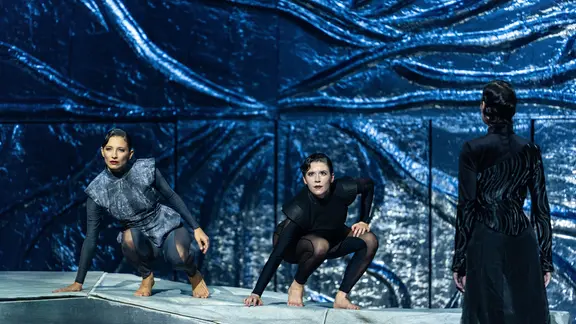
DRESDEN – The ornate, velvet-lined halls of Dresden’s Staatsoperette, a bastion of musical theater and high culture, have recently transformed into a frontline for a desperate civic struggle. Following each performance of "Ich, Eurydike," the applause is quickly replaced by a somber silence as the ensemble steps to the footlights. Holding hand-written notes and wearing expressions of profound concern, they address their audience not as performers, but as witnesses to an impending institutional dismantling.
At the heart of the crisis is a sweeping financial restructuring plan proposed by Dresden’s Oberbürgermeister (Lord Mayor) Dirk Hilbert. As the city faces mounting budgetary pressures, the municipal government has tabled a proposal to consolidate the city’s major cultural institutions—including the Staatsoperette, the Theater junge Generation, and the Europäisches Zentrum der Künste Hellerau—into a single entity dubbed "Eigenbetrieb Bühne" (Stage Municipal Enterprise). The move, ostensibly designed to streamline administration, has triggered a wave of outcry from artists and patrons alike, who fear the plan is a "Mogelpackung" (a shell game) that threatens to sacrifice the artistic integrity of the city on the altar of austerity.
The Core Conflict: A City in Fiscal Distress
Dresden’s administration is currently wrestling with a 7.2 million euro deficit in the cultural sector. Mayor Hilbert’s "Future Pact" aims to bridge this gap by bundling the administrative, technical, and logistical operations of the city’s theaters. However, the proposed budget cuts equate to a potential reduction of 25 percent of the workforce across these venues.

The alarm among the artistic community is palpable. Sybille Lambrich, a prominent singer at the Staatsoperette, spoke for many when she addressed the audience recently. "This would affect all crafts and departments—on, next to, behind, and in front of the stage," she warned. The fear is not merely about losing jobs; it is about the structural degradation of the theatrical ecosystem. If the "Eigenbetrieb Bühne" is implemented, critics argue that the unique creative identity of each house will be subsumed by bureaucratic homogenization.
A Chronology of the Resistance
The current protest movement is not an overnight phenomenon but the culmination of mounting tensions between the city’s financial planners and its cultural stewards.
- Initial Proposals (Late 2025): The city administration identifies a structural deficit in the cultural budget. Early discussions of "synergy effects" through consolidation are met with skepticism by union representatives and theater boards.
- The "Future Pact" Announcement (Early 2026): Mayor Dirk Hilbert officially proposes the "Eigenbetrieb Bühne." The proposal frames the merger as a necessary modernization to ensure the sustainability of municipal theaters.
- Public Outcry (Mid-2026): Intendantin (General Director) of the Staatsoperette, Kathrin Kondaurow, publicly denounces the plan, labeling it a "Mogelpackung" that would undermine the core of the city’s cultural landscape.
- The "Curtain Call" Protests (October 2026): The ensemble of the Staatsoperette begins a nightly ritual of addressing the audience, turning the end of every performance into a platform for civic engagement.
- Foyer Activism: The theater installs a photo wall titled "Damit der Vorhang offenbleibt" (So that the curtain stays open), encouraging patrons to share their support for the theater’s independence on social media.
Supporting Data and Financial Realities
The arithmetic of the cuts is stark. A 25 percent reduction in staff is not merely an administrative tweak; it represents a fundamental change in how a theater operates. In a sector where production quality relies heavily on manual craftsmanship—from stagehands and lighting technicians to costume designers and rehearsal pianists—a quarter-staffing reduction would likely lead to:
- A Halved Repertoire: Management has warned that the number of performances could be cut by 50 percent to keep costs within the new, restricted framework.
- Commercialization of Space: There is a significant risk that the theaters will be forced to prioritize high-yield, commercial rentals over the curated artistic programming that defines their public mandate.
- Ticket Price Hikes: To offset the shortfall, the city is considering significant increases in ticket prices, which would effectively price out the average citizen, further distancing the institution from its role as a public utility.
Official Responses and Political Maneuvering
The political landscape in Dresden remains divided. While the Mayor’s office insists that the consolidation is a pragmatic solution to a fiscal crisis, the Cultural Mayor (Kulturbürgermeisterin) Annekatrin Klepsch has signaled a need for a more nuanced approach.
Klepsch has called for constructive dialogue between the City Council (Stadtrat) and the theaters. "What is a theatrical institution in the state capital worth?" she asked in a recent statement, acknowledging the need to balance the books without destroying the cultural heritage that makes Dresden a global destination for the arts.
However, the skepticism remains deep-rooted. Critics point out that the city is asking the theaters to cover part of their own rising tariff costs through self-generated revenue, an impossible task if the primary product—the performances themselves—is being throttled by a lack of personnel and production time.

The Wider Implications for Civic Society
The debate over the Staatsoperette has transcended the walls of the theater, becoming a litmus test for the values of the city. During a recent discussion in the foyer, a patron noted, "Culture is a foundational stone of a democratic society." This sentiment captures the broader anxiety: if a city cannot maintain its cultural institutions, what does it say about its commitment to public life and community cohesion?
The implications are threefold:
1. The Erosion of Public Culture
If the "Eigenbetrieb Bühne" model succeeds in cutting costs, it risks creating a "lean" theater that is inaccessible to the working class and hollowed out of its artistic soul. The shift from a public-service model to a commercial-efficiency model could set a precedent for other German cities facing similar budgetary constraints.

2. The Loss of Institutional Identity
The Staatsoperette, the Theater junge Generation, and Hellerau serve very different audiences. A unified management structure, while administratively "efficient," often fails to account for the specialized needs of diverse artistic genres. Critics fear that the unique, high-quality production standards of the Staatsoperette will be lost in a generic, centralized management loop.
3. The Future of Municipal Governance
The Dresden City Council faces a difficult vote. They must choose between the cold comfort of a balanced spreadsheet and the long-term investment in the city’s cultural capital. The decision will determine whether Dresden remains a city that views art as an essential public service or as a luxury commodity that can be scaled back at will.
Conclusion: A City at a Crossroads
As the curtain falls each night in Dresden, the applause serves as a reminder of what is at stake. The ensemble members, standing with their notes in hand, are not just fighting for their jobs—they are fighting for the relevance of the arts in a modern, cost-conscious world.
The struggle in Dresden is a microcosm of a larger European challenge: how do cities preserve the cultural infrastructure that was built for a different era, while facing the economic realities of the 21st century?
The final decision now lies with the Stadtrat. Their vote will decide whether the "Future Pact" is indeed a path toward sustainability, or whether it marks the beginning of a quiet decline for one of Germany’s most cherished cultural institutions. For now, the theater community continues to lobby, to perform, and to appeal to the public, hoping that the voices of the citizens will be loud enough to drown out the silence of the budget-cutters. As one audience member put it while leaving the theater, "If we lose this, we lose a piece of ourselves. A city without its stage is a city that has forgotten how to dream."