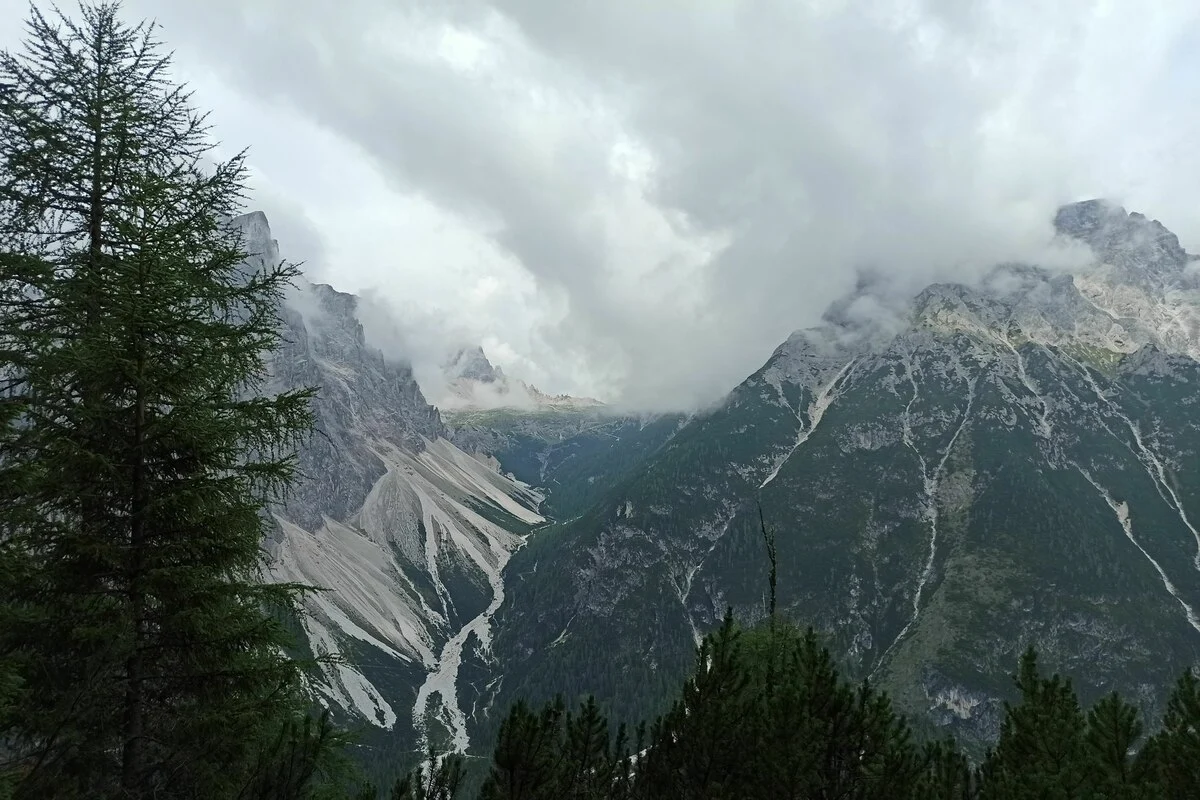
In the jagged heart of the Dolomites, where the pale limestone of the Tre Cime di Lavaredo (Three Peaks) pierces the sky, a profound collision is unfolding. It is a place where the heavy ghosts of the First World War, the fierce preservation of Tirolean identity, and the modern-day scourge of "overtourism" converge. In Sexten, a South Tirolean municipality, the landscape and its inhabitants find themselves engaged in a defensive struggle—not against a foreign army this time, but against the relentless, digitized encroachment of mass tourism that threatens to commodify both their history and their quiet survival.
The Relics of a Forgotten Front
As dark, bruised clouds roll over the crests of the Anderter Alpe, the temperature plummets, signaling the volatile temperament of the high mountains. For Rupert Gietl, a conflict archaeologist who has dedicated years to mapping the scars of the "White War," these mountains are not merely a backdrop for scenic hikes. They are an open-air museum of human suffering.
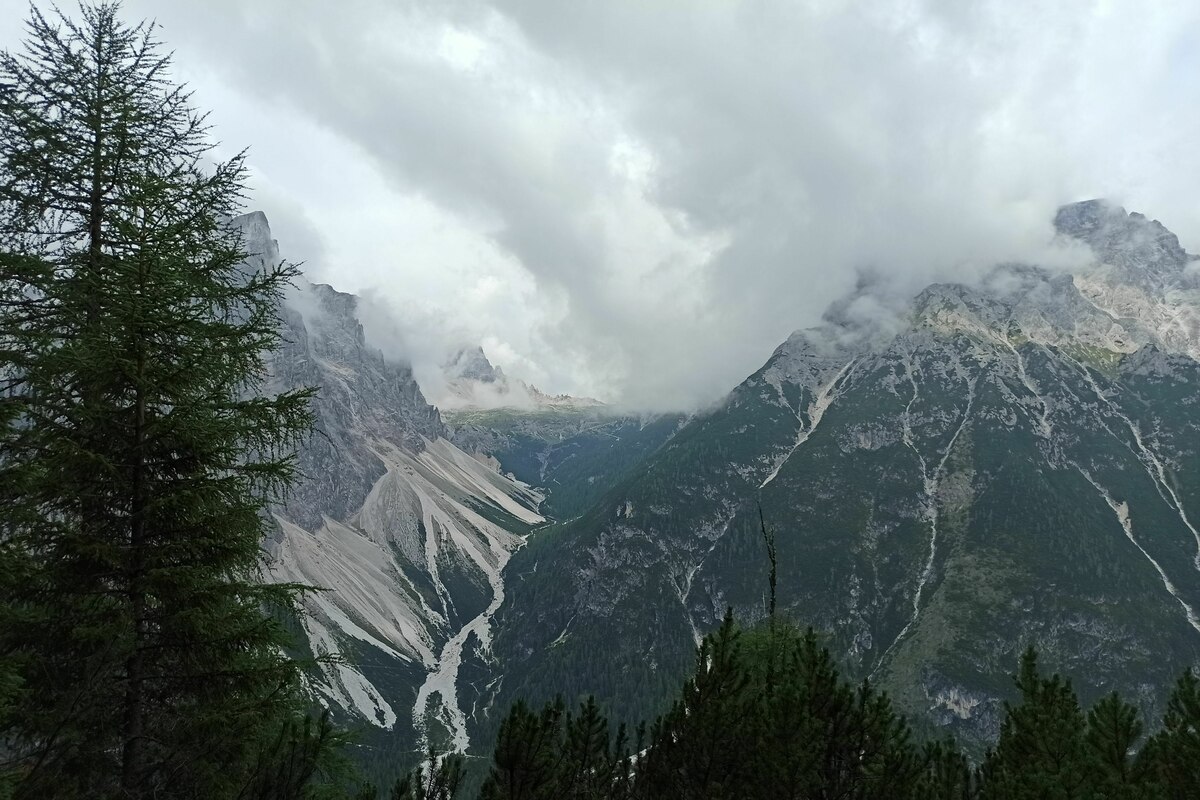
"In the rock, you find shelters everywhere," Gietl says, pointing to the remnants of command barracks, trenches, and supply tunnels. Between May 1915 and the autumn of 1917, this terrain served as the brutal front line between the Austro-Hungarian Empire and Italy. The logistical feat of maintaining a war at these altitudes remains difficult to fathom. Simple windlass systems were engineered to hoist supplies up vertical faces, sustaining mountain infantry—sons of small-scale farmers and laborers—who lived in conditions that bordered on the surreal.
Historians estimate that up to 180,000 soldiers perished along the Alpine front stretching from the Stelvio Pass to the Isonzo. Most chillingly, historical data suggests that one to two-thirds of these fatalities were not caused by enemy fire, but by the mountain itself: avalanches, lightning strikes, landslides, and exposure. For those stationed here, the war was a paradoxical existence; while the threat of death was absolute, the bunkers provided a modicum of stability and sustenance that the harsh, impoverished mountain life below could not always guarantee.

A Chronology of Dispossession
The history of Sexten is defined by a series of traumatic ruptures. In 1915, the entire village was evacuated as the front lines moved in. When the inhabitants returned two years later, they found their homes reduced to rubble. Yet, the physical destruction was only the beginning of a long period of political erasure.
The Treaty of Saint-Germain in 1919 transferred South Tyrol from the Austrian Empire to Italy without the consent of its German-speaking inhabitants. In the decades that followed, the region was subjected to a systematic program of "Italianization." Names of landmarks were changed—the iconic Drei Zinnen were rebranded as Tre Cime—and local traditions were suppressed. It was not until the Second Autonomy Statute of 1972 that the German language finally regained parity with Italian, a hard-won victory for a population that has spent the last century balancing its Tirolean roots against the pressures of a centralist state.

The Modern Invasion: Overtourism and the Digital Swarm
Today, the "foreign occupation" of the region takes a different form. It is a phenomenon known as overtourism, fueled by the insatiable appetite of social media. On the Italian side, in the Venetian town of Misurina, the daily reality is a testament to the scale of the problem. As early as 6:00 AM, long queues of tourists form, waiting for shuttle buses to transport them to the Auronzo Refuge—the gateway to the Tre Cime.
During the peak season, this fragile UNESCO World Heritage site is besieged by up to 14,000 visitors daily. The sheer density of people has prompted local mayors to call for a "crisis summit," proposing an absolute cap of 2,000 daily visitors to protect the ecosystem. However, regulatory efforts remain fragmented. While the municipality of Toblach has implemented an online reservation system for visitors entering from their side, those arriving via Misurina currently face no such constraints.

The social media-driven "swarm participation" has created a disconnect between the landscape and the visitor. "The Sexteners don’t even go up there anymore," says Gietl. The trails have become conduits for mass tourism, where the serene experience of mountaineering is replaced by the performative act of reaching a landmark for a photo.
Institutional Responses and the Image Crisis
Walter Holzer, the head of the Sexten Tourism Association, is deeply concerned about the long-term implications of this trend. He views the "Instagramification" of the Dolomites as a threat to the region’s integrity. "People are moving away from individual exploration toward swarm participation," Holzer notes.

The tourism board fears that the images of crowded trails and mile-long queues for pastries are damaging the reputation of the region, driving away the very demographic that has sustained the local economy for decades: the dedicated mountaineer and the nature-loving family. Paradoxically, the region is vast. With over 700 kilometers of marked trails, the overcrowding is a localized phenomenon, primarily centered on a few "Instagram-famous" spots. Areas like the Fischleintal offer a starkly different, solitary experience, yet the allure of the "must-see" landmark proves stronger than the desire for a genuine encounter with the wilderness.
The Architecture of Resistance
Beyond the hiking trails, the history of the region is preserved in its architecture. The Hotel Drei Zinnen, built between 1929 and 1931 by architect Clemens Holzmeister, stands as a monument to this resilience. Constructed during the height of the fascist suppression of German culture, the hotel was an architectural defiance—a statement of Tirolean identity in a time of forced erasure.

Traudel Watschinger, who manages the hotel in its third generation, treats the building as a sacred vessel of history. Under strict heritage protection, even minor renovations are subject to intense scrutiny and astronomical costs. "If we don’t act sustainably, who will?" she asks. The hotel serves as a bridge between the trauma of the early 20th century and the existential challenges of the 21st. It remains a "total work of art," filled with frescoes by Rudolf Stolz—a man whose own life trajectory mirrored the political volatility of the era, moving from Nazi-favored artist to a figure caught in the tides of history.
Implications: A Region at a Crossroads
The plight of Sexten is emblematic of a broader European struggle. How can fragile, culturally rich regions balance the economic necessity of tourism with the preservation of their environment and social fabric?

The current model, which relies on high-volume, short-duration visits, is arguably unsustainable. If the region continues to be treated as a commodity for digital consumption, it risks losing the very "authenticity" that attracts visitors in the first place. The local response—advocating for quotas, promoting less-visited areas, and emphasizing historical and cultural education—suggests a shift toward a more managed, thoughtful approach to tourism.
However, the power dynamics remain skewed. As long as social media algorithms prioritize visibility over sustainability, the "swarm" will likely continue to descend upon the peaks. For the people of Sexten, the task is to ensure that they are not relegated to the role of historical actors in their own home, but remain active participants in a future that honors both their past and the finite capacity of the mountains they call home. The challenge is clear: they must defend their identity not against the artillery of the Great War, but against the relentless, invisible, and overwhelmingly popular pressure of the modern world.