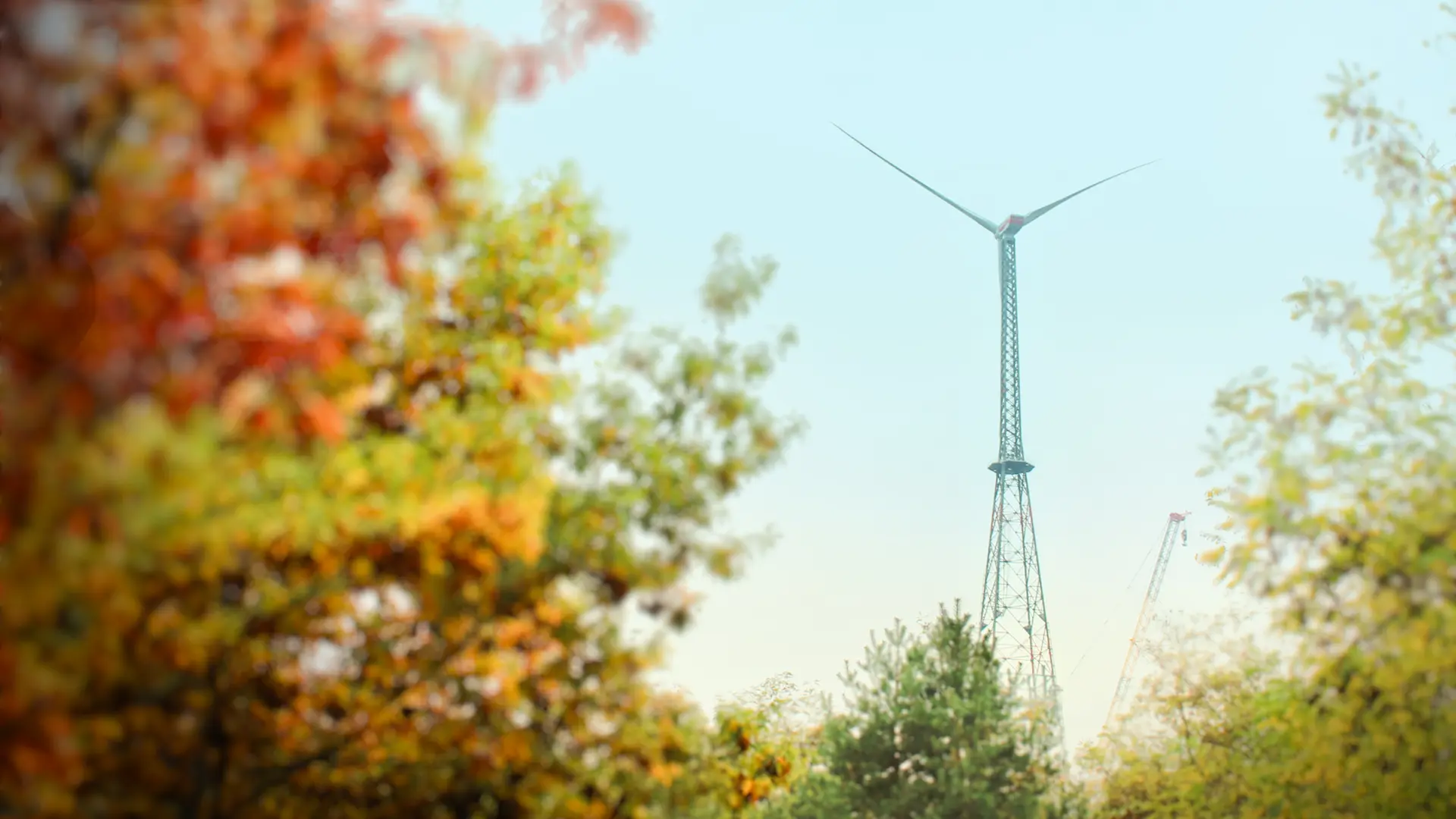
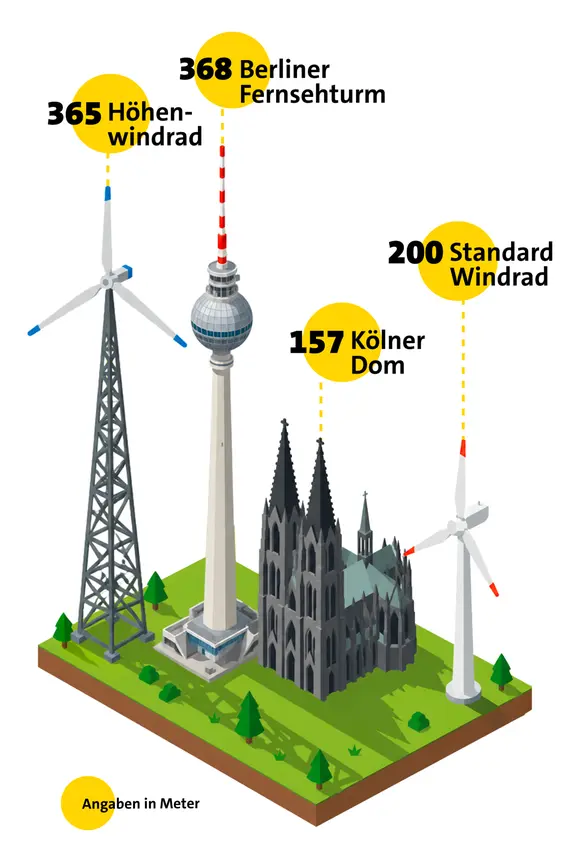
In the quiet landscape of Schipkau, Germany, a 365-meter-tall steel lattice tower has quietly become the most ambitious experiment in the history of wind energy. As the world scrambles to decarbonize, this towering structure—higher than the Eiffel Tower—promises to unlock the untapped potential of high-altitude winds. But is this engineering marvel the "gamechanger" the energy transition needs, or a cautionary tale of over-ambition?
The Main Facts: A New Frontier in Wind Harvesting
In the heart of the Lusatia region, the engineering firm Gicon has completed the construction of the world’s tallest wind turbine. Standing at a staggering 365 meters, the turbine is designed to capture the powerful, consistent winds that exist at an altitude of 300 meters—a height where the atmospheric friction of the Earth’s surface no longer disrupts the wind’s velocity.
For years, the wind industry has been trapped by a fundamental limitation: the higher a turbine, the more expensive and complex its construction becomes. By utilizing a unique, Eiffel Tower-inspired lattice structure, Gicon has bypassed the conventional limitations of tapered steel tubes. This design minimizes wind resistance while providing the structural integrity required to support massive blades at unprecedented heights. The project, which serves as both a landmark and a laboratory, aims to prove that "offshore-level" wind conditions can be harvested on land.
Chronology of a Construction Challenge
The path to the completion of this giant was fraught with technical hurdles. The assembly process defied standard construction logic because no crane on earth is capable of lifting heavy turbine components to such heights.
- The Planning Phase: Years of research and meteorological data gathering confirmed that the Lusatian winds at 300 meters were significantly more energetic than those at traditional hub heights (usually 100–150 meters).
- The Assembly Innovation: Lacking a crane, the team utilized an ingenious internal hub-lifting system. The tower was constructed in sections, and the generator and blades were winched up the internal skeleton of the lattice tower until they reached their final destination.
- The Financial Hurdle: Prof. Jochen Großmann, CEO of Gicon, has been candid about the process, noting that it brought the engineering team to the "brink of despair." With a development and construction cost of approximately 25 million euros—more than four times the cost of a standard 6-million-euro turbine—the project has required significant research subsidies to become reality.
- Operational Readiness: Following final testing in late 2026, the turbine is set to enter full-scale grid operation, marking the first time a permanent high-altitude turbine has been integrated into the German power supply.
Supporting Data: Why "Height Matters"
The physics behind the project is compelling. Atmospheric wind shear dictates that as you rise from the ground, wind speed increases significantly as surface friction decreases.
- Energy Density: Meteorologist Stefan Emeis suggests that based on preliminary measurements from a three-year-long study with a dedicated wind-mast, the energy yield from this turbine is expected to be approximately 63 percent higher than a conventional turbine of the same rotor size located at a standard height.
- The "Full-Load" Factor: The most critical metric for any energy transition is "full-load hours." While standard onshore wind turbines struggle with intermittency, offshore turbines typically achieve 55 percent of their maximum capacity over a year. Gicon claims that by reaching the 300-meter mark, their land-based turbine can match these offshore performance levels, providing a more stable and reliable input to the grid.
- Capacity Potential: The current turbine is a 3.8 MW unit, but the tower is structurally rated for an 8 MW generator. Future upgrades could theoretically double the output without requiring new land usage or structural changes.
Official Responses and Expert Analysis
The energy sector is watching Schipkau with a mixture of skepticism and admiration. Prof. Claudia Kemfert, a renowned energy economist at the DIW Berlin, believes the true value of the project lies in the stabilization of the grid.
"The greatest advantage will be the regularity of the power production," Kemfert notes. "By producing electricity even when lower-altitude winds are stagnant, we reduce the volatility that plagues current renewable energy systems. This is an essential component of a future-proof, 100 percent renewable grid."
However, she warns against premature celebration regarding costs. "The feasibility depends entirely on the lifetime cost of electricity," Kemfert argues. "It is not enough to generate more power; the cost per kilowatt-hour over the twenty-year lifespan must compete with cheaper, lower-reaching alternatives. We are in the data-gathering phase now."
The project has also faced a mixed reception from the local population. While many see the structure as a symbol of progress and a tourist attraction—with families visiting the site during school holidays—concerns regarding noise and local aesthetics remain. Residents living near the site, such as local homeowner Kristin, emphasize that while the transition to green energy is vital, the human cost of living in the shadow of industrial-scale infrastructure must be managed through careful siting.
Implications for the Global Energy Transition
If the Schipkau turbine succeeds in proving its durability and economic viability, the implications for Germany and the world are profound.
1. The "Second Floor" Concept
Gicon envisions a future where high-altitude turbines are integrated into existing wind parks. Instead of clearing new forests or agricultural land, developers could add these "second-floor" giants to established wind farms, significantly increasing output without increasing the physical footprint.
2. Global Replication
Germany is not the only market. Research is already underway in North Rhine-Westphalia and Mecklenburg-Vorpommern to assess the viability of similar projects. Beyond Europe, nations with vast, wind-rich, but land-constrained regions could look to high-altitude technology as a way to maximize power production in areas where surface winds are blocked by topography or vegetation.
3. A Shift in Offshore Dependence
For decades, the consensus has been that the "big wind" energy—the kind required to power heavy industry—could only be found offshore. If the "Offshore-on-Land" model becomes a reality, it would fundamentally change the geography of the energy transition, allowing landlocked nations to generate the same volume of consistent, high-capacity electricity as their coastal neighbors.
Conclusion: A High-Stakes Bet on Innovation
The 365-meter tower in Schipkau is more than a steel structure; it is a test of human ingenuity against the laws of meteorology. While the financial risks are high and the engineering challenges are immense, the potential rewards for the global power grid are too great to ignore.
As we move through the coming years, the data harvested from this giant will determine whether the future of wind energy belongs to the sky. If the turbine withstands the turbulence of the upper atmosphere and the scrutiny of the accountants, it may well prove to be the "gamechanger" that shifts the narrative from how much land we need for wind, to how much height we can reach. The experiment in Lusatia is not just building a turbine; it is building a bridge to a more stable, renewable future—one 300-meter leap at a time.