A seismic digital breach has rocked the German political landscape. A colossal dataset containing over 400,000 internal emails, alongside thousands of documents and images, has surfaced online, offering an unprecedented look into the inner workings of the Alternative für Deutschland (AfD). The leak, circulating under the codename "Hexane," covers a timeframe from 2013 to 2026, encompassing a period of rapid growth, internal factionalism, and radicalization within the party.
The Handelsblatt has conducted an exhaustive forensic investigation into the material. By cross-referencing the leaked files with internal editorial archives—including emails previously sent by our own reporters to party officials—we have been able to verify the authenticity of critical segments of the data. This report examines how the dataset was scrutinized, what it reveals about the party’s strategic communications, and the broader implications for German democratic discourse.
Main Facts: What is the "Hexane" Leak?
The "Hexane" leak is not merely a collection of correspondence; it is a digital roadmap of the AfD’s internal life. The archive contains:

- 421,000+ Emails: Spanning over a decade of party operations.
- 48,700 Documents: Internal memos, strategic papers, and policy drafts.
- 8,300 Images: Including internal meeting photos, event graphics, and personal attachments.
The data is being disseminated by an anonymous collective via a specialized website and decentralized peer-to-peer (P2P) file-sharing networks. This method of distribution is deliberate; by avoiding a central server, the anonymous actors ensure that the files are nearly impossible to remove from the internet, as they reside on a distributed network of user computers rather than a single vulnerable host.
To date, the identity of the group or individuals responsible for the exfiltration remains unknown. The sheer volume and the inclusion of future-dated or ongoing communication suggest an infiltration that may have persisted for a significant duration, or a sophisticated compromise of the party’s central IT infrastructure.
Chronology and Verification: A Journalist’s Perspective
The challenge for any news organization handling such a leak is verifying the integrity of the data. In the digital age, forged leaks are a common tool of disinformation. To establish credibility, our investigation began with a "Ground Truth" approach.

The Case of the 2016 Correspondence
On September 30, 2016, at 1:08 PM, Handelsblatt reporter Dietmar Neuerer sent an inquiry to the AfD regarding a potential story. The subject line was: "Deutsche Bank – Anfrage Alice Weidel."
In the email, Neuerer wrote to Christian Lüth, then a prominent party operative, stating: "We will pass on this specific case. However, an interview with Ms. Weidel would be interesting, given the current state of the AfD and the upcoming 2017 election year."
Ten years later, this exact email surfaced within the "Hexane" archive. Upon finding it, we verified the metadata: the timestamp, the recipient’s forwarding trail—which showed Lüth passing the query to Alice Weidel that same evening—and the precise wording matched our records perfectly. This verification provided a "smoking gun" for the authenticity of the surrounding data.
The Breadth of the Timeline
The archive’s scope (2013–2026) is particularly alarming for the party. It suggests that the breach was not a one-time event but a long-term monitoring operation. The files cover the AfD’s evolution from a Euro-skeptic protest movement to a party increasingly characterized by right-wing populist and, in some branches, extremist rhetoric.
Supporting Data: Mapping the Network
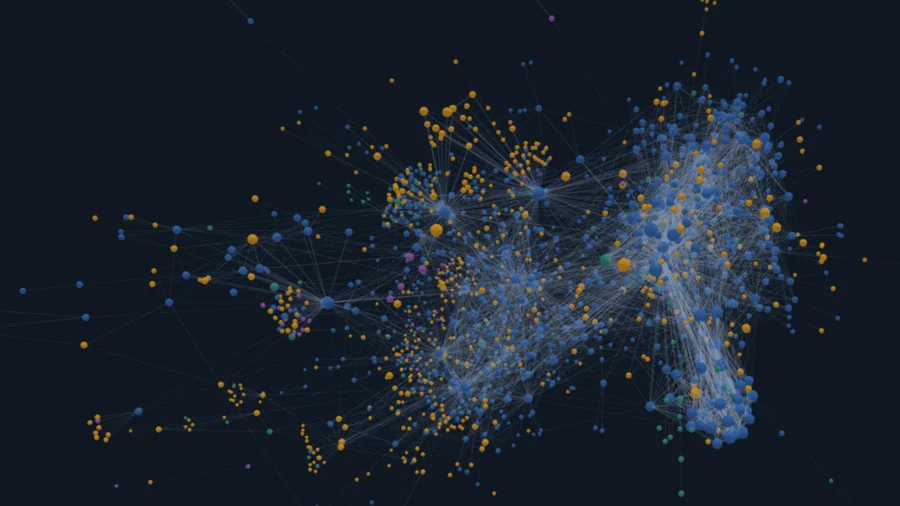
The "Hexane" dataset allows for sophisticated network analysis. Using graph-theory tools, investigators can visualize the intensity of communication between different party accounts.
- Communication Hubs: The data reveals which figures within the party act as "clearing houses" for information. Certain high-ranking officials appear in the center of communication clusters, filtering directives down to state-level chapters.
- Document Flows: The 48,700 documents include internal guidelines on media strategy, talking points for parliamentary debates, and private assessments of political opponents.
- The "Silent" Participants: The leak highlights the disparity between public rhetoric and private internal consensus, particularly regarding the party’s stance on the German constitution and international relations.
By mapping the frequency of exchanges, the data demonstrates how the AfD maintained ideological discipline across disparate state chapters, often using the email network to disseminate specific talking points intended to be used in media interviews and social media posts.

Official Responses: The Party’s Dilemma
The AfD’s reaction to the "Hexane" leak has been a mixture of strategic silence and accusations of "political warfare." Officially, the party has questioned the legality of the acquisition of the data, attempting to frame the publication of the findings as a violation of privacy and a targeted attack by the "system media" (Systemmedien).
However, the nature of the leak leaves little room for a credible blanket denial. Because the data contains thousands of mundane, non-controversial administrative emails mixed with sensitive strategic discussions, the "forgery" narrative is difficult to maintain. Internally, the party leadership is reportedly conducting its own forensic audit to identify the "leaker" or the point of entry, creating a climate of suspicion among staff members and officeholders.
Implications: The Future of the AfD and German Politics
The implications of the "Hexane" leak are profound and multi-faceted, reaching far beyond the headlines.

1. The Death of Private Strategy
Political parties rely on the ability to debate strategies behind closed doors. The exposure of internal communications limits the party’s ability to "test" radical rhetoric or adjust its public messaging in private. Every internal memo is now, effectively, a potential public document. This may force the party to become more opaque, potentially leading to more secretive, non-digital communication methods.
2. Impact on Regulatory Oversight
German intelligence agencies, particularly the Bundesamt für Verfassungsschutz (Federal Office for the Protection of the Constitution), have long monitored parts of the AfD for potential anti-democratic tendencies. The "Hexane" archive provides a wealth of primary source material that could be utilized to substantiate claims regarding the party’s internal radicalization. Whether this data can be used as admissible evidence in a legal context remains a subject of intense debate, but its impact on the court of public opinion is undeniable.
3. The Vulnerability of Political IT
The leak serves as a wake-up call for all German political entities. If a major party can have 400,000 emails exfiltrated over several years without detection, the security standards of German political infrastructure are clearly inadequate. This incident will likely trigger a nationwide push for more secure, encrypted communication protocols within all parliamentary factions.

4. Erosion of Trust
Perhaps the most damaging effect is the erosion of trust between the party and its base. The leaked emails show a side of the AfD that is often calculating, occasionally cynical, and deeply involved in the machinery of power—an image that stands in contrast to the party’s "anti-establishment" branding. As voters sift through the findings, the discrepancy between the "man of the people" narrative and the reality of the party’s internal communications may impact voter sentiment in upcoming cycles.
Conclusion: A Digital Turning Point
The "Hexane" leak is more than just a scandal; it is a digital archive of a specific era in German politics. It records the inner thoughts, the strategic pivots, and the private frictions of the AfD during its most influential decade.
As the Handelsblatt continues to analyze the remaining segments of the data, the focus remains on accountability and transparency. In an era where information is the most valuable currency, the "Hexane" leak has provided the public with an unprecedented, raw, and unfiltered look at the gears turning behind the scenes of one of Germany’s most controversial political movements.

The question remains: once the secrets are out, can the party survive the glare of the light? Or will the exposure of its internal workings fundamentally alter the trajectory of the AfD? The answer will be written not just in the data itself, but in the political response that follows.