By Investigative Science Desk
Updated: September 26, 2026
The world’s glaciers are not merely aesthetic features of our mountain ranges; they are the planet’s frozen water towers, silent sentinels of climate stability. Yet, as the global thermometer continues to climb, these massive reservoirs are retreating at an unprecedented rate. A groundbreaking project led by a team of researchers at ETH Zurich, spearheaded by glaciologist Lander Van Tricht, has unveiled a new interactive digital tool that offers a sobering, high-resolution look into the future of our cryosphere. By mapping over 200,000 glaciers, the researchers have provided a visual forecast of what our world will look like under various warming scenarios, turning abstract climate data into a visceral reality for everyone from policymakers to the average citizen.
The Digital Pulse of a Melting World
The newly launched interactive map—accessible to the public—functions as a digital crystal ball. Users can zoom into specific mountain ranges, identifying individual glaciers, nearby hiking trails, and even alpine mountain huts that have stood for generations. The true power of the platform, however, lies in its predictive modeling.
By adjusting the global temperature slider, users can visualize the projected impact of a 1.5°C, 2°C, 2.7°C, or 4°C increase above pre-industrial levels. This granular approach allows observers to see exactly which glaciers are destined for extinction and the timeline of their disappearance. It transforms the often-distant concept of "global warming" into a localized concern, showing that the fate of a glacier in the French Alps or the German highlands is inextricably linked to global carbon policy.
Chronology of a Crisis: From Stability to Recession
The history of glacial retreat is a chronicle of the Anthropocene. While glaciers have expanded and contracted throughout Earth’s history, the current rate of recession is anomalous.
- 1850–1950: The post-Little Ice Age period began with a slow, steady decline in glacial mass. While some variability existed, the general trend was one of contraction.
- 1950–2000: Accelerated industrialization and the rise in greenhouse gas emissions led to a marked increase in the rate of melt. Glaciologists began documenting "negative mass balances" across the majority of the world’s mountain glaciers.
- 2000–2025: The current century has seen a drastic acceleration. Many glaciers have reached a "tipping point" where even if temperatures were stabilized today, their momentum of loss is already baked into the system.
- 2026–2100 (The Projection): According to the ETH Zurich models, the next 75 years represent a critical window. Under a 2.7°C warming scenario—currently considered a "business as usual" trajectory—the vast majority of mid-latitude glaciers are projected to vanish entirely by the end of the century.
The German Perspective: A Grim Forecast
In Germany, the reality is particularly stark. The nation is home to only four remaining glaciers: the Schneeferner, the Höllentalferner, the Blaueis, and the Watzmann. According to the interactive map, all four are highlighted in warning colors—red and orange—signaling their imminent demise.
The Höllentalferner, located on the Zugspitze, serves as a tragic case study. Even under the most optimistic scenario of 1.5°C warming, models predict the glacier will be extinct in just 22 years. Should the planet reach 2.7°C of warming—a scenario many climate scientists currently deem realistic—the Höllentalferner will likely disappear in only 18 years. This loss represents more than just a change in landscape; it is the permanent erasure of a geographical feature that has defined the German Alps for centuries.
Global Implications: The Alpine "Water Tower"
The European Alps, often referred to as the "water tower of Europe," face a catastrophic future. The projections provided by the Van Tricht team are harrowing:
- At 1.5°C: Only 12% of current Alpine glaciers will remain by 2100.
- At 2.0°C: That number drops to a mere 8%.
- At 4.0°C: The Alps will effectively be stripped of their glacial ice, leading to a profound transformation of the European landscape.
These findings extend beyond the Alps. Even in the massive ice sheets of Greenland and parts of Antarctica, the retreat is accelerating. The loss of these glaciers is not a localized problem; it is a global hydrological crisis.
Glaciers as Vital Resource Reservoirs
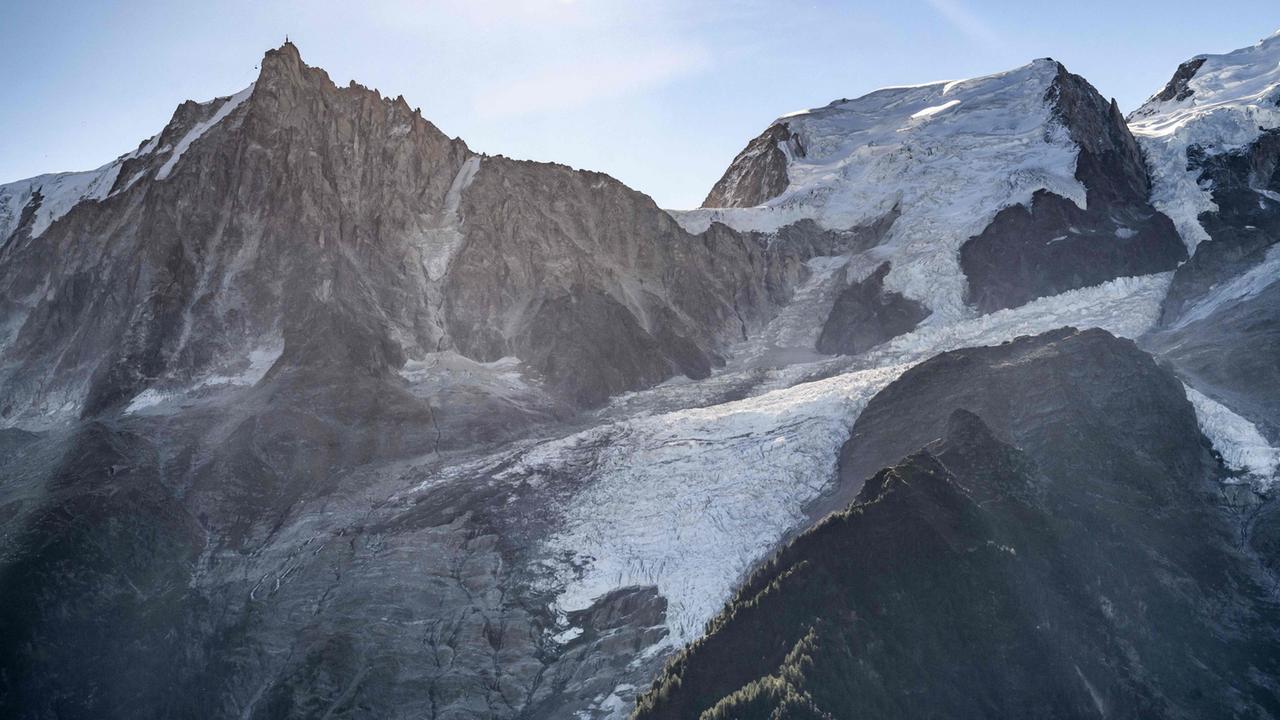
"Glaciers are nature’s most efficient water storage systems," explains Lander Van Tricht. They function by capturing precipitation as snow during the winter and slowly releasing it as meltwater during the hot, dry summer months. This rhythmic release of water is the backbone of alpine ecosystems, agriculture, and hydroelectric power generation.
When a glacier disappears, the "buffer" disappears with it. In the spring, rivers may experience catastrophic flooding as the last of the ice melts, followed by severe droughts in late summer. This shift in water availability poses an existential threat to downstream communities that rely on these rivers for irrigation, drinking water, and the cooling of power plants. The economic ramifications for mountain tourism, agriculture, and energy markets are profound, potentially forcing a complete restructuring of regional economies.
Scientific Consensus and Official Responses
The data presented by the ETH Zurich team aligns with reports from the Intergovernmental Panel on Climate Change (IPCC). The consensus is clear: the current rate of glacial loss is a direct result of human-induced climate change. While scientists acknowledge that some ice loss is now unavoidable due to the greenhouse gases already trapped in the atmosphere, the difference between a 1.5°C and a 4°C world is the difference between a managed transition and a total environmental collapse.
Governments across the European Union have cited such studies as critical evidence for the "Green Deal" initiatives. However, the gap between scientific warning and political implementation remains a point of contention. Environmental advocacy groups have utilized the interactive map as a lobbying tool, arguing that politicians must be able to see the specific loss of their own regional heritage to truly grasp the urgency of the climate crisis.
Adaptation or Mitigation?
The question remains: Can we save them? The scientific reality is that we are in a state of triage. We cannot "refreeze" the world’s glaciers in the short term. However, the rate at which they vanish depends entirely on global carbon mitigation.
Strategies currently being discussed range from:
- Macro-level Mitigation: Aggressive decarbonization to cap warming at the lowest possible threshold, thereby buying time for adaptation.
- Micro-level Adaptation: In some areas, local authorities have experimented with covering glaciers in white reflective fleece blankets to slow the melting process. While effective on a small, localized scale, scientists warn this is a "Band-Aid" solution that cannot address the systemic problem of global warming.
Conclusion: A Call to Action
The interactive map by ETH Zurich does more than show us what we are losing; it serves as a mirror for our collective responsibility. By visualizing the disappearance of these massive, ancient structures, the map forces a confrontation with the temporal scale of the climate crisis.
We are witnessing the end of an era. The glaciers that shaped our valleys and provided our water for millennia are retreating into history. The data is no longer a set of cold, abstract numbers; it is a vivid, mapped reality. Whether these glaciers remain in the maps of the next century or are relegated to historical archives is a choice that is currently being made in boardrooms and government offices worldwide. The ice is melting, but the path forward—while narrow—remains open, provided the world acts with the urgency that the visual evidence demands.