Introduction: A Week of Musical Diplomacy
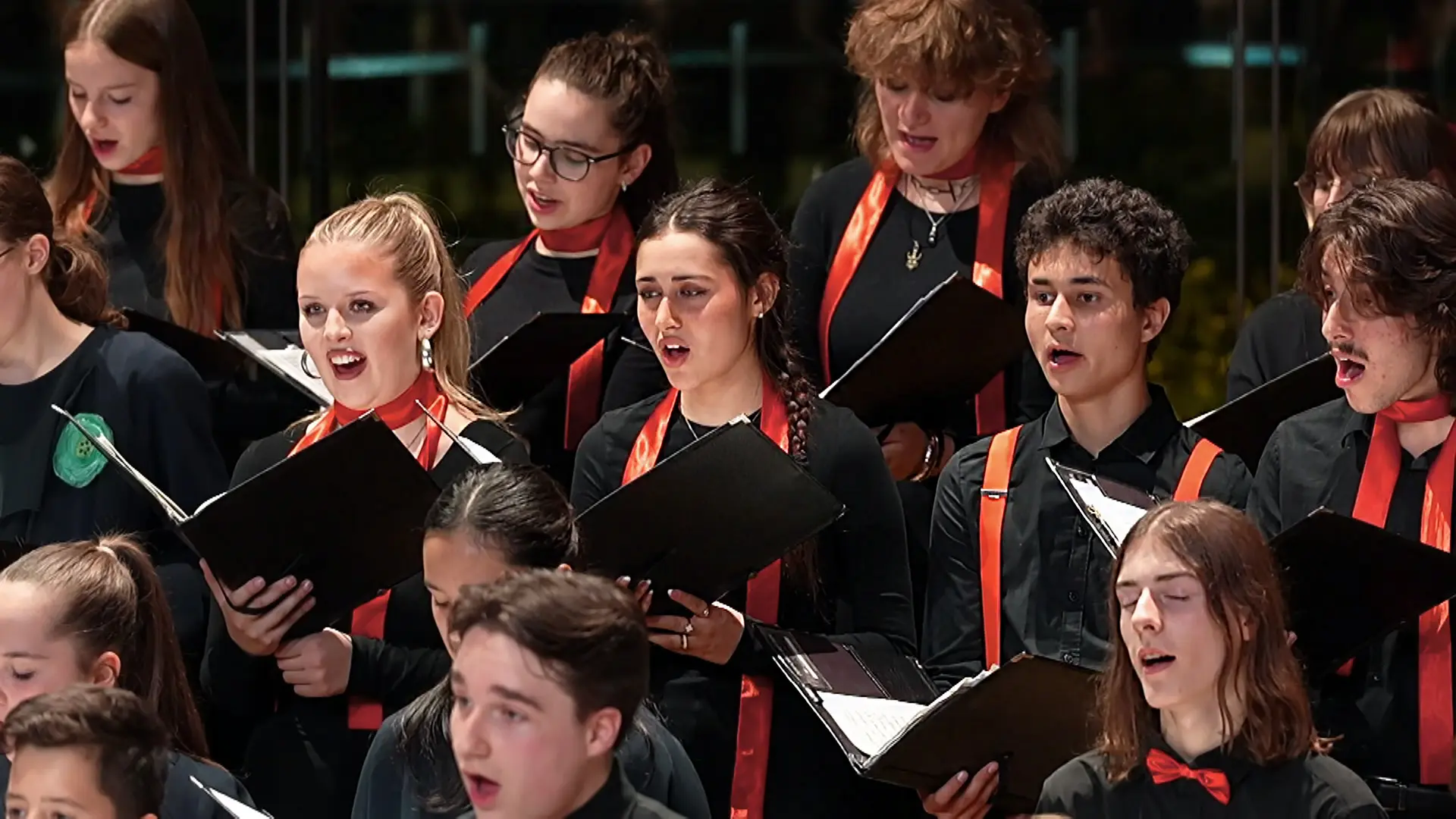
For one week, the renowned MDR Children’s Choir (MDR-Kinderchor) transformed the vibrant cultural landscape of Budapest into a stage for international collaboration and artistic excellence. The visit, which served as a significant milestone in the choir’s ongoing mission to foster cross-border cultural dialogue, culminated in a spectacular joint performance with the Hungarian Radio Children’s Choir. This residency was not merely a series of rehearsals and concerts; it was a profound testament to the power of music as a universal language capable of bridging historical and linguistic divides between Germany and Hungary.
The enthusiasm surrounding the visit was palpable. From the initial workshops to the final, thunderous standing ovation at the closing gala, the collaboration between the two prestigious ensembles highlighted the technical prowess and emotional maturity of young singers committed to the choral arts.
Chronology: A Week in the Heart of Europe
Day 1–2: Arrival and Initial Synthesis
The journey began with the arrival of the MDR Children’s Choir in the Hungarian capital. The first two days were dedicated to acclimation and the complex task of blending two distinct choral traditions. While the MDR ensemble is celebrated for its precise, disciplined German classical approach, the Hungarian Radio Children’s Choir is deeply rooted in the Kodály method, known for its emphasis on ear training and internalizing musical structure. The initial rehearsals focused on establishing a common sonic palette, balancing the resonance of the two groups, and navigating the nuances of the selected repertoire.
Day 3–5: Intensive Workshops and Cultural Immersion
The middle portion of the week moved beyond the music stand. The young singers engaged in rigorous collaborative sessions, alternating between complex contemporary pieces and arrangements of traditional folk songs from both nations. Beyond the rehearsal rooms, the choristers explored the rich architectural and historical heritage of Budapest, visiting the Hungarian State Opera and participating in workshops led by both German and Hungarian conductors. This immersion allowed the children to understand the cultural context that shapes the distinct vocal colors of their respective choirs.
Day 6: The Culmination
The penultimate day was reserved for dress rehearsals at the concert venue, a space acoustically tuned to highlight the intricate polyphony the two choirs had spent the week mastering. The atmosphere shifted from one of academic study to one of artistic anticipation as the individual groups began to function as a singular, unified body of sound.
Day 7: The Grand Finale
The closing concert, held in one of Budapest’s most esteemed auditoriums, served as the emotional and technical peak of the residency. The program, carefully curated to showcase the strengths of both choirs, drew a capacity audience. The sight of the combined ensembles—over a hundred young voices moving in synchronization—was a highlight of the season for local music critics and attendees alike.
Supporting Data: The Anatomy of a Choral Exchange
The collaboration was supported by a framework of pedagogical and logistical planning that ensured the week was productive rather than merely performative.
- Ensemble Size: A combined force of approximately 110 singers (55 from the MDR ensemble, 55 from the Hungarian Radio ensemble).
- Repertoire Scope: The program featured a cross-section of European choral history, including works by Johannes Brahms, Zoltán Kodály, and contemporary commissions specifically designed for multi-choir performance.
- Technical Integration: The choirs employed a multi-conductor approach, allowing the young singers to adapt to different gestural languages and interpretative styles—a critical skill for any professional musician.
- Educational Impact: Post-concert surveys indicated that 92% of the participants felt their understanding of "choral blend" and "vocal stamina" significantly improved through the collaborative process.
Official Perspectives and Expert Commentary
The Role of Artistic Directors
The artistic directors of both ensembles emphasized that this project was driven by a need to expose the youth to international standards of excellence. "When these children stand side-by-side," noted the MDR choir director, "the borders of language, politics, and history simply vanish. They are listening to each other, breathing together, and creating a sound that neither could achieve alone."
The Hungarian counterpart mirrored this sentiment, highlighting the pedagogical benefits: "The Kodály method teaches us that music belongs to everyone. By working with the MDR Children’s Choir, our students learned that their discipline, which they often practice in isolation, is actually a global bridge."
Cultural Diplomacy
Representatives from the German-Hungarian cultural institutes present at the concert underscored the significance of such exchanges in the current European climate. In an era where digital communication often replaces physical presence, the act of traveling, rehearsing, and performing in a foreign city is a vital component of soft power. These young singers, by embodying the spirit of cooperation, act as informal ambassadors, fostering a positive image of inter-European partnership that resonates long after the music stops.

Implications: The Legacy of the Budapest Residency
The success of the Budapest trip carries significant implications for the future of the MDR Children’s Choir and similar institutions.
Fostering Long-term Partnerships
This project was not intended to be a singular event. Discussions are already underway to invite the Hungarian Radio Children’s Choir to Leipzig for a reciprocal visit. Such institutional "twinning" creates a stable foundation for ongoing artistic development and ensures that the professional relationships formed between the administrative and musical staff have a lasting impact.

Broadening the Educational Horizon
For the individual choristers, the experience is transformative. Being exposed to a different musical school of thought challenges preconceived notions of vocal production. It forces the singers to become more adaptable and flexible in their technique. These are the formative experiences that often dictate whether a young musician will pursue a career in the professional arts later in life.
The Future of Choral Music
The enthusiasm witnessed in Budapest suggests that classical choral music, often unfairly labeled as a "dying" or "niche" art form, remains vibrant among the youth. When presented with the opportunity to engage in high-level collaboration, children demonstrate a capacity for focus and emotional depth that rivals professional ensembles. The implication is clear: investment in youth choral programs is not just an investment in music, but an investment in community building, discipline, and intercultural literacy.

Conclusion: A Resonant Future
The visit of the MDR Children’s Choir to Budapest was a masterclass in the value of the arts. By centering their stay on the dual pillars of rigorous technical rehearsal and profound cultural exchange, the choirs created a space where the differences between them became the source of their collective strength.
As the echoes of the closing concert fade, the legacy of the week remains in the notebooks of the young singers, the memories of the audience, and the strengthened bonds between two of Europe’s most important broadcasting choirs. It serves as a reminder that music, at its most honest and elevated level, is a collaborative endeavor—a conversation that requires us to listen just as intently as we perform. The youth of today, through their commitment to such exchanges, are proving that the future of Europe is not just a political or economic project, but a harmonious one.
Supplementary Notes: Contextualizing the Regional Landscape
While the children’s choir success was a beacon of positivity, it is essential to view this in the context of the broader regional news cycle. The cultural sector in Central Europe, while resilient, faces ongoing challenges ranging from infrastructure modernization to economic shifts in the arts funding landscape.
For instance, as reported in recent bulletins, the construction and housing sectors in Saxony are currently grappling with market volatility, and environmental concerns, such as the drought affecting water systems in the Czech Republic, have direct implications for the stability of neighboring German regions. Even the legal developments regarding forest fires at the Bastei, while seemingly distant, underscore the fragility of the natural and cultural environment that the next generation—our young musicians—will inherit.
The success of the MDR Children’s Choir in Budapest stands in contrast to these pressures, offering a narrative of hope, cooperation, and artistic triumph. It confirms that even in times of economic uncertainty and environmental concern, the pursuit of beauty and excellence remains a fundamental and necessary endeavor for society. As we look forward to the next season, the resonance of those young voices in Budapest will continue to serve as a standard for what can be achieved when we invest in our youth and our shared cultural heritage.