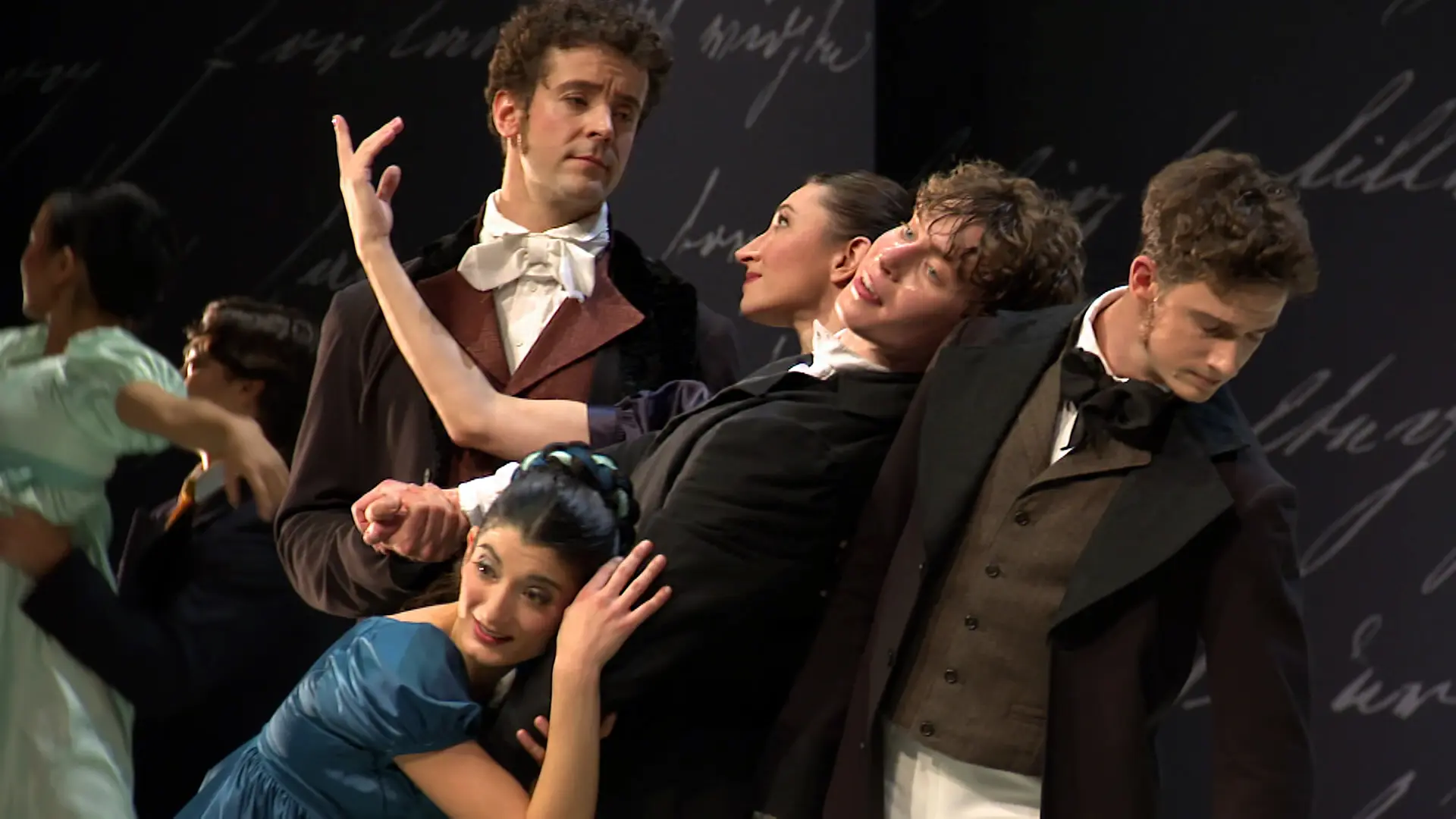
The enchanting, often melancholic world of Hans Christian Andersen, the Danish poet and storyteller who defined the childhoods of generations, has found a new, physical form in the heart of Saxony. The Chemnitz Ballet has unveiled a sweeping, ambitious production that seeks to go beyond the whimsical veneer of "The Ugly Duckling" or "The Little Mermaid" to explore the complex, often tortured psyche of the man behind the fairy tales.
By translating Andersen’s internal struggles—his unrequited loves, his profound sense of social displacement, and his desperate longing for recognition—into the fluid language of dance, the company offers a poignant reflection on the nature of genius and the price of creative vulnerability.
The Essence of the Production: More Than a Fairy Tale
For centuries, Andersen’s works have been sanitized, packaged, and re-sold as moralistic tales for children. However, the Chemnitz Ballet’s latest production challenges this reductionist view. Through intricate choreography and a haunting musical score, the company depicts the writer not as a benign grandfather figure, but as an outsider perpetually looking through a window at a world he could describe with unmatched precision but never truly inhabit.
The production emphasizes the dichotomy in Andersen’s life: the contrast between the global adulation he received and the crushing loneliness he experienced in his private life. The ballet serves as a vessel to externalize his inner turbulence, utilizing the expressive capacity of the human body to convey the weight of being "different" in a society that demands conformity.

A Chronology of a Literary Icon
To understand the weight of this production, one must look back at the life that inspired it. Born in 1805 in Odense, Denmark, Hans Christian Andersen was the son of a poor shoemaker and a washerwoman. His childhood was defined by poverty, superstition, and a burgeoning imagination that set him apart from his peers.
- 1805: Birth of Hans Christian Andersen in Odense.
- 1819: At age 14, he moves to Copenhagen with dreams of becoming an actor and singer. He faces rejection and ridicule, a pattern that would haunt his formative years.
- 1835: The publication of his first collection of fairy tales, Eventyr, fortalte for Børn (Fairy Tales, Told for Children). While initially dismissed by critics, they eventually secure his international fame.
- 1840s–1860s: Andersen travels extensively across Europe, forming deep, albeit complicated, friendships with figures such as Charles Dickens and Jenny Lind. His unrequited love for both men and women is a subject of extensive modern scholarly inquiry.
- 1875: Andersen dies in Copenhagen, having achieved the status of a global literary icon. His legacy, however, remains inextricably linked to the melancholy and longing embedded in his narratives.
Supporting Data: The Global Reach of an Outsider
The endurance of Andersen’s work is statistically staggering. His stories have been translated into more than 150 languages, making him one of the most published authors in history. Yet, it is the nature of this consumption that the Chemnitz production seeks to interrogate.

Data from literary archives suggests that Andersen’s original Danish texts possess a darker, more cynical edge than the bowdlerized English versions that dominated the 20th century. The Chemnitz Ballet’s decision to tap into this darker source material mirrors a contemporary trend in literary analysis: the "de-Disneyfication" of classic folklore.
In terms of attendance and cultural engagement, the production in Chemnitz aligns with a broader push in the German cultural sector to revitalize traditional storytelling through avant-garde artistic mediums. The city of Chemnitz, currently positioning itself as a hub of artistic innovation, views this production as a cornerstone of its cultural outreach program, aiming to attract not just theater aficionados, but younger demographics who are increasingly curious about the "human" stories behind historical figures.
Official Responses and Artistic Vision
The creative team behind the Chemnitz production has been vocal about the importance of capturing the "unspoken" Andersen. In a recent press briefing, the lead choreographer noted that the challenge was not in translating the plot of his stories, but in translating the emotion of the author.
"We didn’t want to stage a parade of fairy tale characters," the choreographer stated. "We wanted to stage the man who felt like a monster when he wrote of beauty, and who felt like a child when he wrote of sorrow. The ballet is, in essence, a study of the creative process as a form of suffering."
The municipal arts council in Chemnitz has lauded the production for its "intellectual rigor and emotional depth." They have highlighted that such high-caliber performances are vital for the city’s identity, particularly as it continues to evolve into a diverse and modern metropolitan center. By choosing to interpret a global figure like Andersen, the Chemnitz Ballet is effectively placing the city on a broader European cultural map, inviting international dialogue on themes of identity and belonging.
Implications: The Resonance of "The Outsider"
The implications of this production extend far beyond the stage. In an era where identity politics and the struggle for personal authenticity are at the forefront of social discourse, the story of Hans Christian Andersen is more relevant than ever.

The Psychology of Alienation
Andersen’s life was a continuous negotiation with his own "otherness." Whether it was his physical appearance, his social class, or his sexual orientation, he existed on the margins. By presenting this through dance, the Chemnitz production allows the audience to experience the physical discomfort of alienation. It is a powerful reminder that the greatest art is often born from the deepest wounds.
The Evolution of Dance Theater
The production also signals a shift in the role of ballet as a medium for biographical storytelling. While classical ballet often leans into the abstract or the fairy-tale archetype, this piece leans into the gritty reality of a human life. It demonstrates that the medium of dance, through its combination of music, movement, and light, is uniquely capable of articulating the nuances of mental health and emotional isolation.

Community and Identity in Chemnitz
For the city of Chemnitz, the success of this production is a point of pride. It reflects a community that is willing to confront the complexities of history and human nature. It encourages a culture of empathy, where the audience is invited to look at a "celebrated" figure and see, instead, a fragile human being. This, perhaps, is the most profound implication of the entire project: the ability of art to humanize, even in the face of immense historical myth-making.
Final Reflections
As the curtain rises on the dancers in Chemnitz, the audience is not just watching a performance; they are participating in an act of historical reclamation. They are watching the transformation of a man who was once a symbol of childhood wonder into a complex, multifaceted individual who understood the pain of being alive.

Hans Christian Andersen wrote for the child in every adult, but this production is for the adult in every child. It asks us to look at the stories we tell ourselves and recognize the shadows that created them. It is a testament to the fact that while our fairy tales may be written in ink, our lives are written in the dance of our experiences—our stumbles, our leaps, and our persistent, quiet longing to be understood.
In this masterful production, the Chemnitz Ballet has not just paid tribute to a Danish poet; they have reminded us that even the most famous among us are, at their core, searching for the same thing: a place to belong. Through the graceful, often painful movements on stage, the legacy of Andersen is reborn—not as a collection of dusty books, but as a living, breathing testament to the resilience of the human spirit.

As the final notes of the score fade and the dancers hold their final, breathless pose, the message remains clear: the stories that define us are rarely the ones we share in the light of day. They are the ones we carry in the quiet, in the dark, and in the constant, rhythmic movement of our own unfolding lives. The Chemnitz Ballet has succeeded in turning that movement into a masterpiece, ensuring that the "Ugly Duckling" of literature finally finds his place in the sun, seen, at last, for who he truly was.